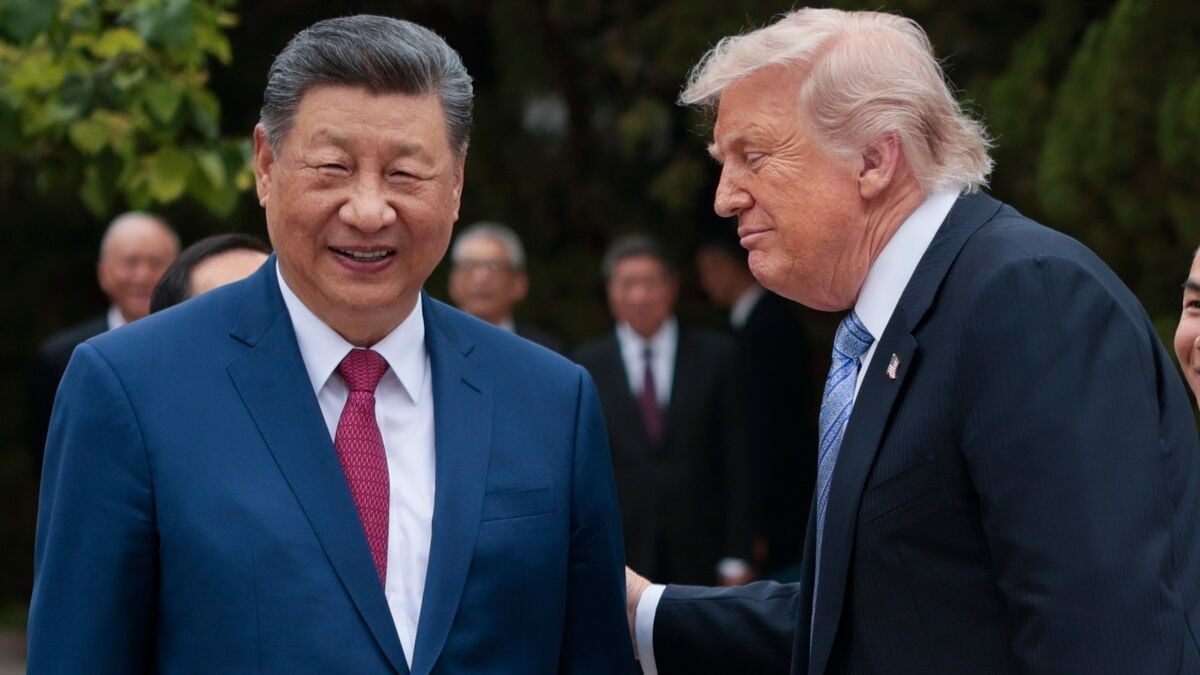
Chinese leader Xi Jinping began the summit in Beijing by warning about Taiwan, saying the US and China could end up "on a collision course" if the issue is not handled properly.
Trump did not comment on the issue while in China, but in an interview with Fox News after the visit, Trump said he had made it clear that he opposed a declaration of independence by Taiwan. He also appeared to question why the United States would defend the island in the event of an attack.
"I don't want anyone to become independent. And, you know, we would have to travel 9,500 miles to fight a war. That's not what I want," he told Fox News on Friday, continuing:
"I want them to calm down. I want China to calm down."
Weapons package a bargaining chip
Trump stressed that the United States does not want war and said he believes China will accept a status quo.
China claims Taiwan, but in practice Taiwan has been self-governing - with its own elections and military capabilities - for decades. Beijing repeatedly threatens to retake the island by military means, and the United States has historically said it will support Taiwan in the event of an attack.
Under Donald Trump, however, the stance has increasingly become subject to interpretation.
In December, the president approved an $11 billion arms deal with Taiwan, but the United States has yet to move forward with the delivery. In the Fox News interview, Trump was asked if he would approve the deal with Taiwan, to which he replied:
"No, I'm keeping it on hold and it depends on China."
"It's honestly a very good bargaining chip for us. That's a lot of weapons," he said without going into what he wanted in return.
“Sovereign nation”
A few hours after Trump warned Taiwan, the island's Foreign Ministry responded in a statement that it "is a sovereign and independent democratic nation" that is not under the People's Republic of China.
Regarding the arms sales, Taiwan believes that it is not only "a security commitment from the United States to Taiwan", "but also a form of joint deterrence against regional threats".