After several weeks of heavy pressure - and hints of military action - the US president has taken a step back.
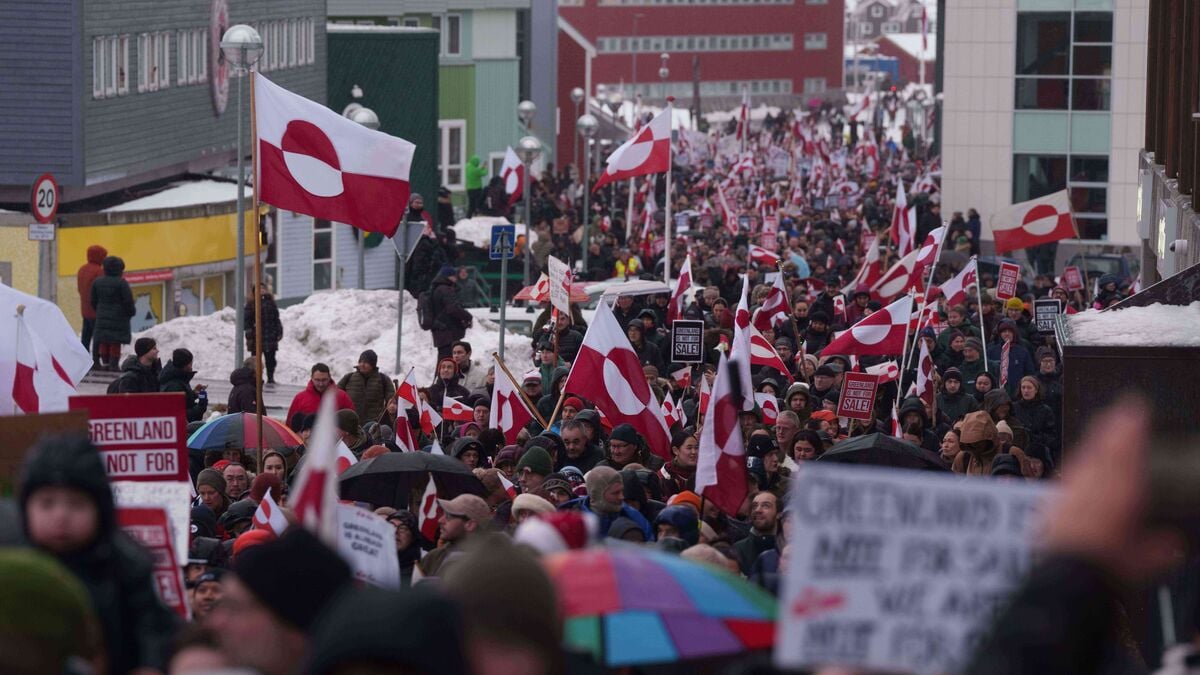
The opposing parties insisted: Greenland is not for sale. New negotiations are reportedly underway, but Trump seems to have realized at this stage that a purchase is not feasible.
Almost no one wants to become American
Greenland is part of Denmark, but in practice it is the Greenlanders who decide on this issue. For a purchase agreement to be possible, it is generally considered that Greenland first needs to become independent.
The former colony has gained more autonomy in recent decades. Greenland wants to become independent - at least on paper - and the idea is that they will one day hold a referendum on it.
But Greenlandic society is still heavily dependent on support from Denmark and its inhabitants are not willing to break away at any cost. Greenland, with its Danish welfare system, has better living conditions in most respects than American territories such as Puerto Rico and Guam.
Only a few percent of Greenlanders would like to become American, polls show.
Danish prestige issue
Greenland makes Denmark bigger than it is, not just geographically. Thanks to the strategically located island in the north, Denmark has gained a place at the big tables when a new security situation has arisen in a less ice-covered Arctic.
It has been described as Denmark being able to play the “Greenland card” by granting Greenlandic land to allies. The US would, in principle, have free military maneuvering.
Economically, Greenland is not a “profitable deal” for Denmark, whose role has long been disputed. In conversations like these, the Danish government is careful to point out that it is the Greenlanders who decide.
Trump is asking for a lot
Greenland is valuable. Most valuations are in the trillions of kroner.
If a purchase were to materialize, the US president would have to seek funding from Congress. Many there, including Republicans, have reacted strongly to Donald Trump's more aggressive pressure. The president has taken a step back, but support for a peaceful agreement is also tepid.
This fall, a sensitive midterm election awaits, where Republicans and Trump risk losing their majorities in Congress. And voters are unimpressed by the Greenland plans: in polls, a large majority oppose the US taking over the island, even if it is a purchase, and especially if it is expensive.
Greenland is the world's largest island, with around 57,000 inhabitants, and part of the Kingdom of Denmark.
The former colony became a Danish county in 1953, gained self-government in 1979, and self-government was expanded in 2009. At that time, it was said that Greenland would have the right to declare independence from Denmark - if and when a referendum is held in which the Greenlanders vote yes.
Most Greenlandic parties are in favor of independence, but there are differing views on how quickly it needs to happen, given that Greenlandic society is still dependent on Danish aid money. Many Greenlanders want independence, but few want it to come at the expense of their standard of living.
Denmark's King Frederik X is the head of state and the Danish government handles Greenland's defense and foreign policy. Two seats in the Folketing in Copenhagen are reserved for Greenlandic members.