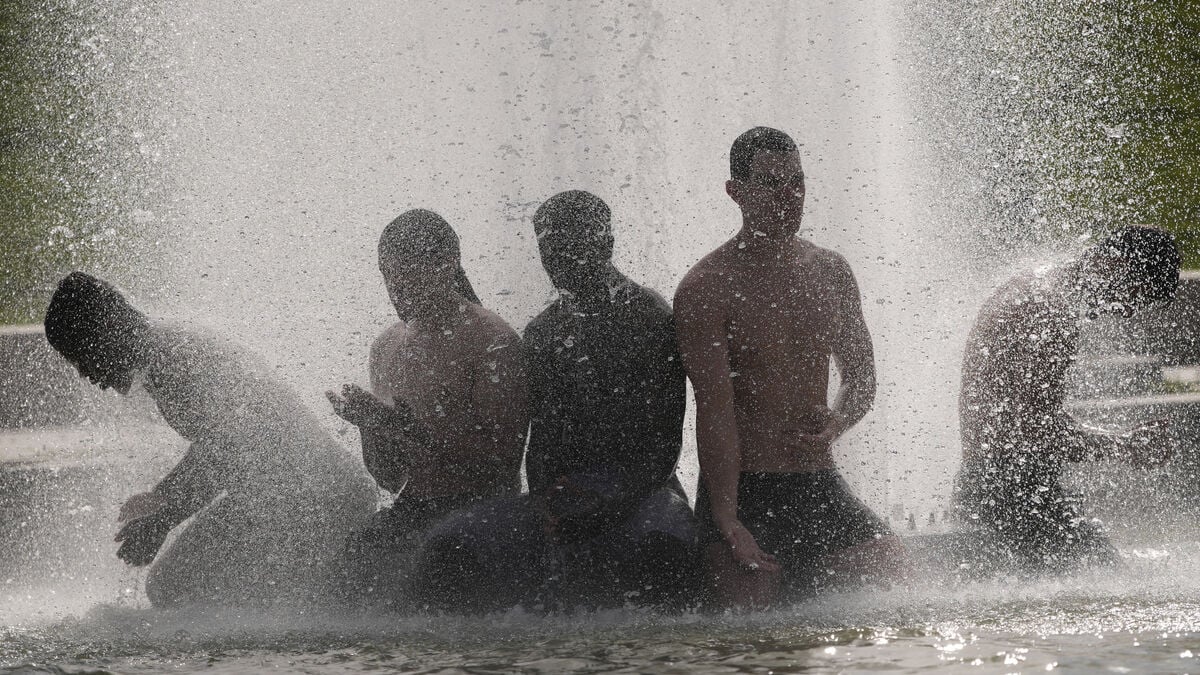
Around 50 million French people are affected by the heat wave sweeping across the continent. Heatwave and thunderstorm warnings are in place in around 60 counties in the country, according to AFP.
In Paris, which has been identified in studies as particularly affected during heat waves, the common zinc roofs have been identified as a risk factor. These become extremely hot and the spaces beneath them become like ovens. It is not uncommon for temperatures to reach 50 degrees on the roofs when the temperature outside is around 30.
They are part of the Parisian cityscape, but it is terrible to live high up in houses with these roofs, says Eytan Levy, architect and co-founder of the company Roofscapes.
More greenery
During his architectural training, he and his classmates began sketching out an idea that could both contribute to more greenery and make the apartments cooler. The solution was to create wooden decks with lush plantings on top of the zinc roofs.
The plants are now on a number of rooftops in Paris and the difference is noticeable. On Thursday, when Eytan Levy looked at one of the rooftop plants, the temperature was 48 degrees in the attic under a regular zinc roof. On the part with plants, it was 34 degrees.
People have temperatures over 40 degrees in the apartments at the top under the roofs, he says.
To help each other with tips and raise awareness about the heat, concerned Parisians have started Collectif Dernier Étage – The Top Floor Collective. Via Whatsapp and other forums, they are trying to create debate about the common enemy: the heat.
Clear reactions
To help residents cope with the heat, the city of Paris, led by Mayor Emmanuel Grégoire, has decided to allow swimming in the Canal Saint-Martin earlier than usual and to keep public parks open 24 hours a day.
At Roofscapes, you can see clear reactions to the heat. In recent days, the company has had over 500 percent more inquiries than normal. Eytan Levy describes it as people waking up when the heat is here. But adaptation requires planning and permission from the city to build over the classic zinc roofs. There is a strong building conservation protection that does not take climate adaptations into account.
Right now we have two projects underway, but those who work can only do it between 5 and 10 in the morning, then it gets so hot that they burn their fingers, says Eytan Levy.