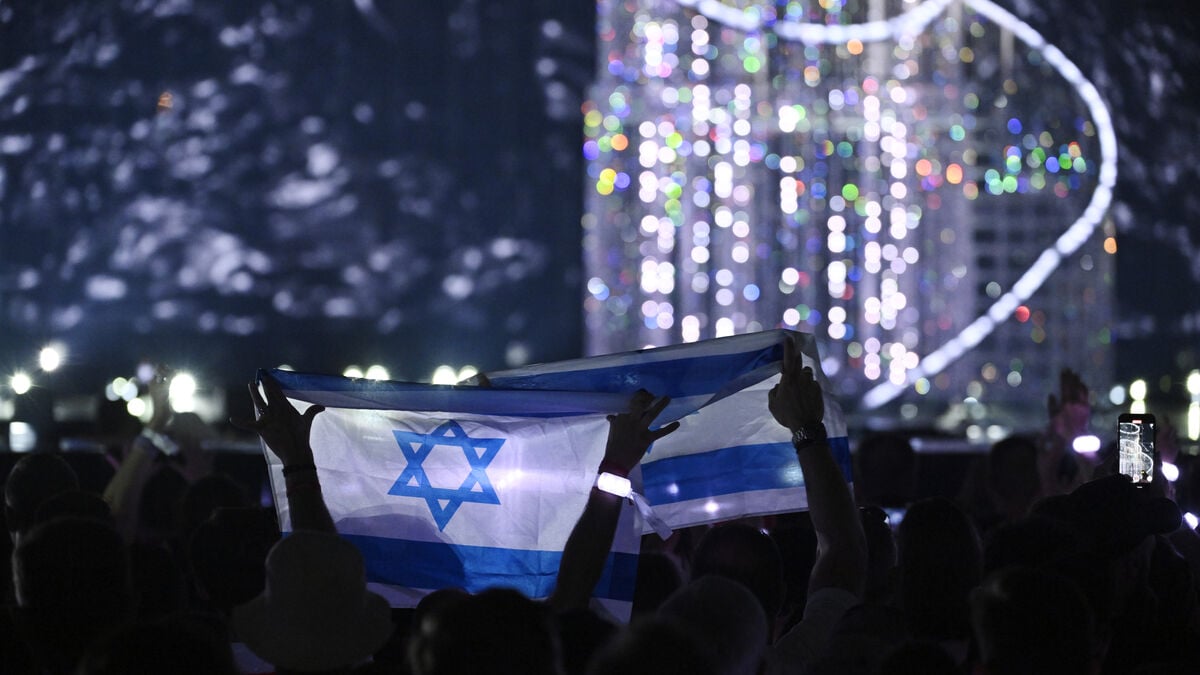
The decision: On December 4-5, the broadcasters that make up the European Broadcasting Union (EBU) will meet in Geneva. It could be decided then whether Israel will be allowed to participate in the Eurovision Song Contest in Vienna in May.
Background: Since the Hamas terrorist attack on Israel on October 7, 2023 and the outbreak of war in Gaza, Eurovision has been rocked by anti-Israeli protests, both in 2024 in Malmö and 2025 in Basel. Several countries also disapprove of the fact that the competition that is supposed to unite Europe has become so politicized and associated with the war in Gaza.
Boycott threat
Against Israel: Television companies from Ireland, the Netherlands, Slovenia and Spain want to stop Israel's participation and have more or less threatened a boycott.
For Israel: Germany and host country Austria have expressed their support for Israel's participation.
Sweden, then? SVT has not wanted to answer the question of whether they want Israel to participate, but regrets that Eurovision has become so politically charged. "We do not take a political position," said CEO Anne Lagercrantz in September. Even the British BBC, whose opinion carries weight, is waiting.
Journalists killed: In addition to the war in Gaza itself, several international television companies, including the Dutch Avrotros, point out that Israel has stopped media outlets from reporting from Gaza, and that at least 249 journalists have been killed during the war, according to the organization Committee to Protect Journalists. This outrages the media companies within the EBU.
Aggressive campaign
The manipulation: Several countries' television companies, including Denmark's DR, are criticizing Israel's aggressive campaign to influence the voting results ahead of Eurovision. Even Prime Minister Benjamin Netanyahu appealed for votes on social media, which was not viewed kindly. Israel received low jury votes in several countries, but won the overall viewer vote and finished second this year.
The compromise proposal: Ahead of the meeting in Geneva, the EBU has drawn up stricter rules for campaigning, fewer viewer votes and a new jury system to counter viewer influence. The EBU hopes this will appease Israel opponents so that they do not boycott the competition.
Liked by SVT: "We are positive about the measures to strengthen the competition's trust and to keep it as apolitical as possible," says SVT's division manager Michael Österlund to TT about the proposal.
What does Israel say? “There is no reason why Israel should not continue to play a meaningful role in this major cultural event that must remain a celebration of music and not be politicized,” public broadcaster KAN said in a statement in September.