When the weather warms up, calls about viper bites to the Poison Information Center increase. So far this year, they have received just over 100 calls. The advice is always the same - seek medical attention immediately, even if you feel okay.
If you are close to a hospital with an emergency department, you can go there; otherwise call 112, says Peter Hultén, pharmacist at the Swedish Poison Information Centre.
If you encounter a snake in the wild, the best thing to do is to stand still and wait until the snake has wriggled away, or to calmly walk away. Snakes are not particularly curious about us humans.
As long as you don't step on the snake or grab it, there is no risk of being bitten, says Johan Nylander, herpetologist at the Swedish Museum of Natural History.
Stomping on the ground can definitely scare the snake away, but there is another trick - to resemble one of the snake's natural enemies.
"If you stand and flap your arms, it's even better. It's reminiscent of flapping birds. If something flaps, the snake takes cover," says Johan Nylander.
400 a year
How serious a viper bite is depends on how much venom the viper has injected. In some cases it is a so-called dry bite, in which case no venom has been injected at all. But since it is not possible to know, you have to seek medical attention. The viper's venom is very potent. Some people only get minor swelling while others become very sick.
Early symptoms can include dizziness, nausea, abdominal pain and vomiting. But there can also be a sharp drop in blood pressure, difficulty breathing and decreased consciousness, says Peter Hultén.
The swelling at the bite site can spread and affect the entire bitten part of the body. Anyone who experiences severe symptoms needs an antidote, a viper serum.
Serum is available at almost all emergency hospitals and is often very effective. If you just go to hospital, there is usually no danger, says Peter Hultén.
Even though the situation may feel stressful, the person who is bitten should remain calm and still. This will reduce the risk of the venom spreading quickly in the body.
Anyone who is bitten should ideally have company and not drive alone, because their condition can quickly worsen.
Thanks to the antidote, deaths are rare. The last reported death was in 2023, when the person bitten by a viper had not sought hospital treatment. However, around 400 people a year are treated in hospital after being bitten.
A changing climate
Vipers are found throughout most of Sweden. Their status is viable, meaning a stable population that is not considered to be endangered. However, there are some concerns.
Because even though vipers love warmth, a warmer climate is not something they benefit from. Less snowy and warmer winters offer fewer opportunities for hibernation. The snow cover acts as insulation and without it, the snakes are more sensitive to cold snaps. They are very inactive during the winter and probably have difficulty moving to warmer depths if necessary.
Small rodents, one of the viper's favorite foods, also find it harder to overwinter safely in warmer climates. In winter, they hibernate in the cavity between the snow cover and the ground.
"We have seen that environmental change is more severe the further north you go. These northern vipers may be living dangerously, we don't know," says Johan Nylander.
Studies show that their numbers are declining in some parts of Europe, mainly due to human impact on their natural habitat. There is no corresponding study for the Swedish population, according to Johan Nylander.
Myth about the young
During May, many vipers lie still in the sun and warm themselves, preferably on a rock or hiding in tall grass or in other places where they are not easily preyed upon by other animals. In June, July and August, they hunt their prey and are more active. When autumn comes, they retreat and hibernate.
The males are the first to come to life after winter. When the females arrive, about three weeks later, it is time for mating. In August and September, the viper's young, the asps, are born. That they are more dangerous is a myth. Their venomous fangs are shorter and they have a weaker bite. They also inject less venom.
They are also not more fearless.
Quite the opposite. They are always keen to get away, says Johan Nylander.
Take the opportunity to watch
Whether it will be a “viper year” or not is difficult to answer. Studies indicate that less food for vipers, for example due to a year with fewer rodents, increases the risk that they will not survive the winter.
Johan Nylander is perhaps, as he puts it, "biased," but hopes that more people will get the chance to see one.
"I've met people who have never seen a viper, even if they've been in the wild. So I would say it's very rare that you have a chance to see one. So you should take the opportunity to look," he says.
Facts: Viper
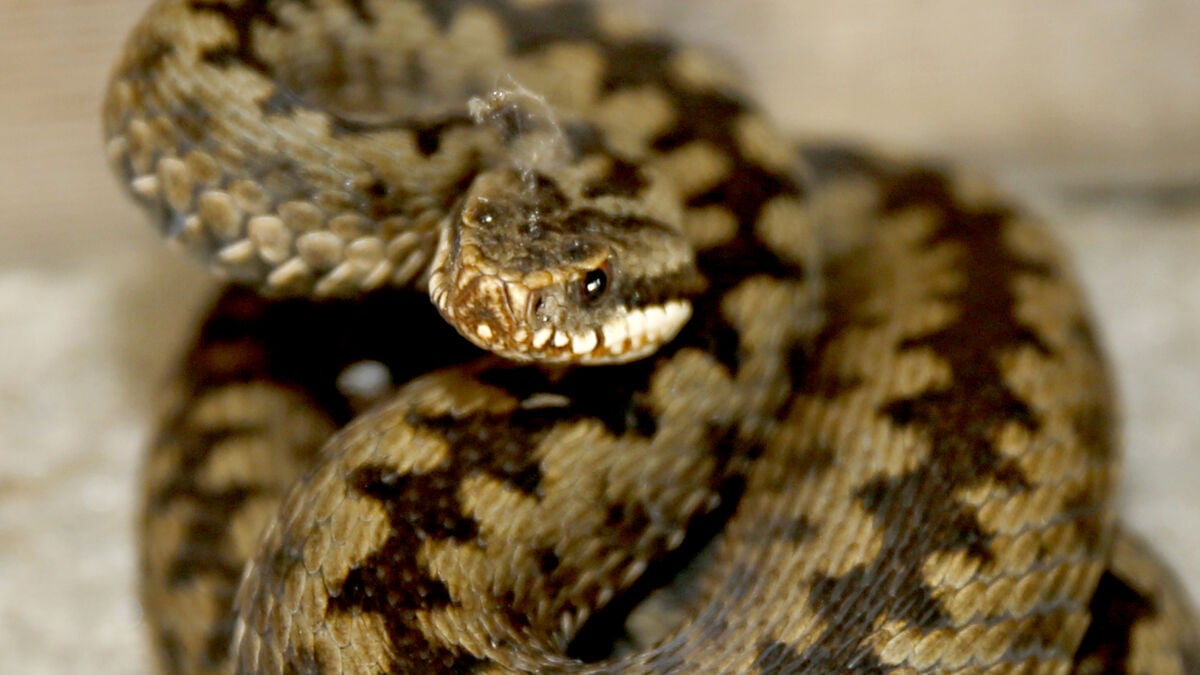
The viper, Scandinavia's only wild venomous snake, is found throughout Sweden, even north of the Arctic Circle, but not in the far north and on the highest mountain peaks.
It is characterized by its zigzag pattern along its back, which is black in males and dark brown in females. The basic color is gray and brown or reddish brown, but completely black individuals occur. The species usually grows up to 65 centimeters in length, but the female can be longer.
The viper thrives in areas such as bogs, heather heaths, forest edges, roadsides, meadows and field edges, but avoids dense forests as it is dependent on places with high levels of sunlight.
In mild and warm springs, the viper can appear as early as February, otherwise usually in March-April.
If you are bitten by a viper, you should always seek medical attention and a bitten pet should always be checked by a veterinarian.
Sources: SLU Species Data Bank and Animal Care Guide
When someone has recently been bitten by a snake:
Call 112.
Calm the bitten person, who may be scared or anxious.
Rest and keep the bitten body part still.
Remove rings, shoes, bracelets or similar items as the area may swell.
Leave the bite site alone. Do not try to suck out the venom, cool, heat, or tighten a belt or similar around the snakebite. This can make the condition worse.
Source: Swedish Medical Products Agency, 1177