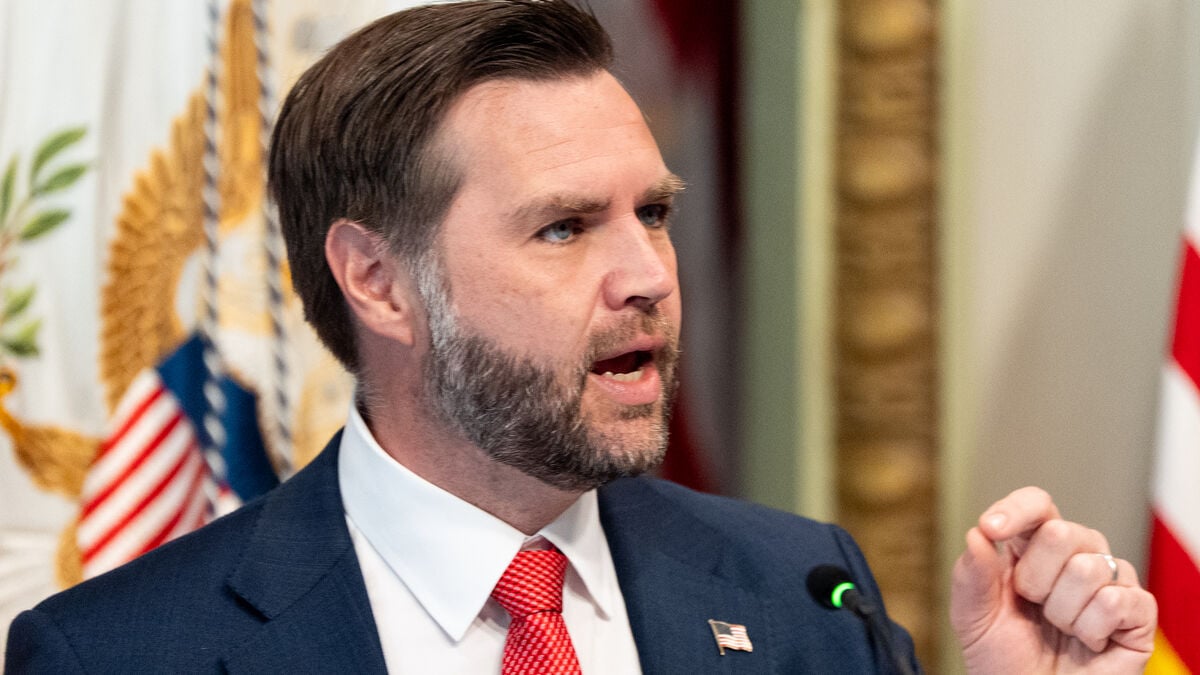
Sources told the news site Axios earlier this week that a deal covering the Strait of Hormuz is close. But now US Vice President JD Vance tells Fox News that continued negotiations to end the war will “get messy” and take “some time.”
"The Iranians are an extraordinarily difficult people, with a divided system," Vance said, according to CNN .
The Ayatollah's absence a problem
He appears to be referring to the decision-making process at the top of the regime. The statement comes after the Iranian regime made an unusual admission on Wednesday, when President Masoud Pezeshkian said in an interview that the absence of Supreme Leader Mojtaba Khamenei was a problem. He also said that it was “very difficult at the moment to communicate with” the ayatollah.
Khamenei has not been seen in public since the first day of the war, and is believed to be in hiding after being injured in a US-Israeli airstrike.
US President Donald Trump and his ministers have said on several occasions in recent days that talks are being held with Iran and that the parties are close to a deal.
From the Iranian side, it has sounded different. They have rather denied direct talks with the US and also an agreement. Instead, Iran has said that negotiations are taking place with the neighboring country on the other side of the strait, Oman.
Visiting Saudi Arabia
At the same time, the important mediator country Pakistan announces that the country's Prime Minister Shehbaz Sharif and Army Chief Asim Munir will visit Saudi Arabia for three days starting Thursday.
Although the visit comes against a backdrop of heightened tensions in the region, it will have significance beyond the immediate crisis and short-term considerations, said Foreign Ministry spokesman Tahir Andrabi.
Saudi Arabia also has an important role in the conflict, since Iran has attacked there several times in response to US bombings.
Saudi oil companies are now trying to export via the Red Sea, rather than the Persian Gulf and the Strait of Hormuz. But in the Red Sea, merchant ships are being attacked by the Yemeni Houthi movement, which is allied with Iran.
Iran has controlled the Strait of Hormuz since the US and Israel launched the war against the country on February 28. All ships passing through the routes that Iran considers to be unauthorized have been threatened or attacked by the country.