The Kurdish self-government in northeastern Syria made a mistake, several analysts believe: it believed that the United States would come to its defense.
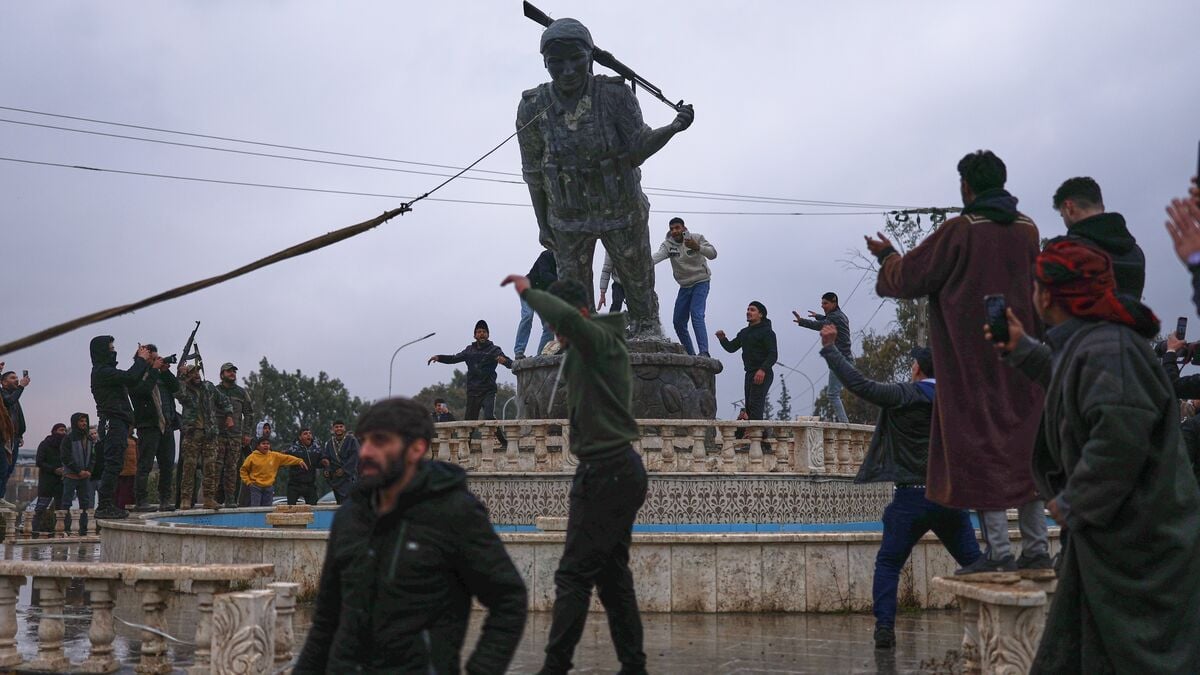
This week, forces loyal to the government in Damascus went on the offensive. The Kurdish SDF forces were pushed back from the areas around Aleppo and from the cities of Raqqa and Dayr az-Zawr to the east.
The SDF, which had held a large area northeast of the Euphrates River for a decade, was surrounded in a small corner of Syria and eventually agreed to a US-brokered ceasefire in which the forces and the self-ruled government would submit to Damascus.
Not surprised
US Syria envoy Tom Barrack said on Tuesday that the SDF has played out its role in the fight against IS. The Kurdish autonomous administration expressed great surprise, but academics who follow Syria are not surprised.
"It has been very clear for several months that the United States sees Damascus as a potential strategic partner," Noah Bonsey, a Syria analyst at the International Crisis Group, told the AP.
Bashar al-Assad's dictatorial regime was overthrown just over a year ago in an Islamist-led rebel offensive. The new regime is led by Ahmed al-Sharaa, a militia leader with a jihadist background, who is president.
Where Assad was allied with Russia and protected by the traditional West, al-Sharaa's regime is ready to forge new connections. It has joined the US-led coalition against ISIS.
Thousands in IS camps
During many years of intense fighting against IS, the SDF was the coalition's ground force. Since then, they have held thousands of IS-linked prisoners in camps, and in doing so have had a diplomatic trump card in a situation where countries such as Sweden have not wanted to take them home.
Now the SDF has left the large IS camp al-Hol and the US is moving prisoners to Iraq.
Over the past year, Syria's new government and the Kurds have negotiated about political power and armed force, but have been unable to reach an agreement.
Government-linked forces - many of them former Islamist rebels - have attacked other minority groups in the country, casting doubt on the Islamist regime's intentions.
"Get paid"
The US's reprioritization forced beleaguered Kurdish leaders to make major concessions.
Donald Trump's comment was that he "likes the Kurds":
"But they were paid incredible amounts of money, given oil and other things, so they did it more for themselves than for us."
A Kurdish autonomous region was established in northeastern Syria in 2012-13, at the beginning of the country's disastrous civil war.
In the fall of 2015, the Syrian Democratic Forces (SDF) were formed, which received support from a US-led coalition to fight the terrorist movement ISIS when it took over large parts of Syria.
The SDF became the army of the Kurdish autonomous government. The dominant group in the SDF is the Kurdish militia YPG (People's Defense Units). The YPG is in turn the armed wing of the PYD (Democratic Union Party), which is the largest political party among Kurds in Syria.
The SDF has also been at odds with Turkey and Turkish-backed Syrian rebel groups. Turkey equates the YPG and PYD with the PKK (Kurdistan Workers' Party), which waged an armed struggle against Turkey for decades and is designated a terrorist organization by the US and EU. Last year, Turkey announced that the PKK would be disbanded.
In December 2024, Syria's long-time dictator Bashar al-Assad was overthrown by a rebel alliance led by the Sunni militia Hayat Tahrir al-Sham (HTS).
HTS and its leader Ahmed al-Sharaa had previously built an Islamist state apparatus on rebel-controlled land in northwestern Syria.
HTS was previously called the Nusra Front and was originally an offshoot of the jihadist al-Qaeda.
Ahmed al-Sharaa has been appointed as the new president in what is said to be a transitional period. He has promised freedoms for all religious and ethnic groups, but government-linked forces have attacked several minority groups and hundreds have been killed in reported massacres.
The US removed a terrorist designation from HTS this summer. Several European countries have resumed relations with Syria. Many sanctions have been lifted and al-Sharaa has visited the US and France, among others.