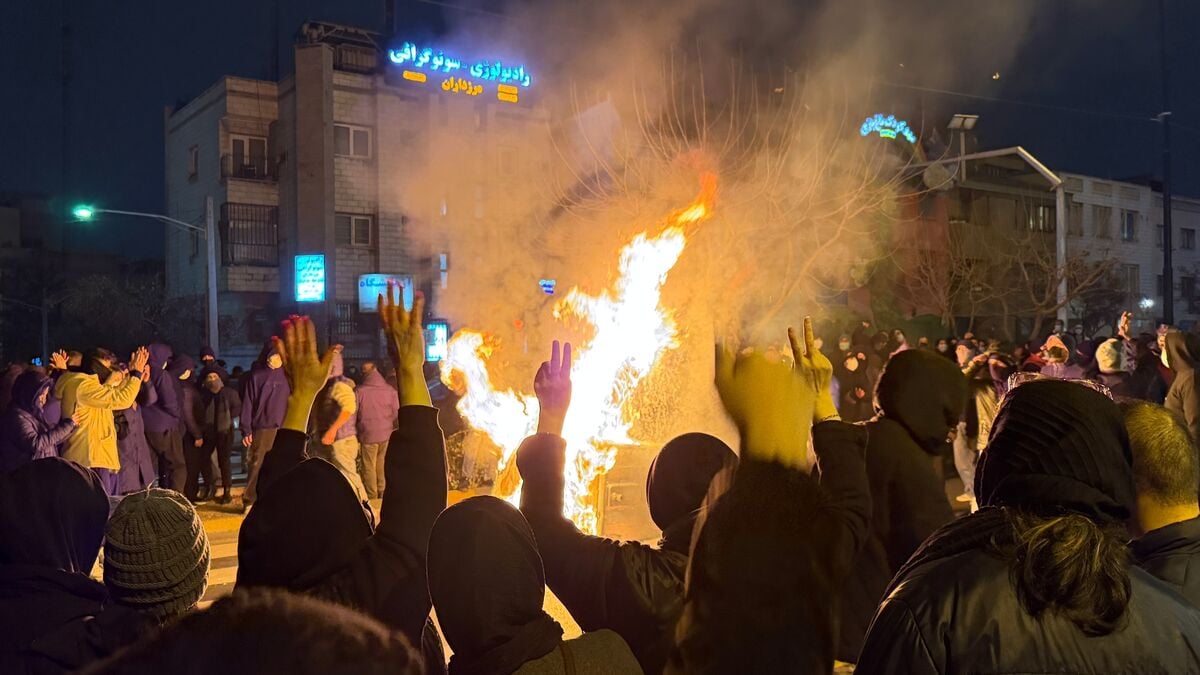
Thursday, January 8: Iran's protests have raged for twelve days. The air is electric, filled with hope for change.
In Tehran, 33-year-old Hasan and his friends gather. For CNN, he describes a feeling that revolution is at the door - that people can actually make a difference this time, but also a growing anger.
"People are so angry. They just want to be on the streets," he says.
Then everything goes black. At 8 p.m., the internet and telephony are throttled, cutting off 92 million Iranians from the outside world.
Plainclothes shooter
Just minutes later, gunshots begin to echo, an anonymous doctor in Tehran writes in The Guardian. The hospital is filling up faster than they can handle. The patients pouring in have been shot with live ammunition, many at close range. Heavy machine gun fire can be heard outside the operating room.
“As the night progressed, it became impossible to even think about counting the dead,” the doctor writes.
In northwest Tehran, Kiarash is standing in the middle of a sea of people. The protesters are shouting “Death to Khamenei” when he hears a popping sound - “tap, tap, tap” - and people start to collapse. The shooter is in civilian clothes, Kiarash tells Sky News.
Nasim Pouraghayee, a mother of two, was also protesting in northwest Tehran when she suddenly fell to the ground and began vomiting blood. She was shot in the neck and died shortly after, a cousin told The New York Times.
In northern Iran, healthcare workers were walking around in boots on the evening of January 8, a doctor says in a voice message that the French Le Monde has received - "there is so much blood on the floors."
Pay for remains
The crackdowns are systematic, testimonies from cities across Iran show: Isfahan, Mashhad, Kermanshah, Karaj, Shiraz.
In southern Iran, Omid sees security forces opening fire with automatic rifles directly at protesters. People are falling where they stand, he tells the BBC. In Rasht, near the Caspian Sea, security forces fire Kalashnikovs into a fire-ravaged bazaar on January 8, protester Saman tells The Washington Post.
Under a cover-up, what is described as the worst massacre since the years surrounding the 1979 Islamic Revolution is being committed. On January 8 and 9, so many are killed that there is no capacity to handle the bodies. Body bags are running out and ambulances are being replaced by trucks, sources within Iran's Health Ministry tell Time.
On January 10 and in the days ahead, relatives gathered at morgues and burial sites. Videos show body bags lined up - in some cases piled high. Some are forced to pay an “ammunition fee” to take their loved ones’ remains home, the UN Human Rights Council said.
The wave of protests began in late December 2025, when shopkeepers took to the streets to express their dissatisfaction with skyrocketing costs and a lowered standard of living. The strike is rooted in a miserable economy with skyrocketing inflation and a currency, the rial, that has collapsed.
The protests are rapidly growing in scale and soon encompass the entire country. Like the wave of protests following the death of Mahsa Zhina Amini at the hands of the so-called morality police in 2022, the anger is directed at the regime at large.
On the evening of January 8, the regime blocks access to the internet and telephony throughout the country. Thousands of protesters and other civilians are then killed and thousands more injured. The worst crackdowns occur on January 8–9, according to testimonies from inside Iran and human rights organizations in exile. Members of the security forces are also killed and injured.
The protests are being fueled by US President Donald Trump, who has repeatedly urged protesters to continue taking to the streets and promised to come to their rescue if the regime responds with violence. However, the US has not intervened.
On January 27, the internet is still largely down, according to internet monitor Netblocks.
Due to the lockdown, there are no definitive figures on how many people have died. Iran's Supreme Leader, Ayatollah Ali Khamenei, has admitted that it is in the "thousands." Sources within Iran's Health Ministry, as well as doctors in the country, have told various media outlets that the death toll could exceed 30,000.
Tens of thousands of demonstrators arrested during the protests risk the death penalty.