The war began early Saturday morning, February 28. A few hours earlier, US President Donald Trump had ordered the US and "partner forces" - read: Israel - to attack Iran.
Israel and the US described the attacks as "preventive", to eliminate the threat posed by, among other things, Iran's nuclear program. Iran and Israel closed their respective airspaces.
Iran quickly counterattacked. It first targeted northern Israel with drones, then struck primarily Bahrain, Saudi Arabia, the United Arab Emirates, Qatar, Jordan and Kuwait - countries that all host American bases.
Late on the first evening of the war, Trump announced that Iran's supreme leader, Ayatollah Ali Khamenei, had been killed along with several other members of the state leadership.
On Monday night, the Iran-allied Islamist movement Hezbollah in Lebanon attacked Israel with rockets and drones. The response was Israeli bombing of Hezbollah targets in Lebanon.
The war closed airspace over the countries involved, stranding tens of thousands of travelers in cities including Dubai, one of the world's largest aviation hubs.
Iran threatened to close the vital Strait of Hormuz and to "set fire" to any ships that tried to pass through.
On Tuesday, Israel advanced with ground forces in several locations in southern Lebanon.
The US military command Centcom stated on Wednesday that the US had hit a total of nearly 2,000 targets in Iran.
On the same day, an American submarine fired a torpedo that sank an Iranian warship off Sri Lanka. At least 90 Iranian crew members were killed.
On Thursday, the Israeli army chief stated that 80 percent of Iran's air defense system had been destroyed.
On Saturday, Iranian President Masoud Pezeshkian apologized for the attacks on neighboring countries and promised that they would stop - but air raid sirens and explosions continued to be heard in a number of countries in the region.
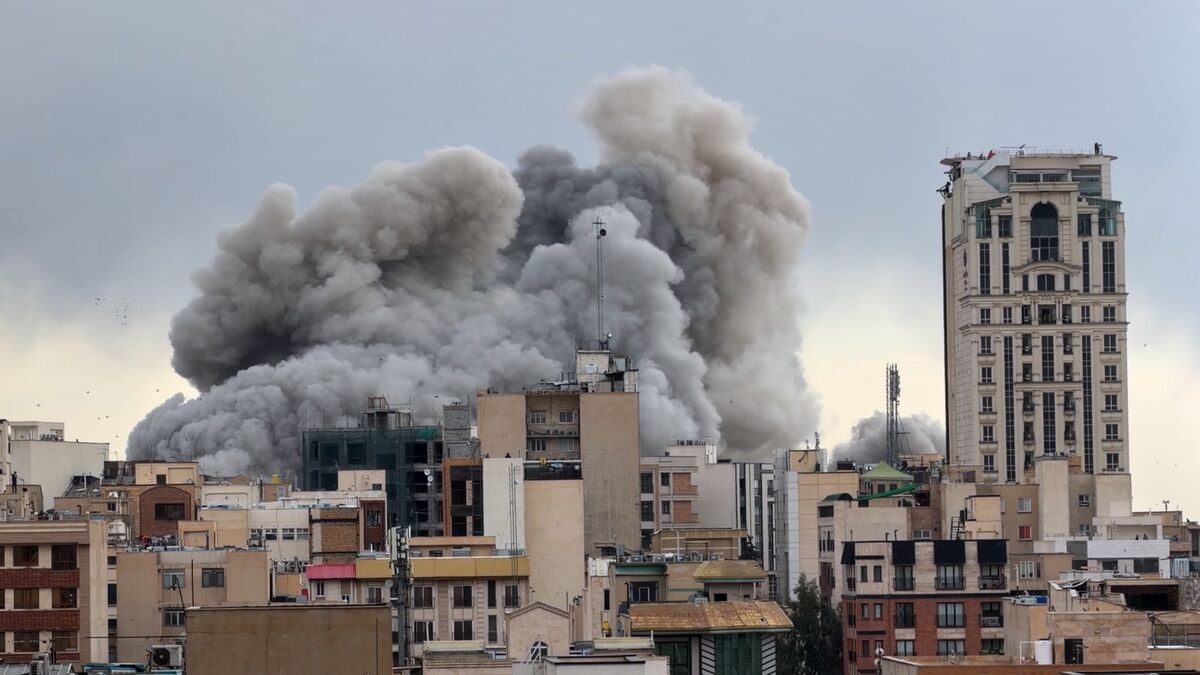
On Sunday night, the US and Israel attacked several oil depots in the Tehran area. Four people were killed and fuel distribution was temporarily halted.
Large parts of the airspace remained essentially closed, but some of the region's major airlines, such as Emirates and Etihad, were still managing to open corridors with limited flights to Europe, among other destinations.