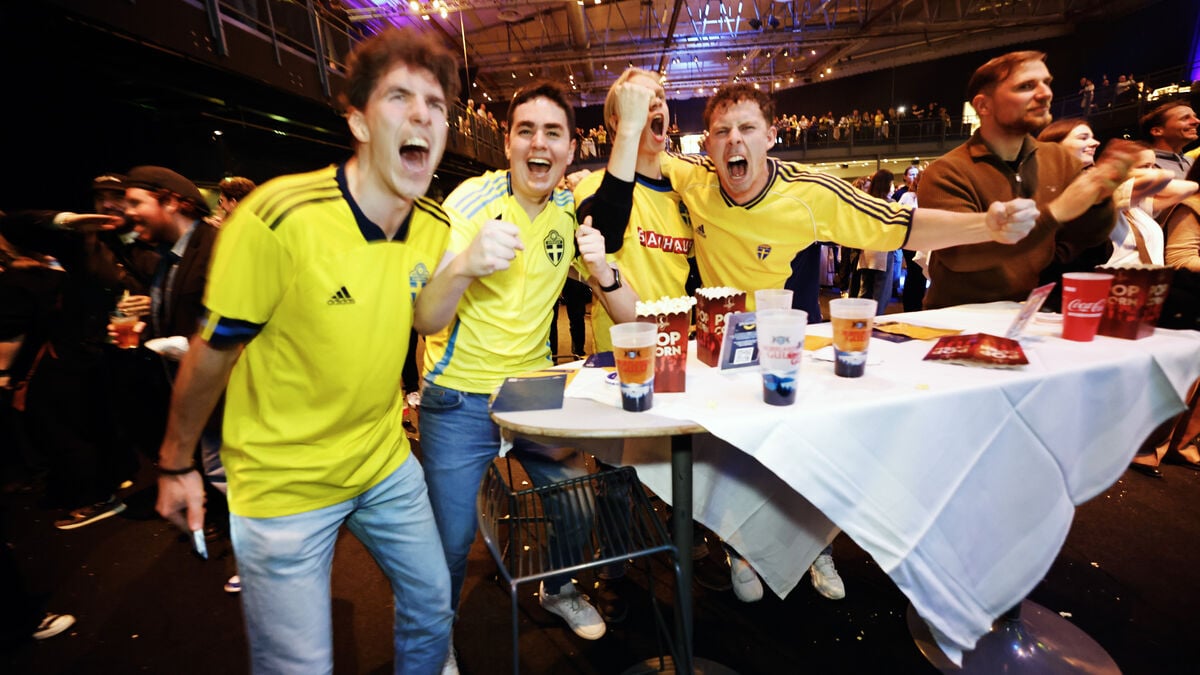
You can become obsessed because you become part of the history, the story, and then the history and the story become yours, says Katarzyna Herd, associate professor of ethnology at Lund University.
The World Cup can act as a vent for pent-up emotions, Herd believes.
It is allowed to show specific emotions, or behave in a specific way, without being judged for it - quite the opposite - during a World Cup.
During a few intense weeks, it suddenly becomes common to hug strangers in front of big screens, move televisions out into the garden, and sing the national anthem at the top of your lungs.
“Psychological help”
Championships create a temporary and harmless community in Sweden where the usual, rigid social rules are put out of play, says Herd, and she continues:
If society organizes itself in such a way that being a little quiet, a little cautious and a little withdrawn is valued, then all emotional expressions must find a way out of the body. And football has become that door.
Kutte Jönsson, professor of sports science and philosophy at Malmö University, describes World Cup fever as an escape from reality.
"You don't go around screaming like a primal in everyday life. It's a kind of psychological help to get things out of your head. Things that are said in the stands or on the TV couch should never be said outside," he says.
“A modern campfire”
That Sweden is affected by collective football fever at major championships is no coincidence, but an extension of our nature as herd animals.
The World Cup will be like a gigantic and modern campfire, says Magnus Lindwall, professor of psychology at the University of Gothenburg, and he continues:
We are tribal creatures. We evolved to hold on tightly to what we have close to us - our tribe. That gives us something to sit down and socialize around instead of everything else that we are at odds about.
It's not certain that everyone enjoys the football ecstasy.
There are certainly people who find it difficult. You may feel, "Okay, fine, we're all on the same team, that's good," but this almost becomes a bit sect-like and feels difficult — a negative feeling of having to get involved, says Lindwall.
"What the hell..."
Calling ecstasy World Cup psychosis is not incorrect, according to Lindwall.
If a bunch of aliens had come and circled the Earth and watched for a few weeks, they would probably have thought: "What the hell is going on now?"
Sweden will meet Tunisia in the World Cup opener on June 15.