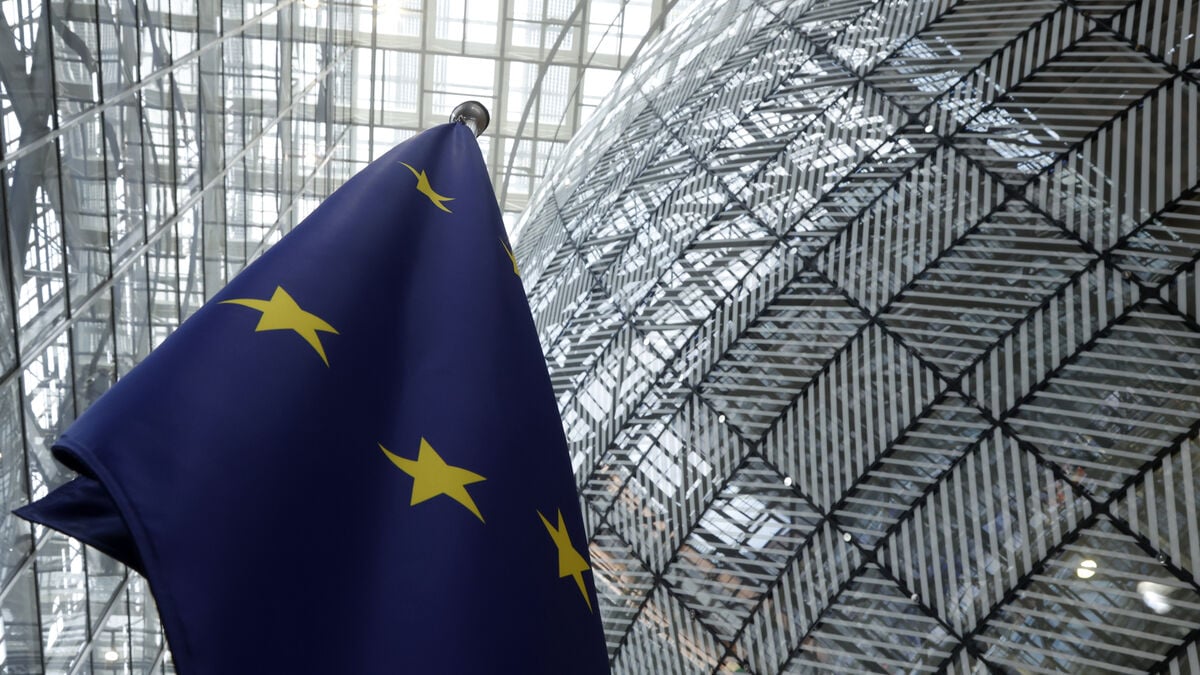
The much-talked-about meeting took place in Brussels on Tuesday afternoon after the five-member Afghan delegation received visas, but only for one day.
After long silence about where and when the meeting would be held, statements came from Taliban delegation leader Abdul Qahar Balkhi, including via the AP news agency and the news site Euractiv.
“This was a historic visit as it was the first time a delegation from the Islamic Emirate visited the EU and held talks with member states in Brussels,” Balkhi, who serves as a spokesman for Afghanistan’s Foreign Ministry, said in a statement.
"The meeting was constructive and there is hope that it can lead to positive developments," an anonymous Afghan source told AFP.
Follow-up
The European Commission describes the meeting in more bureaucratic terms.
The Commission's press service said in a text message to TT: "15 member states participated, allowing a follow-up to technical talks that took place in January 2026 in Kabul, in particular regarding the identification of returnees, the issuance of travel documents and how they should return."
The meeting took place at the civil service level and was pushed forward by EU countries that want to be able to deport convicted criminals to Afghanistan in particular.
"The focus was on people who have committed serious crimes and pose a security threat," the commission said.
Sweden as host
Sweden has co-hosted the meeting, on behalf of a total of 20 EU countries.
However, no information has been given about who participated on behalf of Sweden and at what level.
"I will not do it. It is not at a political level. But Sweden will be in the meeting. It will happen in the future. It is a technical discussion and we will see where it takes us," Migration Minister Johan Forssell (M) told TT in connection with a ministerial meeting in Luxembourg in early June.
Harsh criticism
The European Commission and EU countries have emphasized time and again that the meeting does not constitute any "legitimization" of the Taliban regime.
Nevertheless, criticism has been sharp from both human rights organizations and political opposition in several countries.
“EU countries are undermining their credibility by condemning Taliban abuses with one hand and cooperating with the Taliban and forcing Afghans back with the other,” said Fereshta Abbasi of Human Rights Watch in a press release.
The ideology of the Taliban movement combines an extreme and fundamentalist interpretation of Islam with the ancient cultural code of Pashtunwali, named after the ethnic group of Pashtuns who form the backbone of the Taliban.
The movement was formally born in 1994, but its foundations were laid earlier in the Pakistani refugee camps where many Afghans fled the Soviet invasion in 1979.
The movement captured Afghanistan's capital, Kabul, in 1996. It controlled large parts of the country until the US-led invasion in 2001, only to regain power in a lightning offensive on August 15, 2021, after US forces withdrew.
The Taliban's rule is described as conservative, brutal and arbitrary. Just as during their first time in power, the Taliban now rule with their interpretation of Islamic Sharia law, which in practice means extreme oppression of women.
Women have been forced out of universities and from most jobs, music has been banned, and public executions and floggings have been reintroduced.