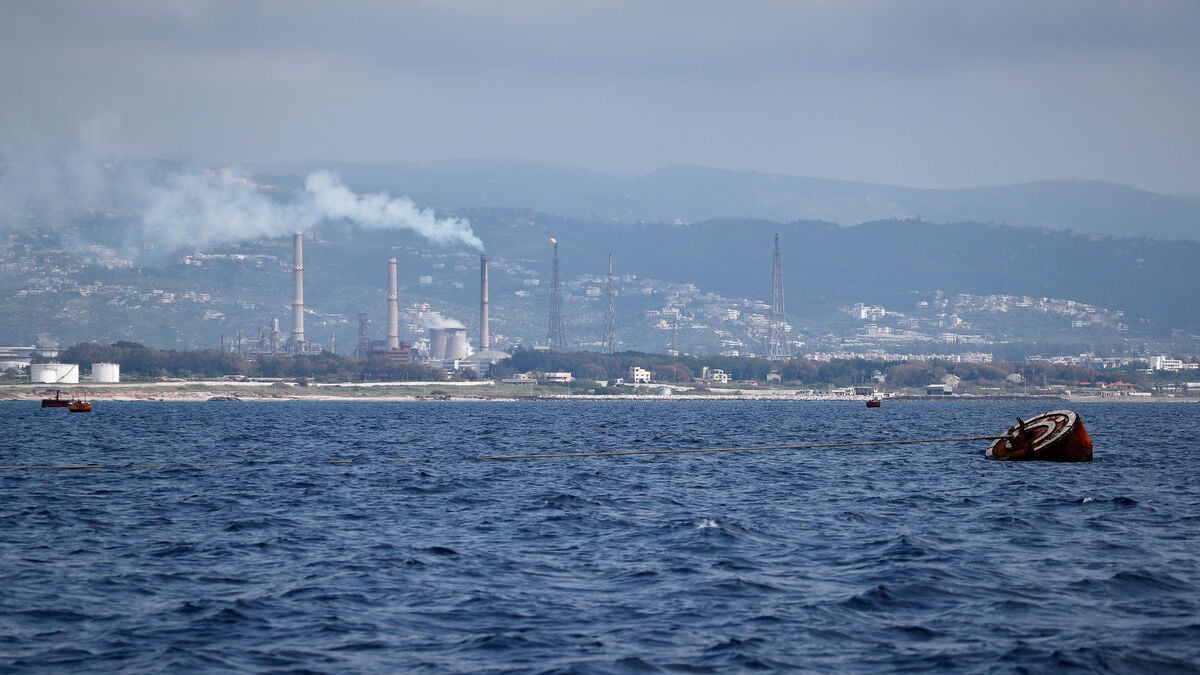
Since Syria's interim president Ahmad al-Sharaa took power in December 2024, the country's relationship with the United States has strengthened. Trump has removed Syria from the terror list and sanctions have been eased, opening up new business opportunities. At the same time, the oil market is being shaken by the war between the United States and Iran.
In mid-July, a letter of intent was signed in Washington DC to rebuild an oil pipeline between Kirkuk in northern Iraq and Baniyas in western Syria, which was destroyed in 2003 during the Iraq War. The aim is to create a direct export route for Iraqi oil to the Mediterranean.
If it makes sense economically, it is a sound idea in principle, since it benefits both countries, says Aron Lund, an expert on Syria and Middle East analyst at the Swedish National Defence Research Institute (FOI).
Alternative route
The unrest surrounding the Strait of Hormuz has increased interest in alternative transport routes among oil-producing countries, including Iraq and the United States, Lund points out.
The fact that it is happening right now is about building an infrastructure to be able to deliver oil from the countries around the Persian Gulf to Europe and other countries, which Iran cannot stop, he says.
The old Kirkuk-Baniyas oil pipeline was approximately 900 kilometres long and was put into operation in 1952, but was closed in 1982 as a result of the conflicts between Damascus and Baghdad during the Iran-Iraq War. The pipeline remained closed until 2000, when limited oil flows resumed. During the 2003 Iraq War, it was severely damaged and has been out of service since then.
Reconstruction is expected to take two and a half years, Syrian sources told Al Jazeera. The US State Department estimates a capacity of around 2 million barrels of crude oil per day.
The total flow through the Strait of Hormuz averaged around 15 million barrels per day last year, according to the International Energy Agency (IEA).
Challenges for investors
Thina Saltvedt, oil expert and chief analyst at Nordea, describes the agreement as a “serious proposal,” but emphasizes that it requires enormous investments. The question is also who will take the financial risk for the project in an insecure country like Syria.
"That's some of the information we haven't received yet," she says.
Middle East analyst Aron Lund also says that investments of this size require a long-term perspective.
If you build such an oil pipeline, you have a very long perspective to get your money back. Syria is not a country that has a long perspective right now.
Lund points to the remaining IS threat in Syria, political tensions in Iraq and the risk that the project will become unprofitable if the US and Iran reach a new agreement.
Regional energy corridor
The new Iraqi-Syrian oil pipeline would not replace the Strait of Hormuz, but it could reduce dependence on the strait in the event of war or conflict, according to Aron Lund.
For Syria, the initiative is about establishing itself as a regional energy corridor and strengthening the country's energy security. Oil-producing Iraq wants to bypass disruptions in the Strait of Hormuz and increase its export quota within OPEC, says Saltvedt.
For the EU, such a pipeline would mean a shorter shipping route for Iraqi oil via the Mediterranean. But it is uncertain what type of oil and what volumes might reach Europe, she points out.
Iraq accounted for 5.8 percent of the total volume of oil imported by EU member states last year, according to the European Council.
Iraq, OPEC's second-largest oil producer, has been hit hard by the shutdown in the Strait of Hormuz, with its oil production falling to 1.9 million barrels per day in June, down from around 4.2 million barrels per day in February.
In mid-June, Iraq announced plans to increase its oil exports via Syria to around 50,000 barrels per day. By the end of the same month, around 1,000 tanker trucks carrying Iraqi oil had crossed into Syria.
On July 17, Iraq and Syria signed two letters of intent to rebuild a historic oil pipeline between the countries. The pipeline was built in 1952 but has been shut down since the US invasion of Iraq in 2003.
The new pipeline is estimated to have a capacity of about 2 million barrels of crude oil per day, according to the US State Department.
Sources: Reuters, CNBC, Al Jazeera.