A rate increase in November was more or less already set in stone. This outcome does not change that, she says.
She expects at least three interest rate increases, taking the key interest rate from its current level of 1.75 percent to 2.50 percent, to counter the inflation now flowing into the Swedish economy.
Interest rate hikes make mortgages more expensive
If the interest rate on a two million kronor mortgage were to rise by the same amount - 0.75 percentage points - the loan’s annual interest cost would increase by 15,000 kronor (about $1,400), excluding the effects of the interest deduction.
Among fixed-income traders, market pricing points to an almost 100 percent probability of five interest rate hikes, taking the policy rate to 3.00 percent sometime in 2027-2028.
According to Spector, it would have been reasonable for the Swedish Central Bank (Sweden’s central bank) to join other central banks in raising interest rates at its September meeting.
It would have been reasonable to raise rates in September and then be better in phase. That would probably have helped the krona, which would have meant that higher energy prices would have risen less in kronor than they are now, she says.
SEB fixed-income strategist Amanda Sundström takes a more dovish view. She notes that underlying inflation - measured by excluding energy prices from the CPIF - is not rising and came in lower than expected in September.
"If you look at those figures, Swedish inflation continues to be very low, especially compared to other countries. Despite higher energy prices, price pressures in the rest of the economy continue to be very subdued," she says.
More subdued than we thought and more subdued than the Swedish Central Bank thought, she adds.
Expecting three interest rate hikes
However, SEB economists also expect the Swedish Central Bank to raise interest rates three times.
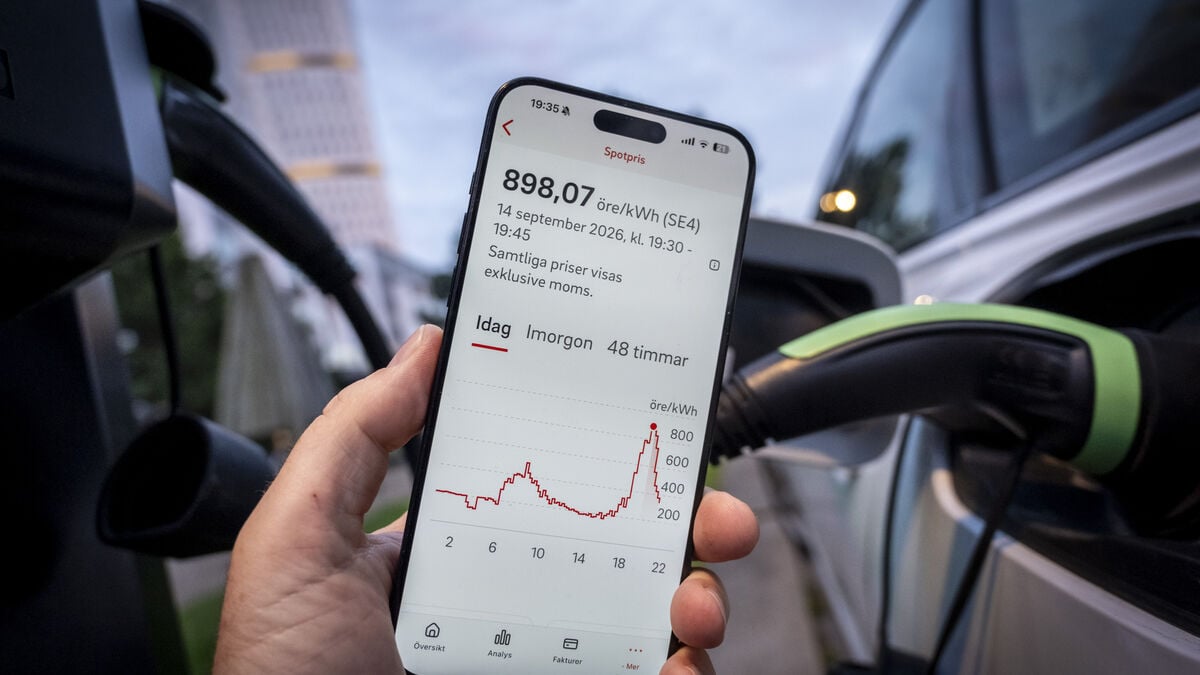
In short, preliminary inflation figures from Statistics Sweden (Sweden’s national statistics agency) show that both commodity and energy prices rose more than expected in September.
"It could be a sign that we are seeing a greater impact from the supply disruptions in the spring," says Spector, referring to the effects of the war in the Middle East and between Russia and Ukraine.
But service prices came in lower than expected. That explains why underlying inflation is stagnant, she adds.
Consumer prices rose by 0.9 percent in September compared with August, according to preliminary figures from Statistics Sweden. The Consumer Price Index (CPI) rose to 1.1 percent, from 0.3 percent in August.
CPIF inflation more than doubled to 1.5 percent in September, up from 0.7 percent in August. This was in line with the average forecast among analysts, according to Bloomberg.
The CPIF measure excludes the effects of mortgage interest rates, and it is the measure the Swedish Central Bank uses as the basis for its 2 percent inflation target.
Excluding volatile energy prices from CPIF inflation, underlying inflation is significantly lower. It was 0.5 percent in September, unchanged from August. An increase to 0.7 percent was expected.
Swedish inflation is currently being pushed down by temporary fiscal support measures, such as halving food VAT, lowering fuel taxes and halving public transport ticket prices. Statistics Sweden’s preliminary inflation report for September does not include a new calculation of their effects on inflation.
Sources: Statistics Sweden, Bloomberg