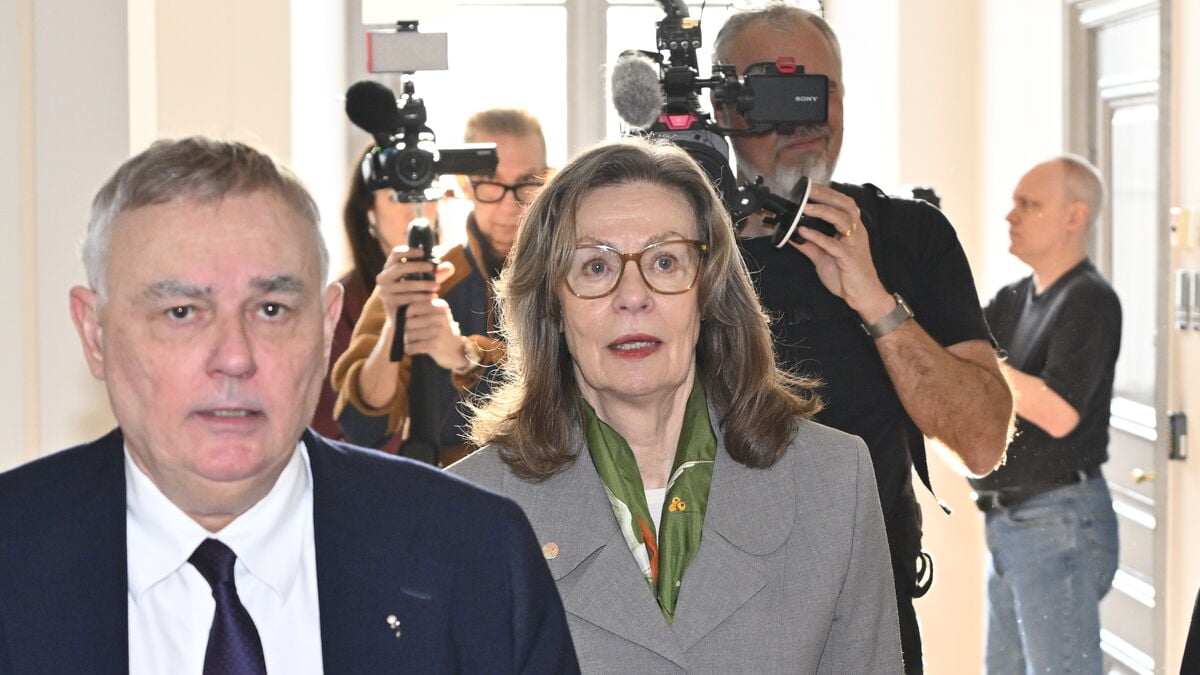
The Court of Appeal sentenced the former Swedbank CEO to one year and three months in prison for aggravated fraud.
The court found that she had provided misleading information about money-laundering links to Danske Bank's operations in Estonia in interviews with SvD and TT in connection with an interim report in October 2018.
But the Supreme Court has now acquitted Bonnesen.
"The statements in all of these interviews have constituted answers to questions of a scrutinizing journalistic nature in customary interview situations. Birgitte Bonnesen has had little time for reflection and the editorial responsibility for the interviews has fallen on the journalists and editorial staff," the Supreme Court writes in its ruling.
"We are, of course, very happy that order has been restored and that the legal situation has been clarified in a good way by the Supreme Court," says Per E Samuelson.
A little surprised
The Supreme Court notes that the questions that Bonnesen answered in connection with the interviews are covered by freedom of expression.
"It has not emerged in any way that Birgitte Bonnesen's purpose in participating in the interviews was to use them as a means to spread misleading information that would affect financial assessments of Swedbank," the judgment further states.
"As for Birgitte, I told her this, of course, and she was very happy and relieved," Samuelson continues.
Birgitte Bonnesen has consistently denied all allegations.
"I am perhaps a little surprised at where the Supreme Court ends up," says Sverre Linton, Chief Legal Officer at Aktiespararna.
"It is unfortunate if this ruling opens the door for more stock exchange CEOs to start slipping into things they actually know about," he adds.
Some concern
According to Sverre Linton, problems with misleading information from listed companies are not widespread.
"I don't think we have a problem in general with stock-market CEOs expressing themselves dishonestly," he says.
But he adds that he is concerned that the ruling could open doors instead of closing doors for how stock market CEOs are allowed to express themselves.
"The quick conclusion is that it will be very difficult to get someone convicted for statements made in newspapers, unless the statements have been meticulously prepared."