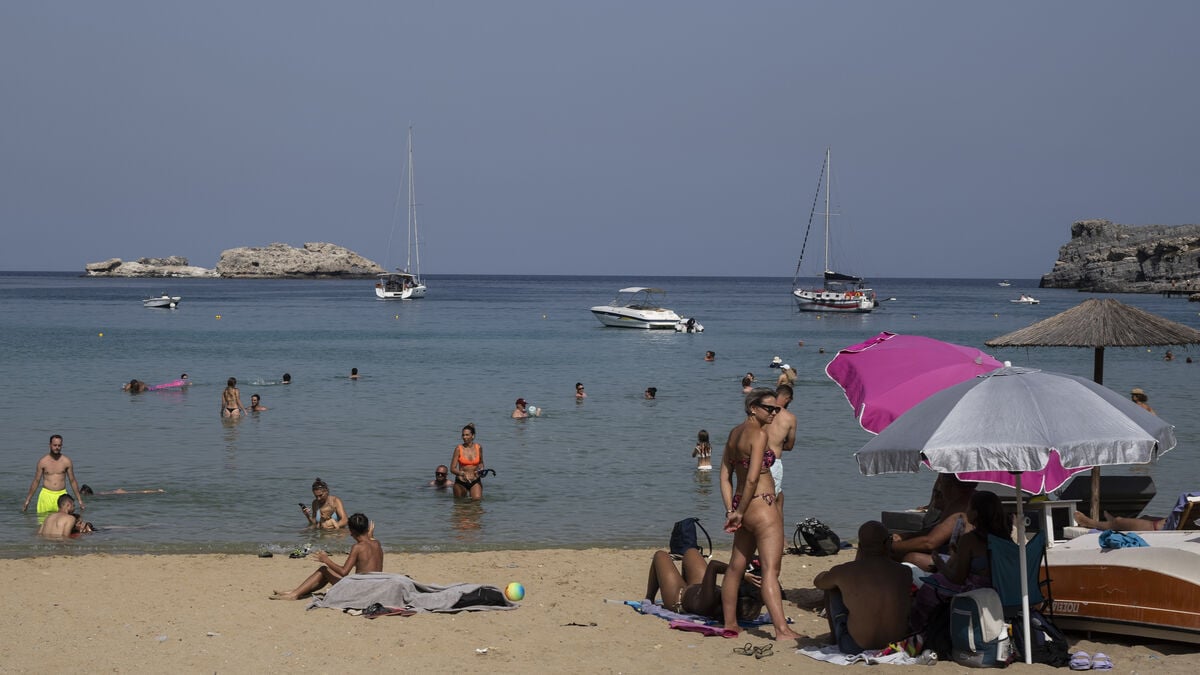
Last year, Swedes' travel budgets for foreign trips strengthened significantly. The dollar became 17 percent cheaper - the euro 6 percent cheaper.
But if you made your budget for this summer's trip abroad around the turn of the year, you may need to take out the calculator again today.
Only the lira is cheaper
The dollar has gained 11.5 percent since the US currency's annual low in January. And the euro is 5.5 percent more expensive compared to its annual low on February 3.
Among Swedes' usual travel currencies, it is basically only the inflation-ridden Turkish lira that has become slightly cheaper this year.
"Dollar strength," says Robert Bergqvist, explaining the krona's downward rebound.
"It's a reassessment of the view on the US economy and US monetary policy. So far in 2026, the US economy has shown resilience. We have started to change our view on what the US Federal Reserve will do with its next interest rate move."
"Plays a role"
Market pricing - since the Federal Reserve (Fed) interest rate announcement last week - points to a hike in the US policy rate this year. This should be set against earlier high expectations of cuts.
According to Bergqvist, what central banks have done and are expected to do with their policy rates has a significantly greater impact on the Swedish economy than the tense geopolitical situation or the energy-price shock following the Iran war.
"Sweden has a policy rate of 1.75 percent and the US policy rate is 3.75 percent. It is clear that it matters."
Wall Street's rise a factor
And if the policy rate were to be raised in the US, the interest rate gap would become wider, creating downward pressure on the krona.
Against the eurozone, the interest rate gap is 0.50 percentage points.
"A calculation error," says Bergqvist when assessing the effect of this on the krona.
Another factor creating headwinds for the krona, according to the SEB economist, is large capital flows to the US, as fund managers adjust their portfolios to how different stock markets are performing. When Wall Street rises sharply and US AI stocks soar, fund managers have to buy those assets.
"Put some of the blame on Elon Musk for the weak krona. I would probably do that, actually, with a twinkle in my eye, perhaps," says Bergqvist about how the listing of Musk's space and AI company SpaceX two weeks ago affected global capital flows.
Since the turn of the year, basically all common travel currencies have become more expensive for Swedes. An unusually large currency shock awaits Norwegian travelers, and only the lira in inflation-ridden Turkey has become cheaper this year among the ten most common travel currencies.
The development of the krona against common travel currencies since the turn of the year (exchange rates from Wednesday, June 24):
Euro: - 2.5%
British pound: -3.7%
US dollar: -6.0%
Norwegian krone: -8.0%
Danish krone: -2.4%
Polish zloty: -0.8%
Turkish lira: +1.6%
Swiss franc: -3.4%
Mexican peso: -7.7%
Japanese Yen: -2.9%
Source: Bloomberg