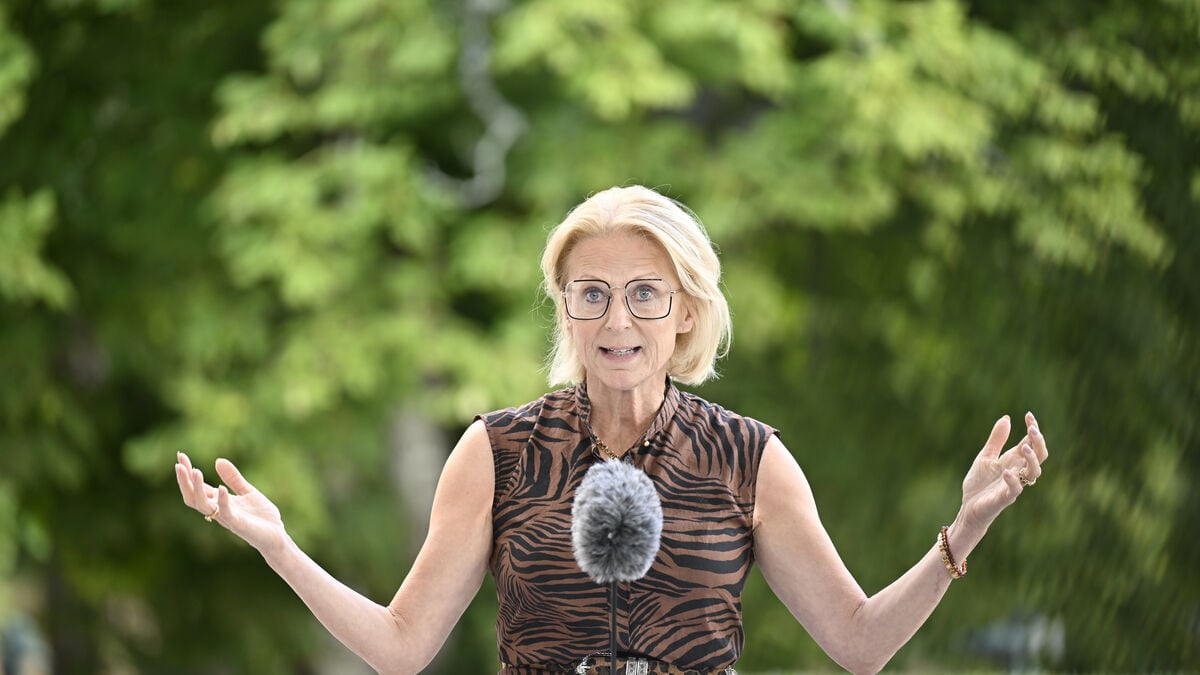
“All eight parties must do it. We have done our homework,” Svantesson says as she presents the economic conditions for 2027 and the period until 2030 at a press conference in Harpsund.
She is referring to the fact that the Moderates have presented a plan with reduced benefits, tighter unemployment insurance and savings on government agencies to pay for their election promises.
She also calls for a statement from the red-green opposition. The 50 billion will force many to deviate from all the election promises that the parliamentary parties have made.
“The scope for reform is quite small,” says the finance minister.
The 50 billion she says are available excludes defence investments decided so far and support for Ukraine. For the whole of 2026, the scope for reform was 80 billion when Svantesson laid out the conditions at Harpsund a year ago. But since then the government has borrowed in addition to that to pay for, among other things, reduced gasoline taxes and halved food VAT.
Running out of money?
“It sounds like the room for reform is not there because the government has run out of money,” says the Social Democrats' economic policy spokesperson Mikael Damberg.
The four Tidö parties' own election promises add up to far more than 50 billion, the sum of the Moderates' proposals for free preschool and after-school care, the Liberals' reduced class sizes, the Sweden Democrats' dental care reform and the Christian Democrats' increased child allowance swallows up the 50 billion.
Set table
But, regardless of whether the Tidö parties are allowed to continue to govern, or if they are allowed to hand over to a red-green constellation, the situation regarding the Swedish economy is good, according to the finance minister.
“It's a set table,” she says, talking about strong government finances, low national debt despite large investments and growth that is expected to pick up.
But government spending will increase sharply in the coming years due to already decided investments in defence, infrastructure and the justice system. And increased tax revenue will be eaten up by these.
Must be paid
The government's line is that what remains in the form of reform space needs to be used to ensure that military investments in defence reach the target of 3.5 percent of GDP. It will also be used to reduce loans for armaments, to complete the government and the Sweden Democrats' major tightening of criminal law, and to maintain the level of welfare.
According to the government, all new election promises need to be financed through, for example, savings or tax increases.