In terms of wind strength, it was a relatively weak cyclone that moved across Southeast Asia in late 2025. Nevertheless, at least 1,200 people died in the floods and landslides that Senyar brought with it, mainly in northern Sumatra.
Decades of deforestation in the area likely contributed to the unexpectedly large devastation, according to analysts.
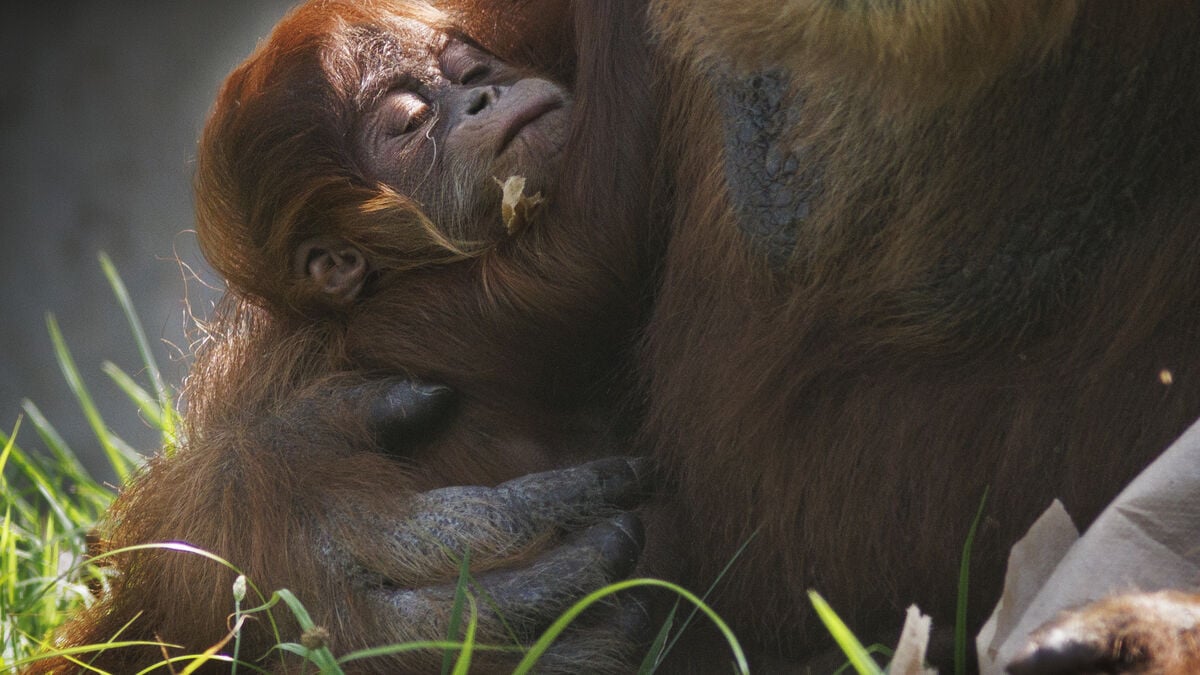
The Tapanuli orangutan, a species of just under 800 individuals that live isolated in three small areas south of the volcanic Lake Toba - areas already threatened by oil palm plantations, environmental degradation and climate change, was also hard hit.
Possible higher death toll
Thousands of hectares of orangutan habitat were destroyed by the cyclone's landslides and mudslides, according to a study recently published in Current Biology, which CNN reported. The landslides likely occurred without warning and the apes had very little chance of escaping, the researchers write.
As a result, it is estimated that around 60 individuals of the rare great ape - over seven percent of the total population - have died.
"But it could very well be that up to 120 animals died during the landslide," the study's lead author, Erik Meijaard, told CNN.
Slow reproduction
The cyclone has brought the critically endangered orangutan ever closer to extinction, with scientists describing it as a “shock” for the species.
“Given the slow reproduction and sensitivity of the species, this single event constitutes a serious demographic shock with long-term consequences for its viability,” they write.
The study shows that extreme rainfall events can directly threaten the survival of great apes, the researchers say. They therefore underline the urgent need to strengthen protection of primate habitats, as well as to begin conservation planning with climate change in mind.
The orangutan is the only great ape in Asia and the largest arboreal mammal.
It only lives in small isolated areas on the islands of Sumatra and Borneo. In Indonesian, the species name means “forest man”.
There are three species of orangutans: Pongo abelii in Sumatra, Pongo pygmaeus in Borneo, and the Tapanuli orangutan, Pongo tapanuliensis, which was only recognized as a separate species in 2017 and lives in a small, mountainous area in Sumatra.
All species are critically endangered due to deforestation, palm oil plantations, poaching, illegal wildlife trade, and the construction of roads, dams, and mines. The Tapanuli orangutan is the most endangered of all great apes (orangutans, gorillas, chimpanzees, and bonobos).
Orangutans live for about 35-50 years. They have young about every eight years, giving them the slowest reproductive rate among the great apes.
Source: World Wildlife Fund (WWF)