A variety of species were wiped out at around that time. North America, South America and Australia were the worst affected, but Europe and northern Asia also lost a large part of their megafauna, that is, the large animals.
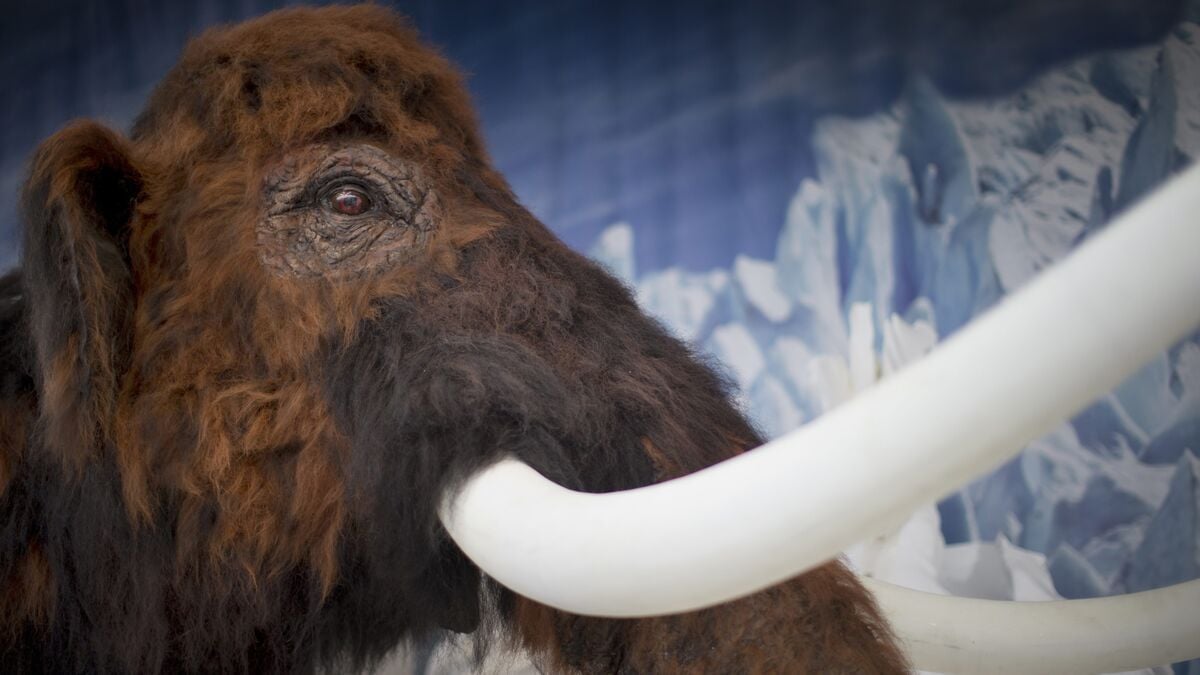
The woolly mammoth disappeared, as did the woolly rhinoceros and the steppe bison. In North America, mammoths, mastodons and camelids died out, along with the American lion and the saber-toothed cat Smilodon.
Many scientists believe that our own species, Homo sapiens - which was then spreading across the Earth - was the main cause of the mass extinction. However, for some years there has been a competing hypothesis that a collision with a comet was a decisive factor.
Extreme heat
The new study, published in the scientific journal PLOS ONE, provides further support for the hypothesis.
The researchers examined the geology of three sites in the southern United States with remnants from the end of the Ice Age. They found that the mass die-offs coincided with layers of shocked quartz - grains of sand that had been altered by extreme heat and pressure, which are clear signatures of a collision with a celestial body.
Such an event may have given rise to massive fires and atmospheric pollution that blocked out sunlight for an extended period of time.
The cold came back
At exactly this time, when the Ice Age was almost over, the Earth was hit by a severe cooling called the Younger Dryas, a return to glacial cold that lasted for about a thousand years. Scientists believe that the cooling was a direct result of the cosmic collision - and a main cause of the mass death of large animals.
One caveat to the hypothesis has been the lack of an impact site - no crater where the celestial body hit.
The scientists explain this by saying that the comet likely exploded in Earth's atmosphere before reaching the surface. The enormous blast produced massive pressure waves that created the shocked quartz.
Even if it did not kill all life in its vicinity, many species may have been affected so severely that they became vulnerable to other changes, such as human impacts on the environment.