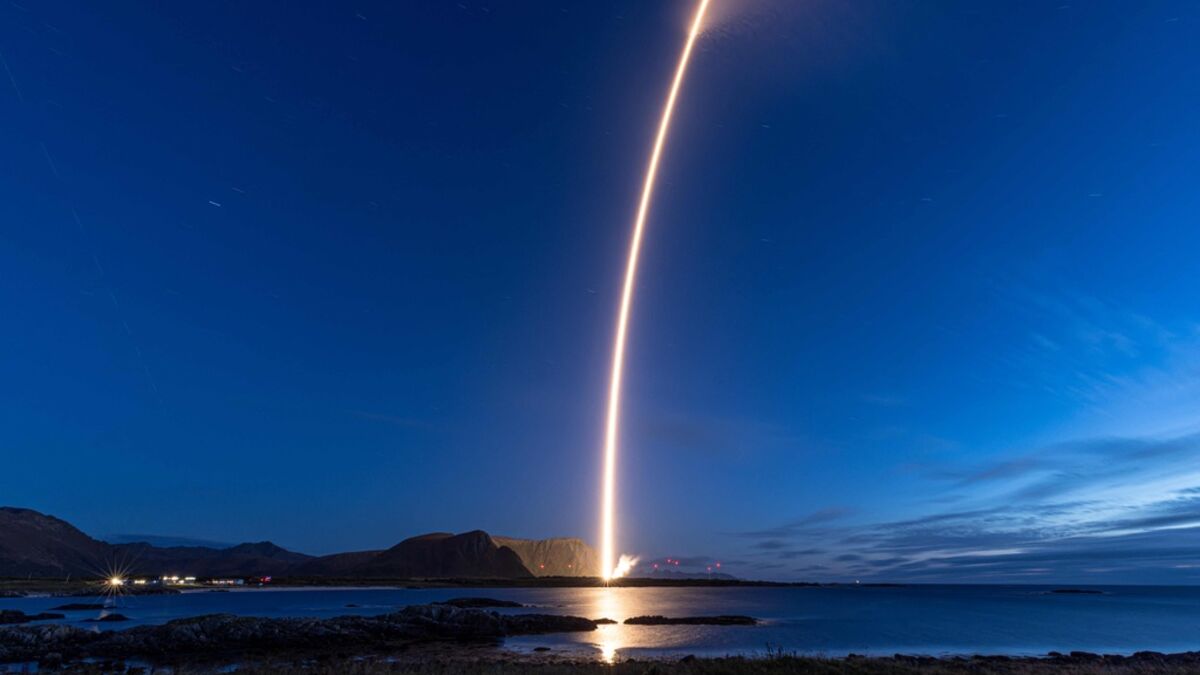
The 28-meter-long Spectrum 2 rocket was launched from the spaceport on the island of Andøya, north of Lofoten, shortly after 10 p.m. on Saturday evening.
"This is a historic day! The successful launch from Andøya is a breakthrough for Norway as a space nation," writes Norwegian Prime Minister Jonas Gahr Støre on social media.
It is the first launch vehicle to be launched from Western European soil and place cargo into orbit around our planet, writes NRK.
During the night, Norwegian researchers on the ground were able to establish initial contact with one of the small satellites after it had entered orbit.
After explosion
The launch of the German-made rocket follows several failed attempts and an explosion. Spectrum 1 was launched in March last year, but exploded and crashed into the sea after less than half a minute.
Sweden has long strived to launch the first satellite from European soil. The Esrange space base outside Kiruna has been developed for this purpose since 2020. At that time, the aim was to launch a first satellite in 2022, but the plans have been postponed several times.
Sweden's state space company SSC highlights on its website that Sweden "could soon become the first country to launch satellites from European soil," but now Norway has already gotten ahead of the curve. Earlier this year, it was said that a first satellite could be launched from Esrange in 2028.
“A huge success”
This is a huge success and one of the biggest things that has happened in European space travel in a very, very long time, says Kjellmar Oksavik, space physicist at the University of Bergen, to VG.
The management at the Norwegian Andøya base announced in a press release that within a few years they want to launch up to 30 satellites there per year.
Most European satellites have so far been launched into orbit from South America, from the Kourou space base in French Guiana.