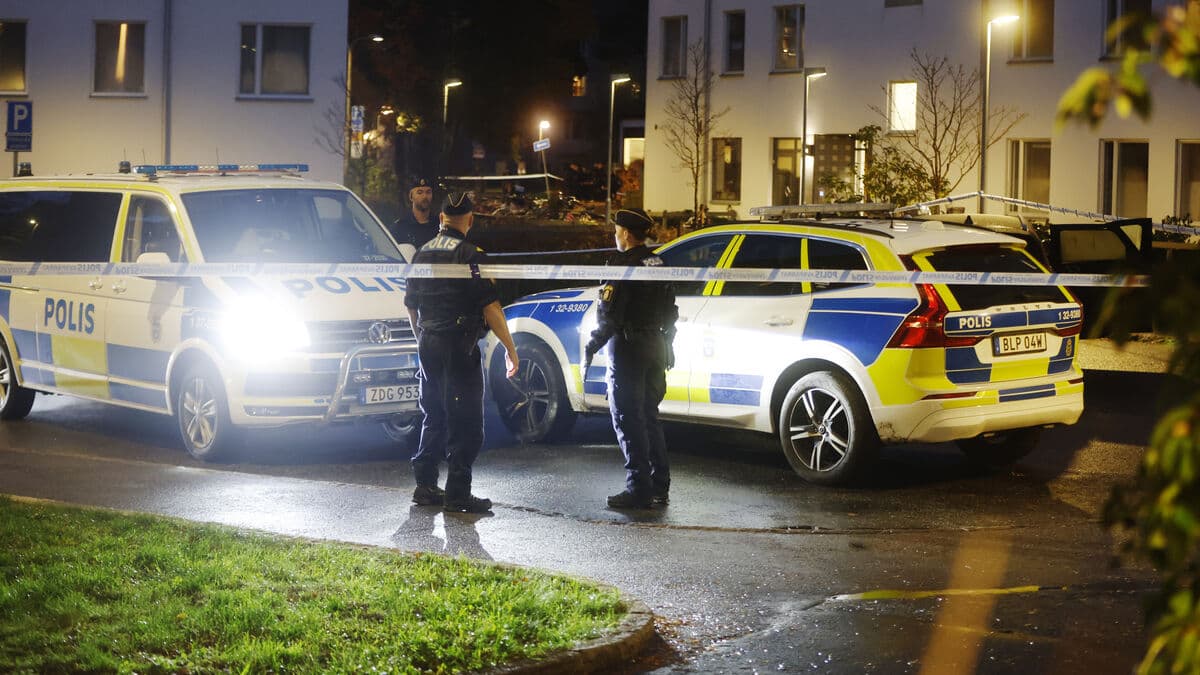
The government is proposing a new law for the reception of asylum seekers. The idea is that most asylum seekers, and even those whose applications have been rejected, will live in the Swedish Migration Board's reception and return centers.
To verify that they are actually living in the asylum accommodation assigned to them by the Swedish Migration Board, they are required to participate in presence checks. However, children under the age of 16 are exempt.
They are also expected to reside within the county where they live.
The Migration Board should also be able to decide on individual reporting obligations at certain times, for example, if there is a risk of an asylum seeker absconding. Asylum seekers who have received a deportation decision must report to the Migration Board three days per week.
Those who fail to attend attendance checks or ignore the reporting obligation or violate the county restrictions may be punished by having their daily allowance withdrawn or reduced weekly. In some cases, this may lead to the asylum application being considered withdrawn.
Better control
With this new law, it will be easier to make contact to provide support, help and advice - and to ensure that those who are going to return home actually do so and do not go underground, says Migration Minister Johan Forssell (M).
Reception and return centres are located in Boden, Flen, Sigtuna, Stockholm, Västerås, Burlöv, Malmö, Halmstad, Mölndal, Vänersborg and Härnösand. In total, there are approximately 5,400 places.
Today, around 8,000 asylum seekers are registered with the Swedish Migration Board. Of these, around 2,100 people live in the centres, 520 in the Swedish Migration Board's apartments and 600 in other forms of accommodation, such as institutional accommodation.
An additional 4,800 asylum seekers live in their own accommodation.
Not working
Asylum seekers have had the right to settle wherever they want since the Act on Own Housing (EBO) was introduced in the mid-1990s. According to the government, this law has had negative consequences, such as exclusion, overcrowding and segregation.
Since September 1, the main rule has been that those who have their own accommodation are not entitled to daily allowance. However, even if the EBO Act is now abolished, they will not be prohibited from living outside the Swedish Migration Board's accommodation.
However, they must manage without daily allowance, and the new law means that asylum seekers would no longer have the right to work. They must also follow rules regarding registration, attendance checks and county restrictions.
The legislative amendments are proposed to enter into force on October 1, 2026.