A desperate attempt is underway outside the Australian city of Melbourne to save a group of birds. Thousands of people watch the little penguins on Phillip Island make their nightly journey from the water to their burrows. But bird flu and an expected super El Niño threaten to spell disaster for thousands of penguins.
A relatively wet Australian winter and spring have slowed the spread of the virus. But most indications are that El Niño will bring a very dry and hot summer - conditions that, according to Darren Grover, a biodiversity expert at the World Wildlife Fund (WWF), will increase the spread of the infection.
Birds will gather more and more densely, creating ideal conditions for the spread of the virus, he says.
10,000 vaccine doses
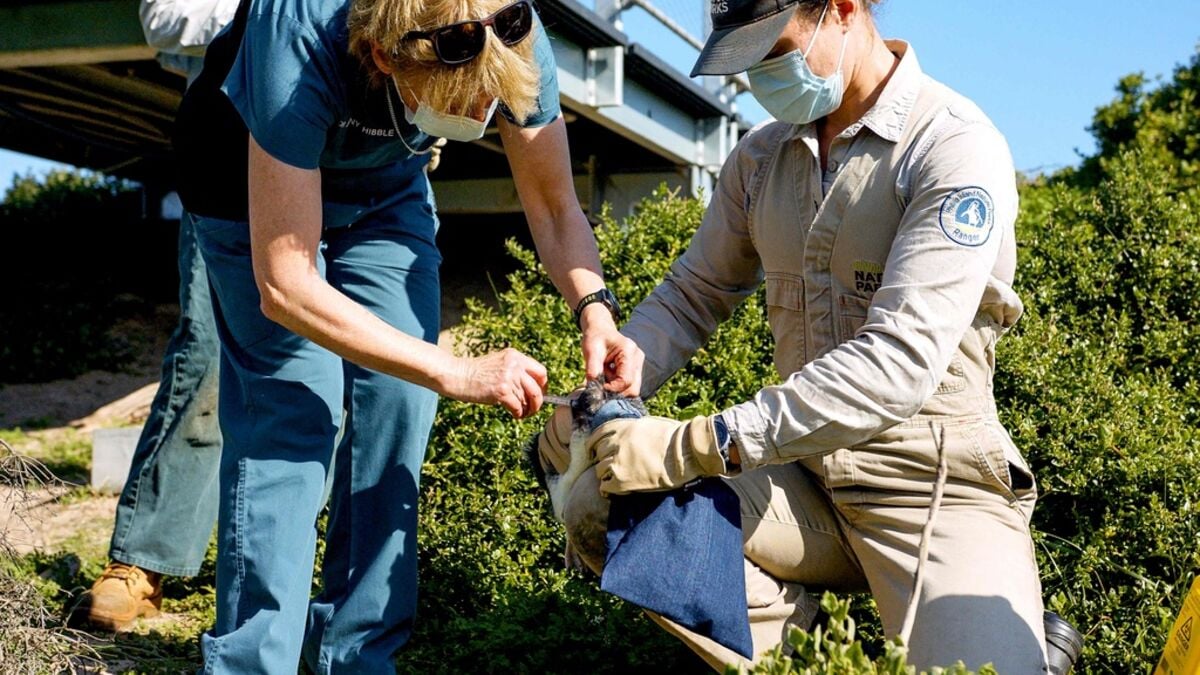
About 40,000 little penguins live on Phillip Island, the world's largest colony, which covers an area of about 20 square kilometers. In the evenings, they gather at the water's edge and walk together up to their nests - a kind of super-spreader event every night. In response, authorities in the state of Victoria have taken the drastic step of vaccinating them. About 5,000 penguins will receive two doses of the vaccine, reports ABC.
"We don't know how successful this vaccination will be. It hasn't really been used on wild birds before," says Darren Grover.
But if we use the vaccine and it saves some of them, that's good, because in the worst-case scenario, most or all of them die.
But climate change is not only helping bird flu spread among birds. Animals that eat or live near them, such as dingoes, opossums and Tasmanian devils (a marsupial), are also at risk of infection - animals that are found nowhere else. As the Australian summer approaches, there is growing concern for these already vulnerable animals, as the heat itself is a direct threat.
The heat is coming soon
During the summer of 2019-2020, also known as the “Black Summer,” Australia was hit by massive bushfires. Thirty-three people lost their lives as more than 17 million hectares burned between November and March. Three billion animals died or were displaced by the flames, most of them reptiles, according to a WWF report.
With two months to go until the official start of the Australian summer, the country is bracing for what the Bureau of Meteorology (BOM) has warned could be the strongest El Niño on record. The extreme nature of this event is linked to climate change.
According to a report from the Climate Impact Lab at the University of Chicago, global land temperatures in the coming months will be 1.4 degrees Celsius higher than in a typical El Niño year. Up to 44 percent more days of extreme heat are expected.
The world must treat this as the urgent climate warning it is. El Niño conditions will add fuel to the fire in an increasingly warm world. The impacts will hit even harder, travel even further and cross borders with devastating speed, UN Secretary-General António Guterres said earlier this year.
“We have to test”
Although bird flu is not directly linked to climate change, there is a risk that the situation will become a kind of vicious spiral. If forest fires and drought force animals into increasingly smaller areas, the virus could spread at an ever-increasing rate, with mass extinction as a possible consequence, says Darren Grover.
The worst, devastating, scenario would be that we lose entire species.
For the penguins on Phillip Island, the breeding season began in August and runs until February. A first dose of the vaccine has already been given to a selection of penguins. Vaccination of wild birds is still experimental, but authorities hope it will save future generations of these waddling, sociable birds.
Facts: Bird flu
Bird flu (avian influenza) is spread primarily between birds. The disease is caused by several different variants of the bird flu virus. Some types of the virus can infect humans, but this is very rare. No human has been infected in Sweden so far.
Bird flu occurs every year among wild birds in Sweden and Europe. Wild aquatic birds, such as ducks and geese, can carry the virus without becoming ill, and spread the infection to more susceptible species such as domestic chickens. Therefore, wild birds should not be fed near facilities with domestic birds.
There are different forms of bird flu. The highly pathogenic form leads to very high mortality and causes epidemics that can spread rapidly, devastate the poultry industry and result in strict trade restrictions. The low pathogenic form of the virus usually causes only mild symptoms.
Source: Swedish Board of Agriculture (government agency for agriculture).
El Niño and La Niña are phases of the El Niño-Southern Oscillation (ENSO) weather cycle. El Niño warms the surface waters of the eastern Pacific Ocean, while La Niña cools them.
El Niño occurs on average every two to seven years and usually lasts nine to twelve months. It often peaks around Christmas, hence the name El Niño (the boy child - meaning Jesus).
El Niño effects, such as increased rainfall, typically affect parts of southern South America, the southern United States, the Horn of Africa and Central Asia, while severe drought can occur in Australia, Indonesia and parts of South Asia.
Sources: WMO, SMHI (Swedish Meteorological and Hydrological Institute), NOAA