It is known that acidification can lead to essentially catastrophic conditions for many marine organisms in the long term. Currently, the pH value - the measure used for acidity - in the oceans is around 8.1. But there is a clear risk that this will drop to around 7.8 by the year 2100, which means a sharp increase in acidification.
Fated
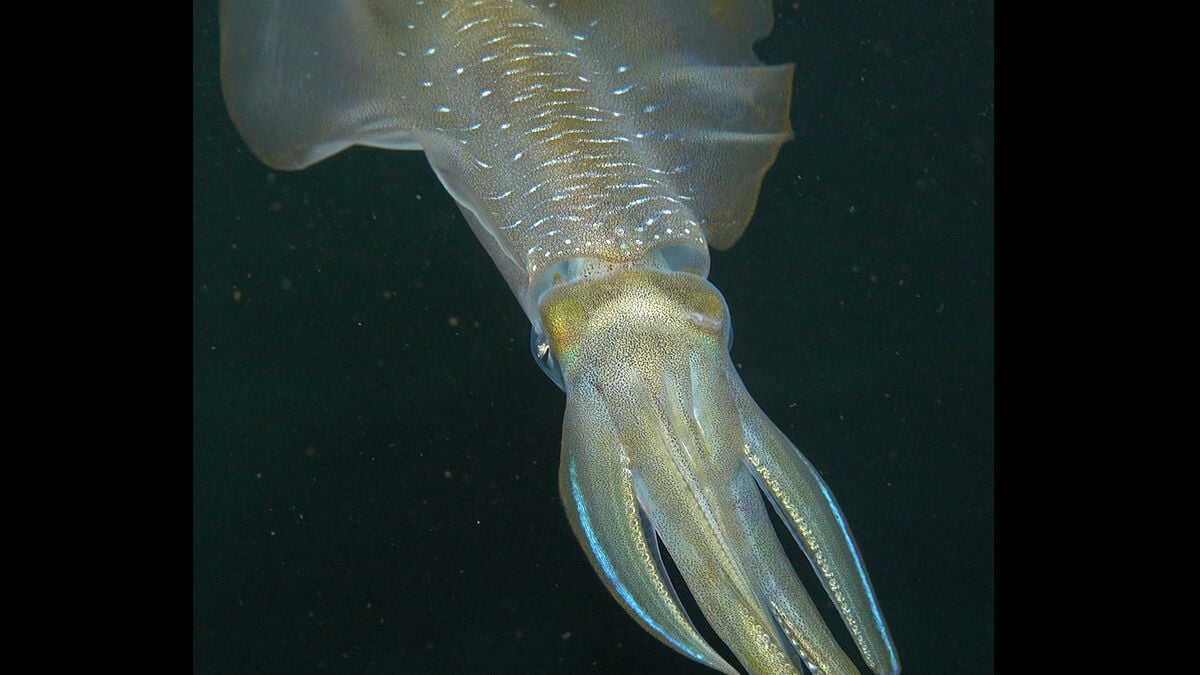
What the consequences of this would be is unclear, but for many squids at least, it could be fatal, judging by experimental studies by researchers at Acadia University in Canada and Academia Sinica in Taiwan. They examined the sensitivity to increasing acidification of a common ten-armed species, the giant reef squid (Sepioteuthis lessoniana), which is common in coastal waters of the Indian and Pacific Oceans.
The squids were placed in two different pools of water, one with a pH of 7.8 and one with a pH of 8.2. After 90 days, the animals were removed and the effects were examined.
Shrinking brains
Something striking was immediately discovered - the brains of the squids that had been in the more acidic pool were significantly smaller. No effect was seen on other organs, but brain volume decreased dramatically, by a total of about 50 percent, probably as a result of so-called oxidative stress. The greatest reduction was seen in the regions that control vision, the optic lobes and the optic nerve.
Squids hunt primarily by sight, and the animals showed a clearly reduced tendency to search for prey after spending time in the more acidic water. What the long-term consequences may be is unclear, but if the brain is not capable of handling information from the outside world, abnormal behavior may result. Squids are recognized as intelligent creatures that have an especially great need for a functioning thinking apparatus. Currently, many species are numerous, but if carbon dioxide emissions are not reduced, the future may be dark for them.
Squids, with about 900 known living species, form a class of their own among mollusks. They have existed for at least 500 million years.
Today they are divided into three main groups, the pearly nautiluses (which are the only ones with an outer shell), the ten-armed squids and the eight-armed squids. They have by far the largest brains among invertebrates.
Source: Nature