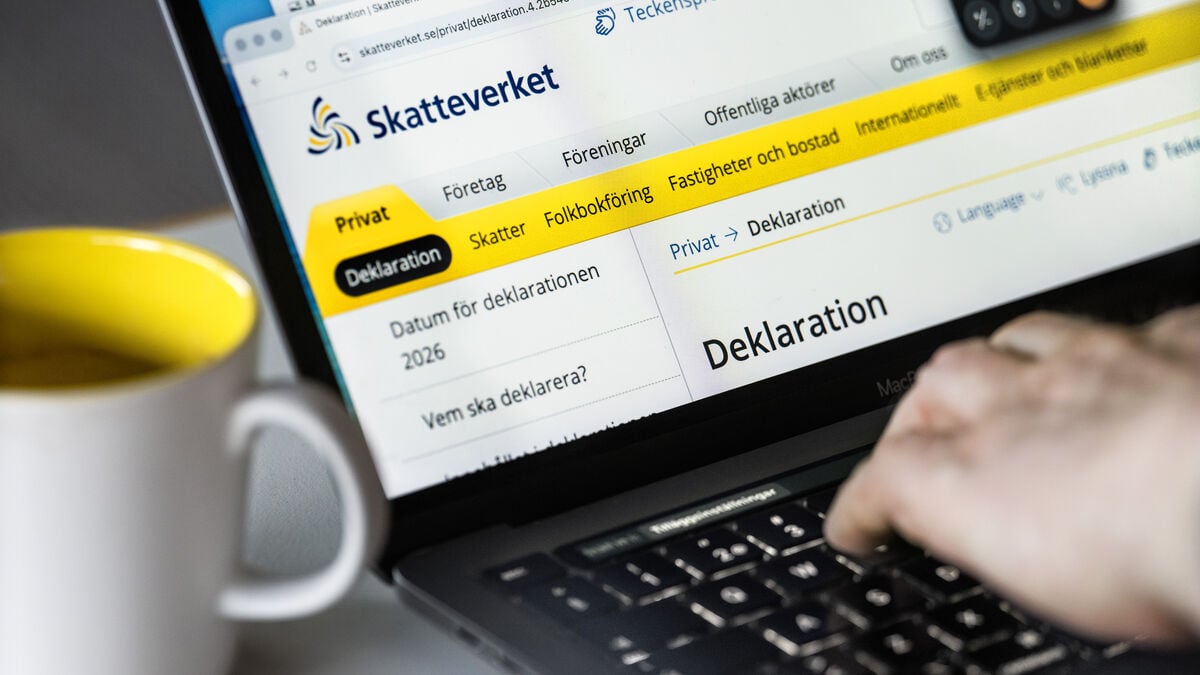
Between April 7 and 10, the payment will land in the accounts of those who will receive a refund and who submitted their tax return by March 31. If you don't know what to do with the money, there are a few things to consider.
Felicia Schön, savings economist at Avanza, is clear:
Priority one is to pay all invoices; that's the most important thing.
After that, her advice is to set aside a buffer for unforeseen expenses of around SEK 10,000, for example in a savings account.
Anyone who has a house, boat and children may need a larger buffer to cover their needs.
Paying off expensive loans
Priority three is to pay off any high-interest loans.
After that, there are good opportunities to start saving. If you can put the money away for three to five years, the stock market is a good alternative.
Carl-Henrik Söderberg, savings economist at Nordnet, also advises thinking about it.
If the plan is to use the money for a vacation this summer, it is wise not to expose the money to risky assets, such as stocks, but then a savings account is the best option.
But he also recommends the stock market for long-term savings. Despite the many ups and downs, it is the stock market that provides the highest returns over time.
- One tip is to build a portfolio where the risks are spread between different types of companies and sectors, but also where there is a geographical spread.
A simple but effective way is for you as a private saver to buy a Swedish large-cap fund, a global fund and add a Swedish or Nordic small-cap fund. This will also provide you with an important risk spread.
Do something fun
Another tip is to invest in fixed-income or corporate funds. It may be wise to invest the majority of your money in funds that are exposed to large companies or banks. The engineering industry, for example, is often very resilient to various crises in the world.
Felicia Schön also advises trusting your own judgement.
Maybe I can save a little and also do something fun with some of the money; it doesn't have to be one or the other.
When the Swedish Tax Agency has decided on the final tax, the money is generally paid out within one week.
April 7–10: Anyone who has approved their tax return digitally by March 31, without changing or adding any information, will receive their tax refund.
June 9–12: Anyone who has filed a tax return by May 4 will receive their tax refund.
August 4–7: Anyone who has not received their tax refund in April or June, for example if you have had a delay with your tax return, will receive their tax refund.
December 8–11: Anyone who has not previously received notification of their final tax or who is not tax registered in Sweden will receive their tax refund.
If the tax refund does not appear as expected, it may be because the Swedish Tax Agency needs to review the return.
Source: Swedish Tax Agency