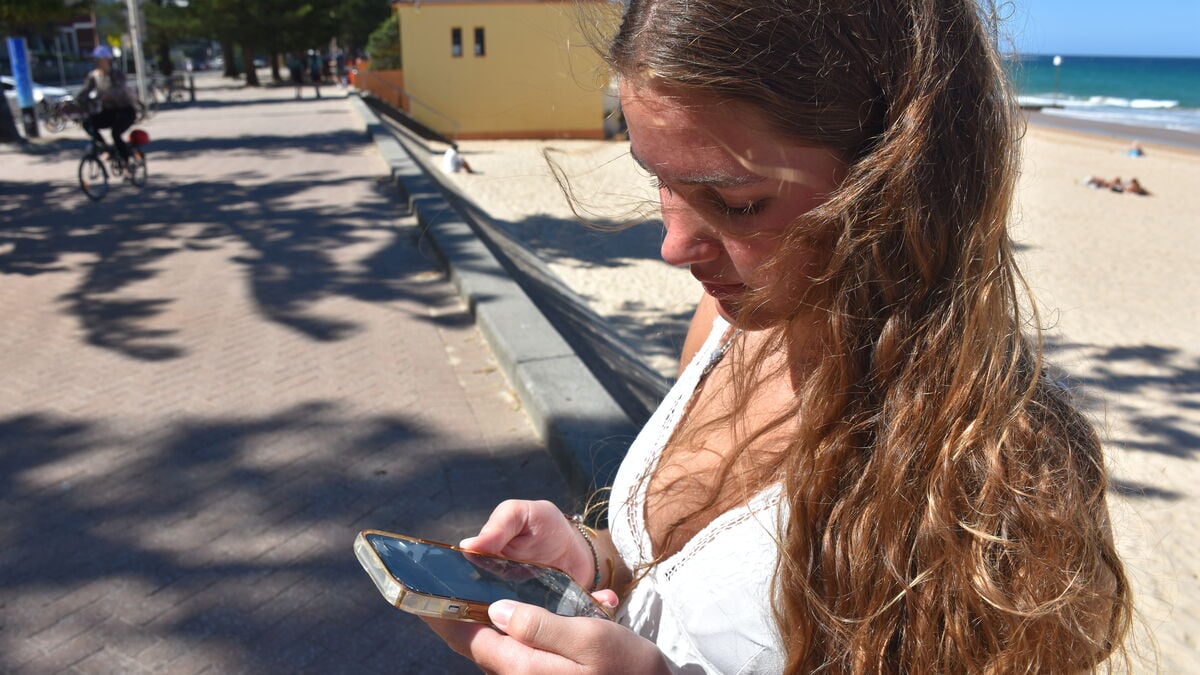
It's summer break for Vivian Wilson from Sydney. During the peak of summer in the southern hemisphere, she's going surfing, just like she usually does when school is on break. But one thing will change this holiday.
Starting in early December, social media platforms such as Instagram, Snapchat and Tiktok will have to ensure that they do not have any users under the age of 16.
“Getting a little disconnected”
The ban is attracting attention and curiosity around the world, and in some cases strong reactions at home.
At first I panicked because I have a lot of things saved on social media and use it to keep up with what my family, who live far away in the UK, are doing, says Vivian Wilson.
Most of her peers use social media as their only source of news, she says.
When you're online, you're in touch with what's going on in the world, and without that opportunity, you feel a little disconnected. So I was pretty angry when I first found out about the ban.
Will protect young people
From a political perspective, the law is primarily motivated by the need to protect young people from various risks and harmful content on social media.
I also think there is a big concern about the mental and emotional effects of social media, which is specifically designed to keep people on the platforms, says Mark Johnson, senior lecturer in digital culture at the University of Sydney.
Several of the heaviest, including Snapchat and Meta, which owns Instagram and Facebook, have expressed dissatisfaction, but said they will act in accordance with the new law.
Are there any ambiguities?
The platforms have presented different methods for age verification, including facial scanning to assess age or uploading an ID document.
There are a lot of ideas but even now, at this very late stage, there is still a lot that is unclear, says Mark Johnson a few days before the ban came into effect.
At the same time, there are several possible ways to get around the age checks, such as having someone older register the account for you or using VPN services.
How well the ban works will be determined by how the state enforces it and how the platforms and children and young people comply with it, says Johnson.
High fines are required
If companies systematically fail to carry out age checks, they risk fines of up to 49.5 million Australian dollars, around 300 million SEK. Here too, however, it is unclear what counts as a breach of the rules.
I think it's a good step, but the fines have to be high enough to make a difference," says Johnson, pointing to the situation in the EU, where he believes large platforms are breaking laws and simply taking the fines because they cost so little for a giant company.
Although Vivian Wilson has gotten used to the idea, she doesn't think a ban is the right way to go.
"I think it should be the parents' job to decide whether their children should be on the internet or not," she says.
Just because they ban social media doesn't mean kids won't access it. We've found ways around it.
Australia is not the only place in the world that wants stricter age limits for social media.
Malaysia approved a ban on people under 16 on social media in November, effective from next year.
The same month, the European Parliament voted to call on the European Commission to submit a proposal for a 16-year age limit on social media. According to the call, however, young people as young as 13 should be allowed to use social media with parental permission.
In Scandinavia, Denmark promised a new national law this fall on a 15-year age limit on social media. Norway has said it intends to do the same.
Sweden appointed an inquiry into age limits on social media in October.