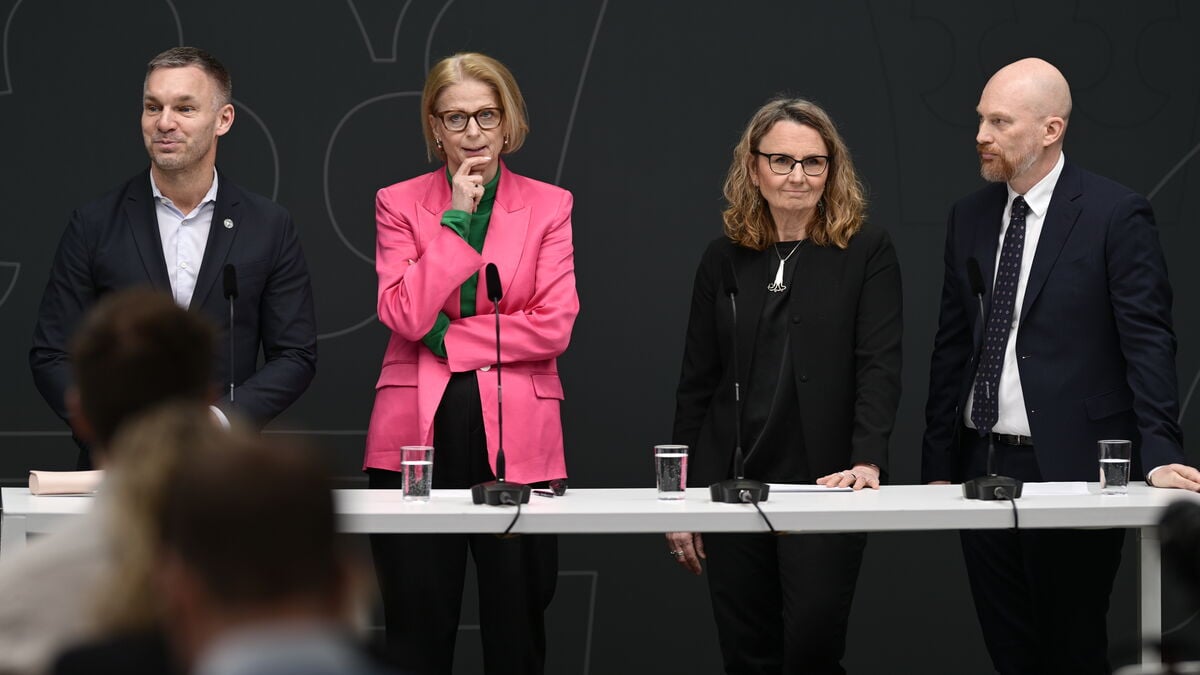
The development of food prices from August 2025 – just before the VAT cut was announced – through January 2026 does not deviate from historical patterns, the National Institute of Economic Research (KI) notes. Rather, it appears that the price increases are slightly below historical averages.
And compared with other countries, there are no significant differences in price trends.
"It's very good," says Elisabeth Svantesson.
The reduction will end in 2028.
Prices for meat and non-alcoholic beverages have risen more than usual, especially in January. However, prices for vegetables and sweets have fallen more than usual. For most product groups, price developments are in line with historical patterns, according to KI.
Together with the Swedish Consumer Agency, the authority forms the food price commission the government appointed last fall, tasked with monitoring whether the halved VAT actually leads to cheaper food.
VAT will be reduced from 12 to 6 percent on April 1, which should make a package of milk priced at 13–14 kronor about 1 krona cheaper, says KI's head of research Thomas Eisensee.
"We would like to see the VAT reduction have a 100 percent impact."
The Commission will continue to review prices in the sector until 2028, when the temporary VAT reduction ends. The plan is then for the food VAT to double to 12 percent again.
Calls for protest
Minister of Civil Service Erik Slottner (KD) urges people to vote with their feet if the grocery store they usually go to does not lower its price. And if you only have one grocery store to choose from, you should make your voice heard, he believes.
"Then I think that in various ways, through demonstrations, petitions, mailings, where you point out the grocery store, you can question why they haven't lowered the prices."
When asked if she thinks the next government will have difficulty raising the food VAT back, Svantesson replies:
"It is a temporary VAT reduction. But what the world will look like then - what resources are available and what needs to be done, that is for the government - hopefully me, who would like to continue as Minister of Finance - to decide then. I don't think any party should promise anything at this point."
She is careful to describe the measure as "economic policy".
"It's about making it easier for people and families who have had a tough time, with a cheaper grocery bag. But also ensuring that we can break the recession."
Facts: Halving food VAT costs 37 billion
According to a proposal in the autumn budget, the food VAT will be reduced from 12 to 6 percent on April 1 this year until the end of 2027. The measure is estimated to cost the state a total of SEK 37 billion in reduced revenue. The VAT reduction applies to food sold in stores and for takeaway, but not for consumption in restaurants and cafes.
If the VAT reduction has full impact, it should reduce the price of a lunch box by 5.4 percent. For a "normal family with two children", the lunch box will therefore be approximately 545 kronor cheaper per month, which adds up to approximately 6,500 kronor per year.
Source: Government