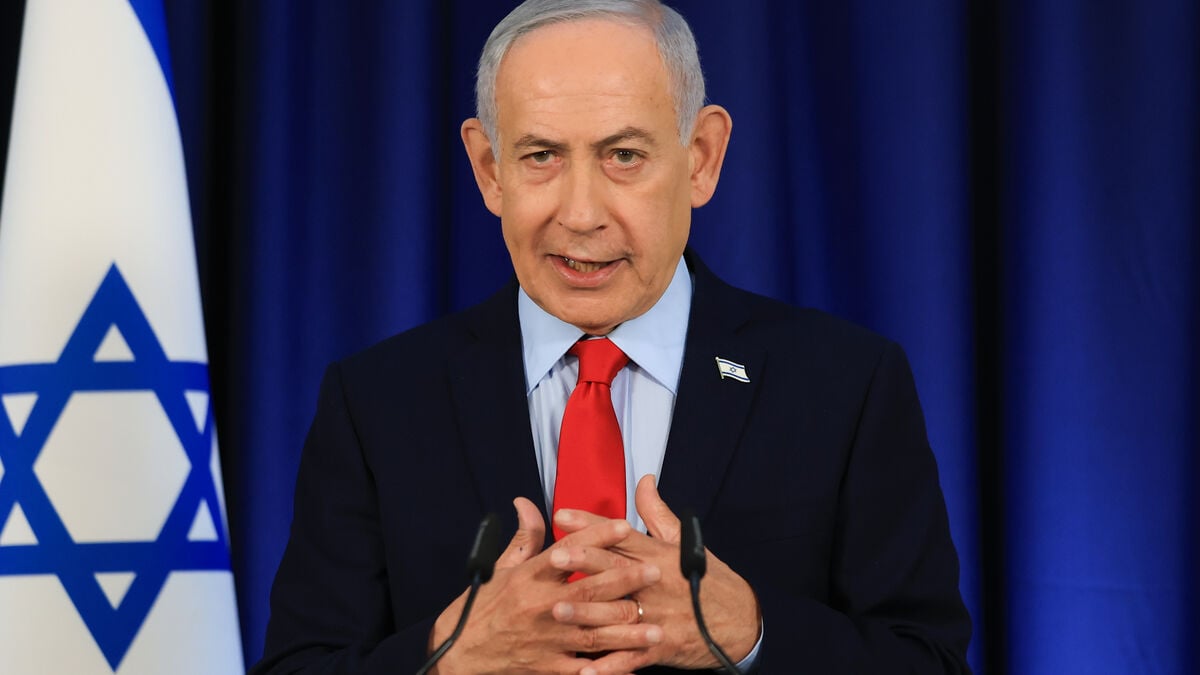
Netanyahu announced on Thursday evening that he had instructed his government to begin direct negotiations with Lebanon "as soon as possible," following what he described as a request for negotiations from Lebanon.
The talks will focus on disarming the Shiite militia Hezbollah and establishing peaceful relations between Israel and Lebanon, the Israeli prime minister said.
A few hours later, at 9 p.m. Swedish time, news came that Israel had begun attacking Lebanon again. The Israeli military said it was striking Hezbollah launch sites, after previously warning that the Shiite militia might be about to fire projectiles at Israel.
Hundreds dead
The development follows Israel's massive attacks on densely populated areas of Lebanon's capital Beirut and southern Lebanon on Wednesday, killing more than 300 people and putting pressure on efforts to ease tensions between the US and Iran.
Israel says the attacks were directed at Hezbollah targets.
Israel has also been carrying out a ground invasion of Lebanon for the past few weeks. Since the escalated Israeli attacks began on March 2, 1,888 people have been killed and 6,092 injured in Lebanon, according to the Lebanese Ministry of Health.
Want to see a ceasefire
Negotiations between Israel and Lebanon require a ceasefire as a first step, according to Lebanese President Michel Aoun. "A ceasefire between Israel and Lebanon followed by negotiations is the only way," Aoun said in a written statement.
MP Ali Fayyad, who represents Hezbollah, also says that the Lebanese government should demand a ceasefire as a condition before taking "further steps." However, he reiterates Hezbollah’s opposition to direct negotiations between Israel and Lebanon.
Israel dismissed Lebanon's demand for an initial ceasefire on Thursday evening, several Israeli media outlets reported.
Despite the disagreement, talks between Israel and Lebanon are reportedly taking place next week, on site in Washington, according to an official at the US State Department, AFP reports.