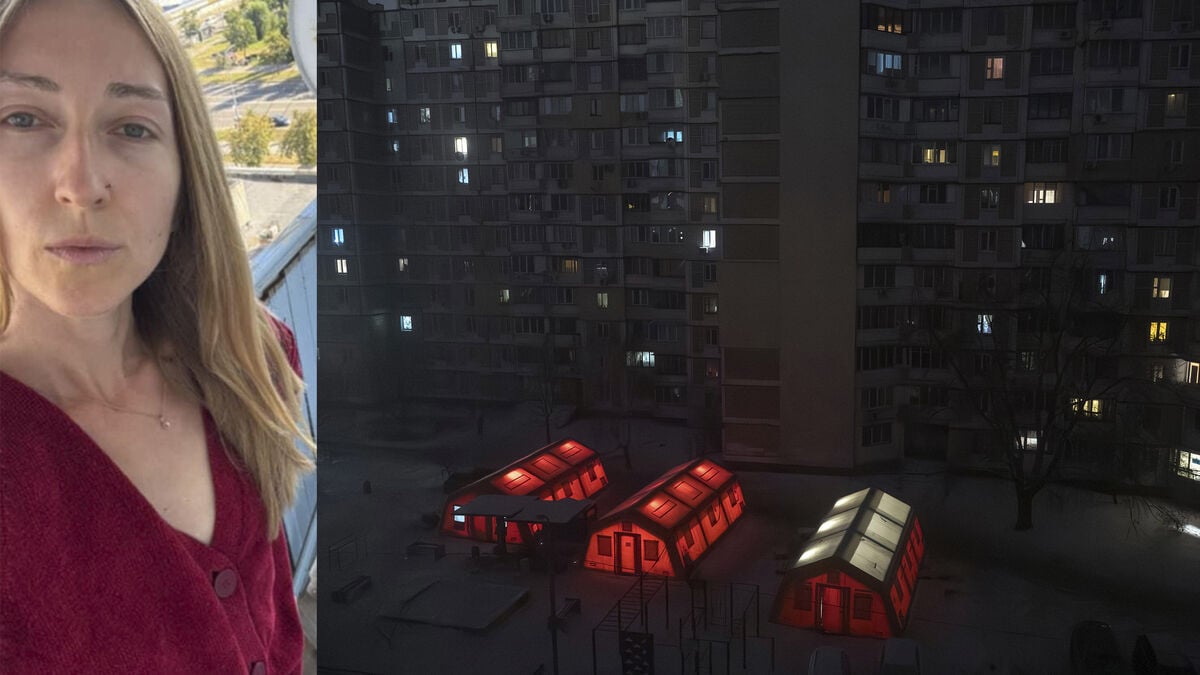
Natalya Lytvynova's apartment has been freezing cold for a week after repeated Russian drone and missile attacks on Ukrainian energy infrastructure.
And she is not alone. The same thing has happened to thousands of others during the coldest winter since Russia launched its full-scale invasion of Ukraine almost four years ago.
Many have left the city due to the power outages, but Natalya Lytvynova has stayed despite the fact that her breath is visible even indoors.
But she got sick.
"Not only did we lose heat throughout the house, I also developed a high temperature because of the cold," she says.
Problematic nights
Last weekend, she stayed in a hotel for a night to avoid freezing, albeit temporarily.
"There was heat and hot water, but when I moved home last Sunday, I felt my blood freeze again," she says.
To sleep, she uses all the blankets she owns.
"But it's not very comfortable, because under many blankets you start to sweat and then you feel like your sweater is getting wet. It makes for problematic nights."
Soviet heating system
Half of all apartment buildings in the capital Kyiv were left without heat, electricity and water after Russian attacks over the past weekend.
"As a result of the enemy's massive attack and damage to critical infrastructure, almost 6,000 buildings in the capital are again without heating. Most of them have already been connected to or have been in the process of being connected to the heat supply twice since the attacks on January 9 and 20," Mayor Vitali Klitschko wrote on Telegram over the weekend.
Many residential buildings in the cities were built in large housing programs in the 1950s and 1960s.
"Ukraine inherited the Soviet heating system and it has not changed," Ukrainian energy expert Yuri Korolchuk told the BBC.
"The heating plants were not built to be attacked with robots or drones."
Repairs
Intensive work is underway to repair the damage.
"They are working very hard, but this is the second time in a week that we have had a hit to our infrastructure. This past weekend came the second big hit, and places that had been repaired had to be repaired again," she says.
"This morning it was six degrees, but it's still much better than this weekend when it was ten degrees below zero."