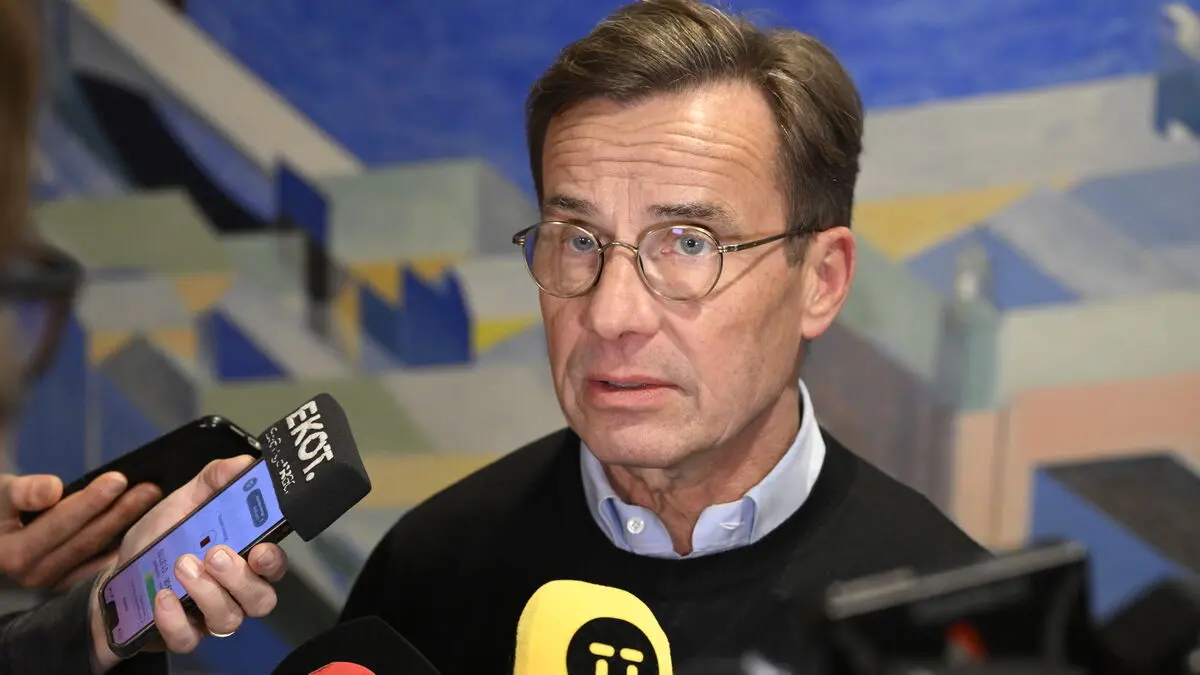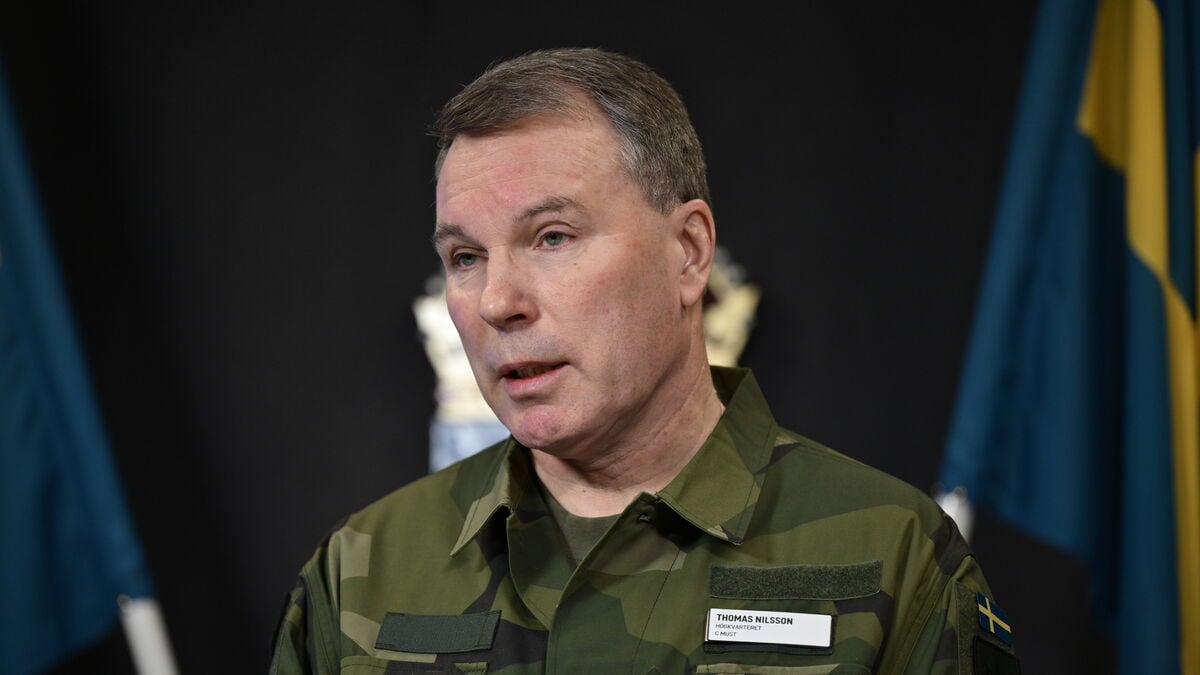
This is evident from the annual report of the military intelligence service, Must. The threats against Sweden are very serious and the situation could worsen further, according to Must chief Thomas Nilsson.
The main reason for the deteriorating situation is that Russia continues its war in Ukraine.
If I were to add anything, it would be the hybrid warfare we see from the Russian side to weaken and divide the West, says Nilsson.
Must notes that there are signs that Russia is expanding its hybrid warfare and writes that Russian "security-threatening activities against Europe will likely increase in frequency, scope and risk-taking until 2030."
Taking risks
According to the annual review, Russian actions have "become increasingly risk-prone and reckless." Sabotage and airspace violations with aircraft and drones are mentioned as examples.
"We have seen sabotage carried out against our neighboring countries, Poland and the Baltic countries, and there are reports from Germany," Nilsson says.
"So far, we have not seen Sweden as a particular target, but that could change very quickly."
The threat of sabotage is considered to be greatest against Sweden's and NATO countries' military support for Ukraine.
But the Must chief does not rule out that, for example, energy and communications infrastructure could also be exposed in the future.
"Such things could, of course, become a target."
Splitting NATO
Hybrid warfare is currently considered to be the Russian leadership's main choice for influencing developments in Sweden's vicinity.
However, Russia has military resources available in the Baltic Sea region and will prioritize reinforcements there as soon as possible. Today, Russia is considered to have the ability to combat individual military units and facilities in the immediate area, cause disruptions, or knock out civilian and military infrastructure.
Within three to five years, Russia is estimated to have the ability to take control of small areas of land of strategic importance. This could happen on the Russian border with NATO countries, if Russia suspects that NATO will fail to agree to trigger its mutual defence clause, Article 5 of the NATO treaty.
"It would have a major impact if the West's and NATO's unity were not complete," Nilsson says.
It is believed that Russia will have achieved the capability to carry out a major armed attack against the West within five years at the earliest.
How quickly Russian rearmament progresses depends on how and when the war in Ukraine ends, how the economy develops, and what support can be obtained from China, Iran, and North Korea.
Facts: Hybrid threats
Hybrid threats involve state actors using a combination of military and non-military means to influence, destabilize or harm an adversary.
The activities remain below the threshold for being considered an armed attack.
Hybrid threats can include disinformation, election interference, cyberattacks, disruption of critical trade flows, sabotage of infrastructure and impact on strategic investments.
Central to hybrid threats is the coordination of methods to exploit society's vulnerabilities and create uncertainty, increase division and weaken resilience.
The purpose may be to influence decision-making in a direction that benefits the attacker's interests.
Source: Must's annual review 2025