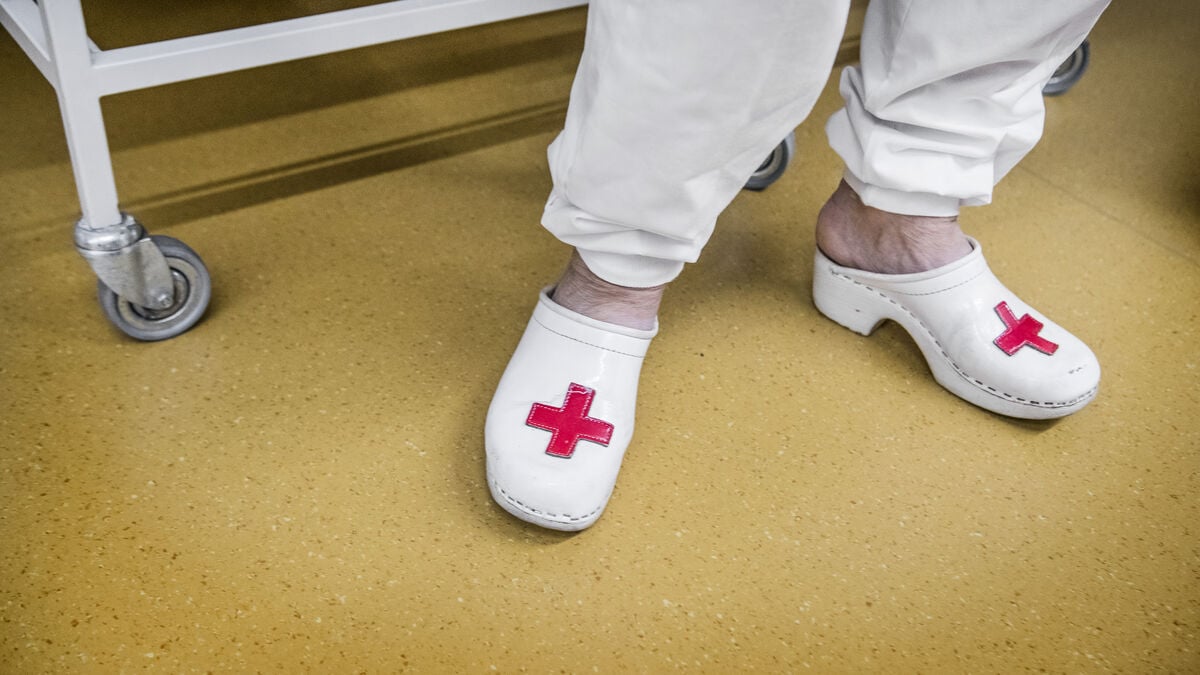
After the pandemic years of 2021–2022, those born abroad have had a much easier time getting a job than before, often in various service professions, in restaurants, in shops and in healthcare.
There has been a remarkable increase after the pandemic, says Anna Westlund, economist and specialist in labor market issues at major bank, Nordea.
Unemployment among foreign-born people was 12 percent at the end of 2025, according to Statistics Sweden's register-based statistics that Nordea uses in its study. Among native-born people, the corresponding figure was 3.5 percent. The gap has narrowed from 12 to 8.5 percentage points since 2020.
“Establishment takes time”
When it comes to the proportion of people who have a job, the employment rate, the gap has narrowed even further. Among Swedish-born people, the proportion is close to 70 percent, and among immigrants, just over 62 percent.
The gap is largest in southern Sweden and smallest in northern Sweden, which may reflect the nature of the labor market. Unemployment is generally lowest in the north and highest in the south.
Many foreign-born people came to Sweden during the large refugee wave around 2015. They have been in Sweden for some time now, and the length of stay has a great impact on the chances of getting a job.
"Establishing yourself in the job market takes time, especially in the Swedish job market because the skill requirements are quite high. We have a fairly small proportion of what we usually call simple jobs," says Anna Westlund.
Now that effect is visible - a picture that does not always emerge in the debate about problems with migration and integration.
"We have missed this positive picture that has existed in recent years. That is not to say that there are still differences," says Anna Westlund.
Higher than the EU average
And as the job market is expected to improve in the future, there are prospects for the job situation for immigrant Swedes to improve further - this is where the potential is greatest.
Even compared to Europe, foreign-born people in Sweden generally have a higher employment rate than the EU average, according to statistics. However, the gap between native and foreign-born people is larger in Sweden.
And that's what I think is relevant to compare with.
This is how employment development is predicted to be this year in different parts of the country, according to Nordea's regional forecast. Percentage change compared to 2025. (In brackets: change in 2025 compared to 2024)
West Sweden, +0.6 (0.0)
Southern Sweden, +1.1 (+0.4)
Småland and the islands, +0.5 (-0.4)
Stockholm, +1.2 (+0.3)
East Central Sweden, +0.7 (-0.2)
North Central Sweden, +0.1 (-0.5)
Central Norrland, +0.6 (-0.1)
Upper Norrland, -0.4 (-0.9)
Source: Nordea