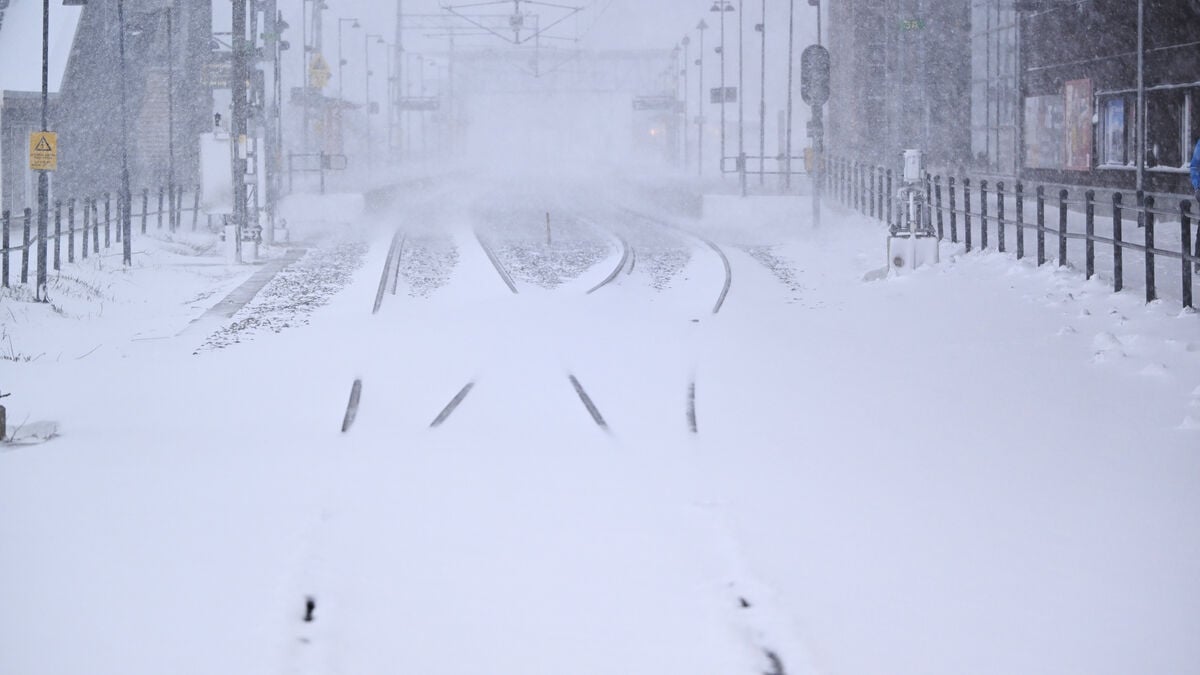
"The main reason for increased delays for travelers was several snowstorms that affected both the infrastructure and the trains," said department head Thomas Andersson in a press release.
During the month, 85 percent of the more than 91,000 commuter, regional and long-distance trains arrived on time, defined as a maximum of five minutes behind schedule.
That was 6.9 percentage points lower than December, which in turn was last year's most punctual month, and 1.8 percentage points lower than January 2025.
At the same time, 94 percent of passenger trains arrived no more than 15 minutes behind schedule in January this year, according to the Swedish Transport Administration.
Cancelled departures are not included in the statistics.