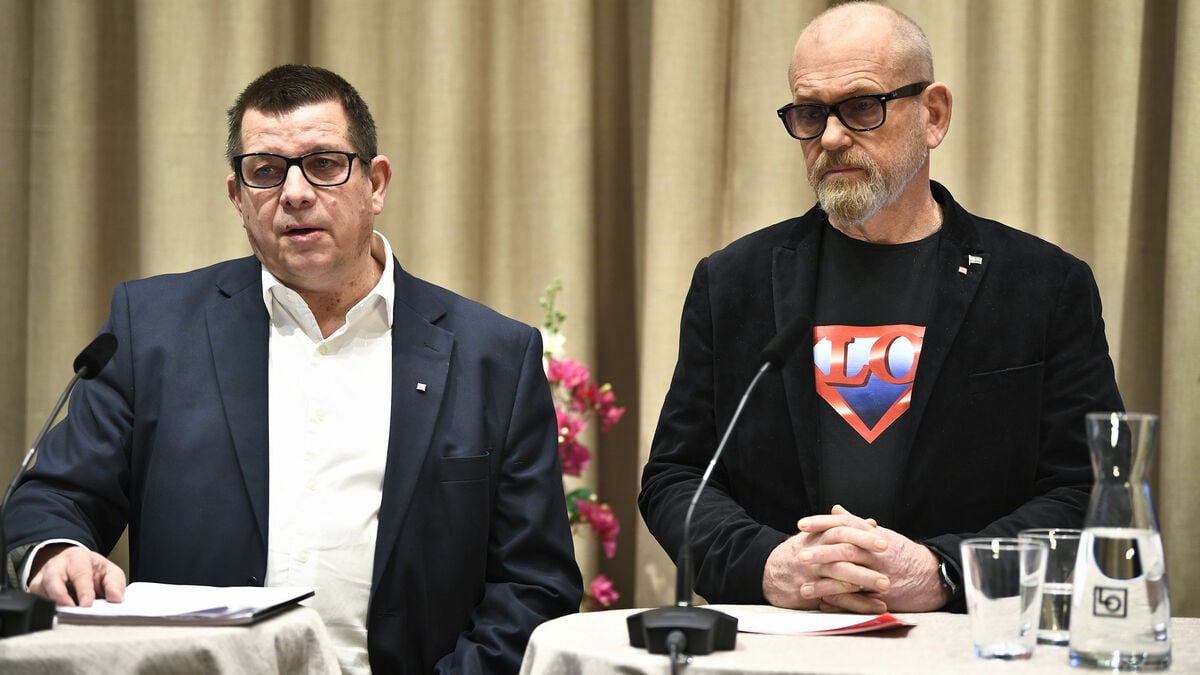
– In Sweden, we have worked according to the 40-hour week for 50 years. Since then, the labor market and society have developed at lightning speed, but the 40-hour week has remained unchanged, says LO chairman Johan Lindholm.
It is time to reduce the weekly working hours for workers in Sweden.
LO therefore intends to request central negotiations with the employers within the Confederation of Swedish Enterprise. The extent of the reduction in working hours that LO aims for will be specified in any negotiations, but one indication is that LO has investigated a 35-hour week.
According to LO's contract secretary Veli-Pekka Säikkälä, it is possible to shorten working hours while maintaining salaries and also receive future real wage increases, even if the scope for wage increases is shrinking.
Says no
But the Confederation of Swedish Enterprise does not want to negotiate centrally, for the entire LO collective.
– No, says Mattias Dahl, vice president, to TT.
– The timing is also very strange when recent years have been characterized by crises. For us, it would be very strange to sit down and negotiate about shorter working hours.
And at the Swedish Industrial Employers' Association, negotiating manager Per Widolf is equally dismissive. According to him, reduced working hours would mean lower wages, fewer jobs and reduced competitiveness for Swedish industry, and less money for welfare.
We do not intend to reduce weekly working hours, he says, calling LO's demands "tone deaf".
The employers emphasize that issues of working hours are included when unions and employers negotiate terms in collective agreements at the industry level. Central negotiations, for the entire labor market, are not the right forum.
Disagree
LO does not agree with this.
– This issue is far too big and important to be addressed at the industry level. Here, we in the main organizations need to step in and take the responsibility required to find common solutions, says Johan Lindholm.
We will be told that it is impossible. It is not, he says.
Lindholm notes that Denmark and Norway have had around 37 hours for decades.
He assumes that the government and parliament support what he hopes the parties will arrive at – and if necessary – through legislation.
The Social Democrats agree that working hours need to be shortened, and the party's labor market policy spokesperson Ardalan Shekarabi states that "the day there is an agreement between the parties, we will take our responsibility based on the role of politics."