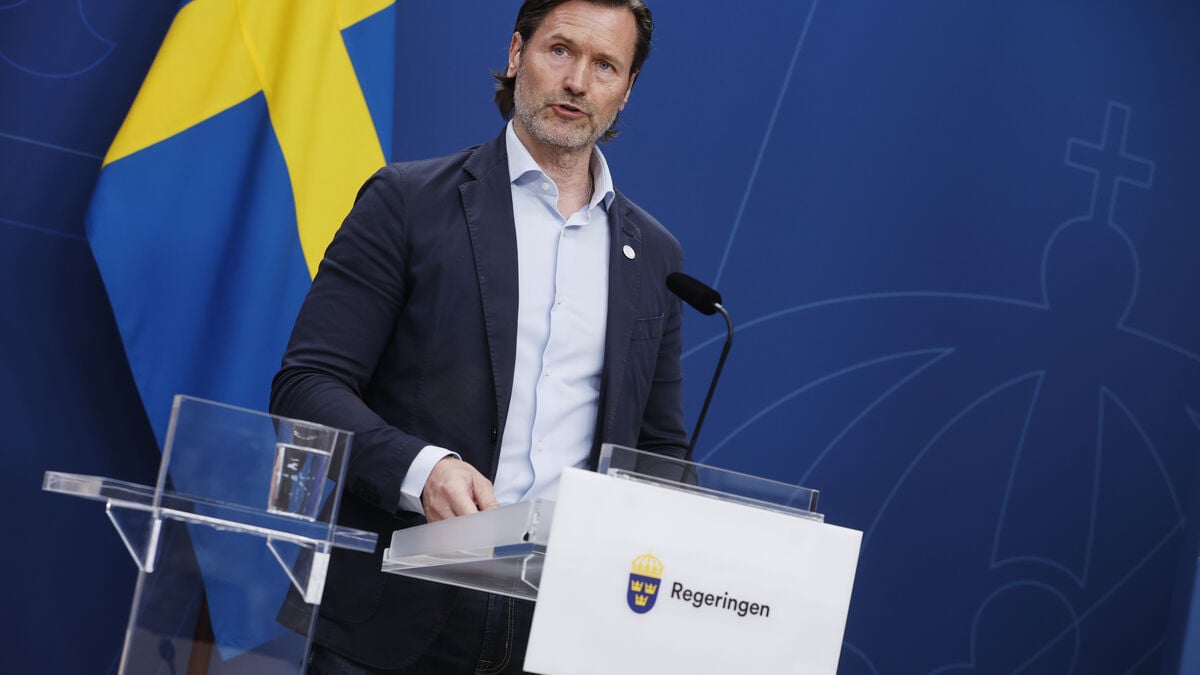
Liberal Party leader Simona Mohamsson and criminal policy spokesperson Martin Melin were interviewed in Dagens Nyheter in connection with a visit to Högsboanstalten in southern Gothenburg. It is one of the prisons where minors (15–17 years old) will be able to be placed from July next year.
Unlike a regular class of 30 students, they will sit in groups of four or five. The prison service has qualified teachers and there will be counselors. So yes, I think they have a better chance of completing their education here in a prison than in school outside, Melin tells DN.
Those who are convicted are often not present in regular school, say Melin and Mohamsson.
“Extreme situation”
Currently, minors convicted of serious crimes end up in the State Institutionstyrelsen's (Sis) youth homes. They have not functioned as they should, according to Mohamsson.
"We are in an extreme situation in Sweden, where we have 13, 14, 15-year-olds shooting on our streets. Then it is too late to come in with Band-Aids, then you have to sit here and have a functioning school system," she says.
This spring, the government appointed an inquiry into how children and young people can receive their education in prison. It is due to report on December 15.
Warns against distance learning
Fredrik Hjulström, social policy director at the Swedish Association of Academics SSR, says that the government has pushed too hard on this issue.
Everyone, including the Swedish Prison and Probation Service itself, says that it is going too fast and that the time aspect is critical, he tells TT.
He has received signals that the investigation will include an opportunity for the Swedish Prison and Probation Service to conduct some of the teaching remotely.
"Who has to pay for this? It's the children," says Hjulström.
He cannot say how long it takes, but he compares it to the teaching at the Sis homes.
They weren't the best in the world at it 20–25 years ago, when they realized that the school part wasn't working. It took quite a few years. They have a good school operation today, if you look at it individually. It will take time.
The government has proposed lowering the age of criminal responsibility to 13 over a five-year period. The Swedish Prison and Probation Service has been tasked with preparing prison space for 13- and 14-year-olds convicted of particularly serious crimes.