The competition consisted of four heats with 25 riders in each.
The winner was American Gus Schumacher, who competed in the second heat. He finished in 9:35.4, taking his second World Cup victory of his career.
Other podium places went to Austrian Benjamin Moser and Norwegian Lars Heggen, who were also in the second heat with Schumacher.
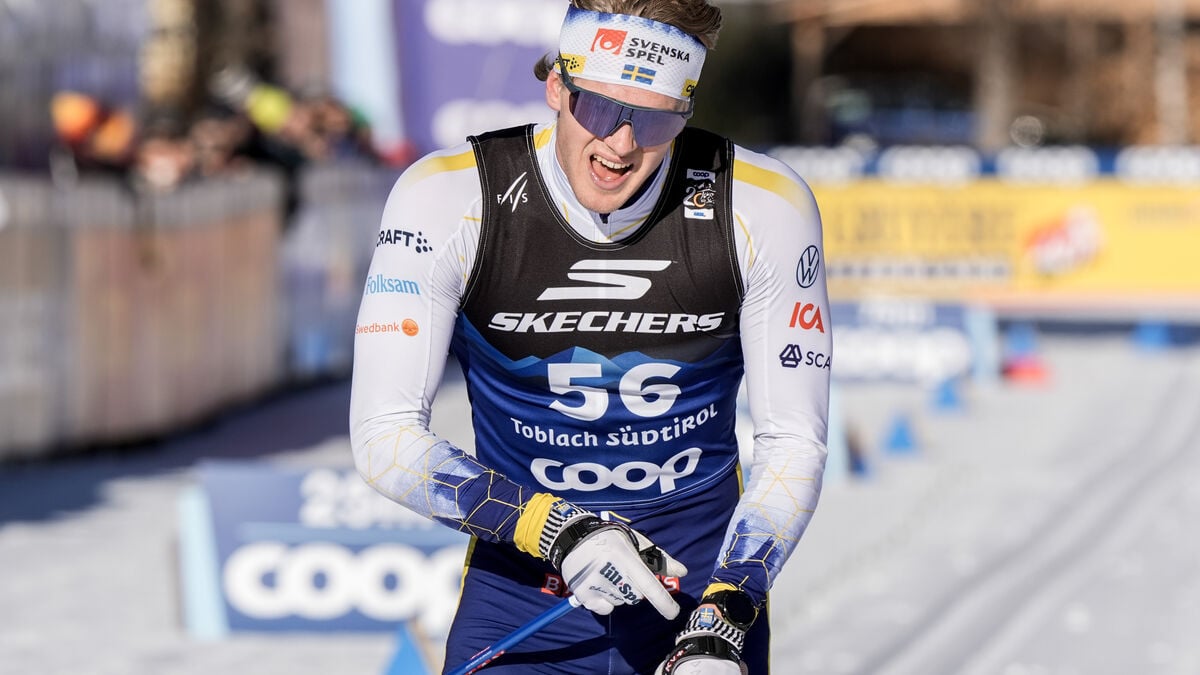
Gustaf Berglund came eighth in his heat, despite a fall, but ended up in 30th place overall and became the second-best Swede.
"Especially"
It's special, but you knew the conditions so you just have to like the situation, Berglund told Viaplay.
The best Swede was Jonas Eriksson, who competed in the first heat, in 28th place with a time of 9:46.1.
I don't know if you can call it a heat, there are quite a lot of people and it's hard to advance. It's a little different, Eriksson said.
William Poromaa ended up in 47th place.
"It was tough, it was really hard. I don't know what to say really, it was special," he said.
Indicates worst Swedish result
The highest hopes among the Swedes were placed on Edvin Anger. Instead, he was the worst-placed Swedish skater, finishing 78th out of 102 skaters.
"It's just a matter of forgetting. There's nothing to take with you, it's just a matter of going home, recharging and driving again tomorrow because I don't really know what happened today," Anger said.
We are putting this behind us and looking forward to a hopefully better 2026.
Alvar Myhlback was 45th, Truls Gisselman 53rd and Johan Ekberg 55th. Anton Grahn ended up in 61st place and Erik Rosjö in 63rd place.
Has been criticized
Star Johannes Høsflot Klæbo won his heat but had the twelfth-best time overall, 9:44.0.
The new format has been criticized in advance, partly because the conditions can differ greatly depending on which heat the riders end up in and a lot can be decided by chance.
At the same time, several skiers have been looking forward to trying something new and the FIS hoped that skiers who are not usually at the top would be able to join in and fight for podium places.
Johannes Høsflot Klæbo continued to lead the overall standings of the Tour de Ski, 45 seconds ahead of second-placed Lars Heggen and 57 seconds ahead of third-placed Harald Østberg Amundsen. Edvin Anger was fourth overall before the third stage but dropped to tenth place after the day, 1 minute and 22 seconds behind Klæbo.