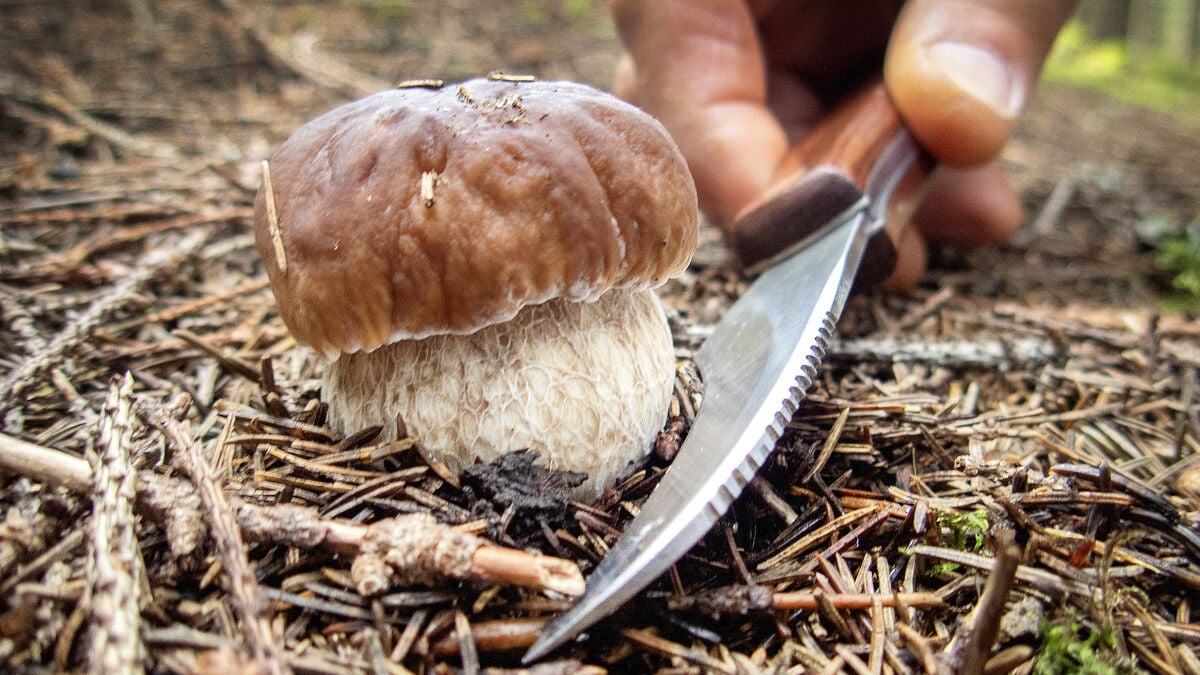
It's not too late, it's now that things are starting to get going, says mushroom expert Michael Krikorev at the Swedish University of Agricultural Sciences (SLU).
The mushroom situation around Uppsala, where he works, has been desert-like during the summer, he says. It has been the same around Skövde, where he is currently teaching a mushroom course. But in both places, it is Karl Johan mushrooms that are now coming into season.
At least in some places it's Karl Johan time right now.
The rain decides
Rain is essential for the fungus to grow, so his best tip is to keep an eye on SMHI's precipitation map. If it has rained heavily, preferably for several days in a row, the fungi usually start to grow after a week or ten days.
The mycelium, the part of the fungus that is underground, can withstand quite a bit of drought, but is damaged if it becomes extreme. Most edible mushrooms live in symbiosis with trees and can thus obtain liquid via the roots of the trees, but the part of the fungus that we humans are looking for, the fruiting bodies, only emerge if there has been enough rain.
"Dry years can be found in valleys, on north-facing slopes and in damp depressions. Wet years are found everywhere," says Michael Krikorev.
“No mushroom harvest”
It hasn't been a great season in northern Sweden either, says Göran Lidén, mushroom consultant in Norrbotten.
In some small locations, the mushrooms have been very good, but overall it hasn't been a great mushroom harvest.
Birgitta Damne, a mushroom consultant in Tranås in northern Småland, has not found any mushrooms at all so far. She has only found some red-yellow trumpet mushrooms in a bog.
I have never experienced such a small number of mushrooms.
From Uddevalla in Bohuslän, mushroom consultant Malin Mobrandt says that the recent rain is now starting to yield results.
There's a lot going on now.
Minor worm infestation
One advantage of the fungus peaking just over a month later than normal in southern and central Sweden is that the fungi become less worm-infested when the nights start to get cooler and chillier, emphasizes Professor Anders Dahlberg.
"Lower temperatures and not least night dew contribute to September being a good mushroom month in southern and central Sweden. The fruit bodies also stay fresh longer during this period of the year," he says in a press release from SLU.