The statement came in an interview with Fox News. Trump also said the diplomatic situation now looks complicated after what, according to him, had been a "very close" peace deal with Iran.
"You have fired your missiles, that's enough. Come back to the negotiating table and make a deal," the president said, adding that he was also "not happy about" Israel's attack on Beirut, Lebanon, on Sunday.
Trump told the news site Axios that he intends to urge Prime Minister Benjamin Netanyahu to take it easy:
I'm going to call Bibi right away and tell him not to fight back.
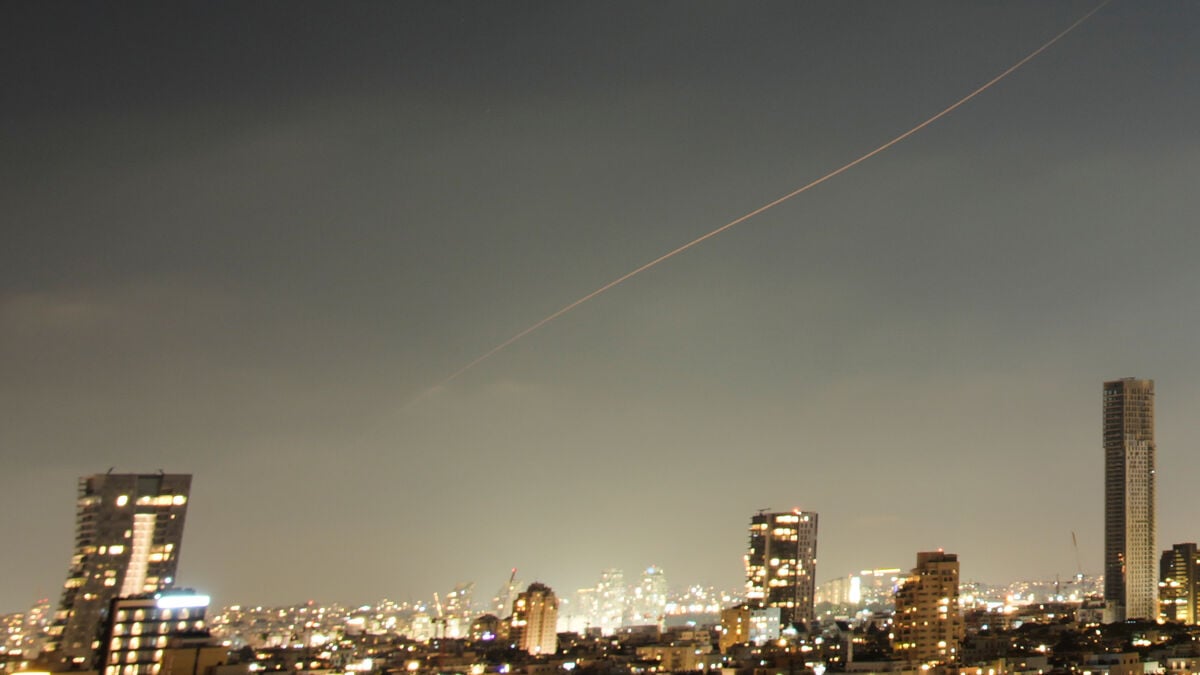
At around 9 p.m. local time in Sweden, the Israeli military reported on social media that two waves of rockets had been fired at Israel. A little later, the military said that all the rockets in the first wave had been intercepted, but that new projectiles had been identified.
A spokesman for the Israeli military told The New York Times that a total of ten missiles were fired from Iran. By 10 p.m., the attack appeared to be over.
Response to Beirut attack
The Iranian missiles were fired after Israel earlier in the day attacked targets in a suburb in southern Beirut. According to the Israeli military, it was in response to the Iranian-backed Shiite militia Hezbollah firing rockets into northern Israel.
Iran's military headquarters Khatam al-Anbiya said in a statement that "all red lines have been crossed" with the relatively rare Beirut attack, the AFP news agency reports.
"The Israeli army must cease its attacks on southern Lebanon and the suburbs," Major General Ali Abdollahi said in the statement, warning of more "devastating" attacks otherwise.
According to a statement from Iran's Revolutionary Guard, missiles were fired at the Israeli Ramat David air base, located outside Haifa in northern Israel.
Schools are closed
Iran has closed its airspace in the western parts of the country, according to state media, and Israel has decided to keep all schools closed on Monday.
Although Israel has repeatedly bombed targets in southern Lebanon during the offensive there despite the current ceasefire, Beirut has only been attacked a few times since mid-April.
Regarding the Iran conflict, the US has sporadically attacked Iran during the ceasefire, while the Iranian military has shelled American bases in the region, among other actions. Israel and Iran, however, have not attacked each other during the ceasefire.