The demonstrations have been gradually spreading across the country for almost two weeks. But they are only now being described in the tightly controlled state television news, the AP news agency reports. The broadcasts accuse infiltrators from the country's arch-enemies - the United States and Israel - of being behind the deadly violence.
A few hours later, according to news agencies, Khamenei called the discontented "vandals" who are destroying streets and squares "for the president of another country", i.e. Donald Trump in the United States.
"Death to the USA," the audience responds in the broadcast.
Late Friday afternoon, US-based HRANA reported that at least 62 people have been killed since the protests broke out.
The Shah's son
The wave of protests is being fueled by Reza Pahlavi, the eldest son of the last Shah of Iran, who is calling for a popular uprising from exile in the United States. How much influence he now has is uncertain, but the AP news agency reports that the demonstrations include slogans in support of the Shah - cries that in the past could have led to death sentences in Iran.
Pahlavi called for loud protests at 8 p.m. on Thursday and Friday. And at least on Thursday, before the internet was shut down, international media reported that the call had been heeded, with many thousands on the streets.
"Death to the Islamic Republic!" AP quotes protesters.
Even on Friday, a day later, the network remained inaccessible, according to the international organization Netblock.
Many dead
Holly Dagres at the Washington Institute for Near East Policy said she believes that Pahlavi's statement had a major impact.
"According to social media posts, it is clear that Iranians are delivering and taking the call to protest to end the Islamic Republic seriously," she told AP.
After Thursday's protests, the news flow fell silent.
"That's exactly why the internet was shut down: to prevent the world from seeing the protests," says Holly Dagres.
"Unfortunately, it also gives security forces the opportunity to kill protesters without transparency."
UN human rights chief Volker Türk demands that all cases of deadly violence against protesters be investigated.
"Those responsible for all forms of abuse must be held accountable in accordance with international standards," he said in a statement on Friday afternoon.
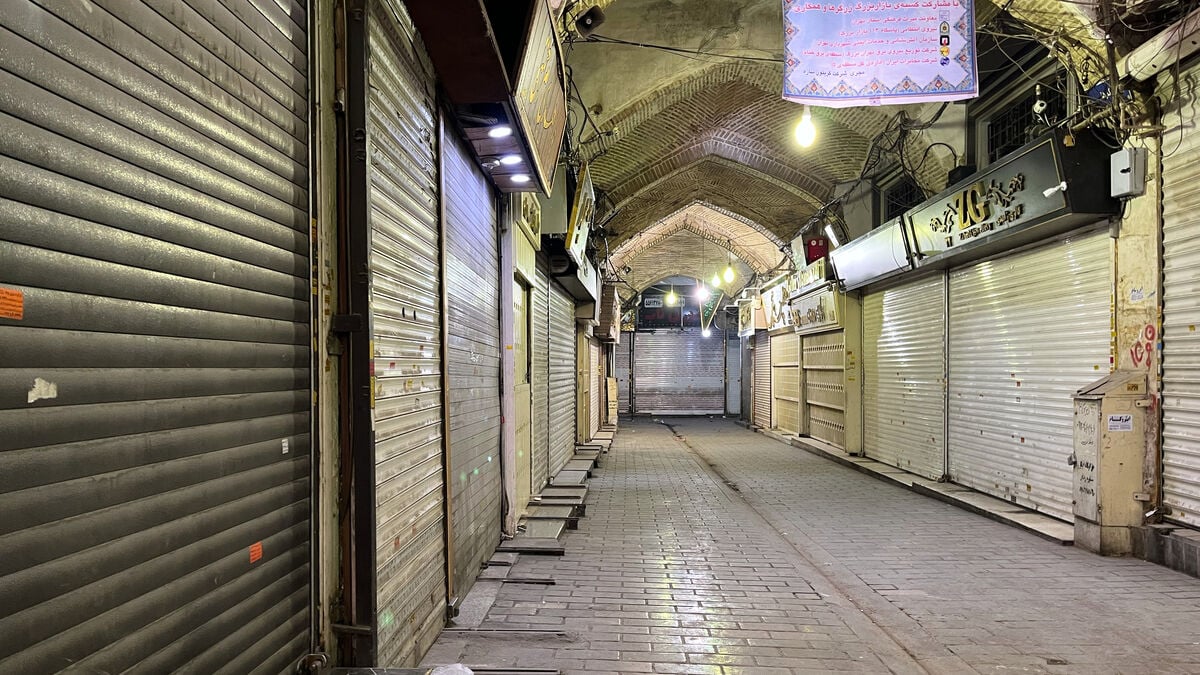
The demonstrations in Iran began in late December when shopkeepers took to the streets to express their dissatisfaction with skyrocketing costs and falling living standards. Since then, other protests have grown massively and now encompass the entire country.
The dissatisfaction is rooted in the miserable economy with skyrocketing inflation and a currency, the rial, that has collapsed. But, as with the wave of protests after the death of the young Mahsa Zhina Amini at the hands of the so-called morality police in 2022, the anger is directed at the regime in general.
Since the protests broke out, dozens of people have been killed in clashes with security forces.