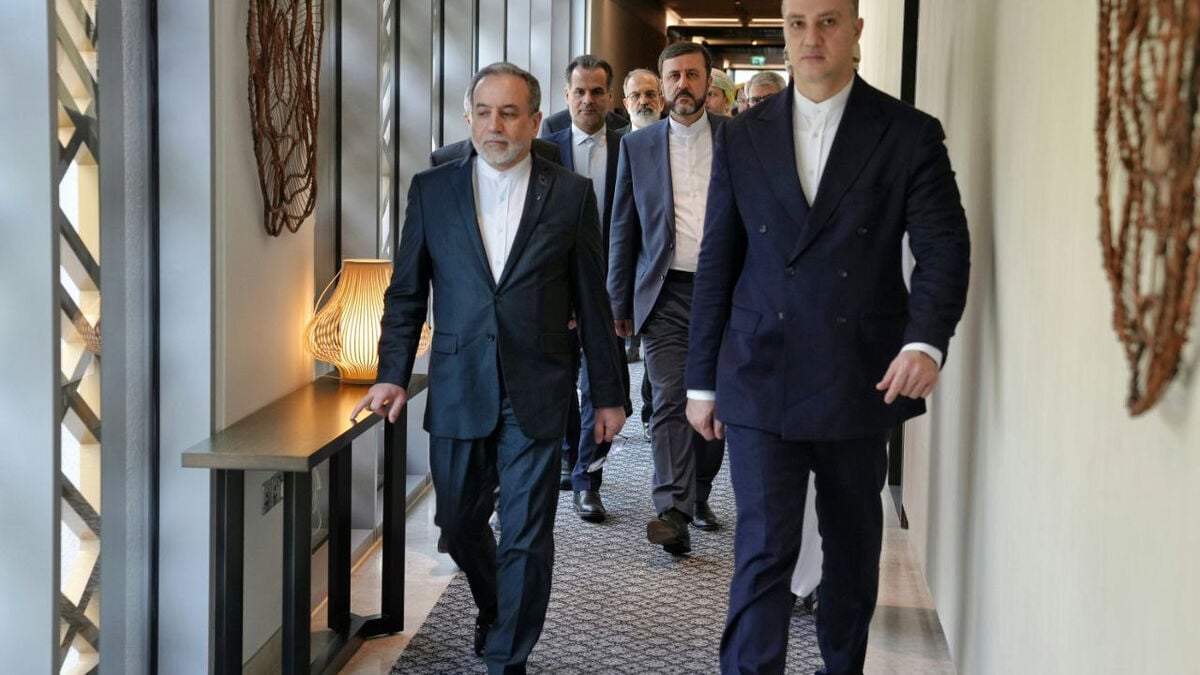
Araghchi said in an interview with Iranian state television that Friday's indirect talks in Oman's capital, Muscat, took place in several rounds. The focus was primarily on reaching a framework for continued negotiations.
"Our arguments were exchanged in a very positive atmosphere and the other side shared its views with us," Araghchi said, according to AFP, emphasizing that the talks were solely about nuclear energy.
According to the Iranian Foreign Minister, Iran and the United States have agreed to continue negotiations.
But we will decide on the conditions and timing at a later date, he said, adding that the delegations must now first return to their capitals to consult with their leaders.
Oman's Foreign Minister Badr al-Busaidi is said to have acted as a mediator between the delegations, led by Araghchi and US envoys Steve Witkoff and Jared Kushner, respectively.
Test-fired missile
Shortly before Friday's negotiations, there were power plays from both sides.
Araghchi said Iran will defend itself against “any excessive demands or adventurism.” At the same time, state-run Iranian media published a video purportedly showing Iran’s Revolutionary Guards test-firing the country’s most advanced long-range missile.
The United States, for its part, signaled readiness to act militarily by urging American citizens to leave Iran.
Ahead of the talks, sources told Israeli newspaper Haaretz that the parties had agreed to discuss only Iran's nuclear program. Previously, the United States had also demanded that Iran limit its missile development and curtail support for its terrorist proxies in the Middle East, such as the Houthis in Yemen and Hezbollah in Lebanon.
Thousands were killed
Among Iranians, optimism is low, Qatar-based Al Jazeera reports.
"Whatever happens in these talks will not benefit the people of Iran because they have no representation and their interests are never prioritized," said exiled Iranian film director Jafar Panahi, highlighting that thousands were killed by the Islamic Republic during January's wave of protests in Iran.
Oman also acted as a mediator between Iran and the United States during last year's nuclear talks. Those negotiations were abruptly interrupted in June after the United States sided with Israel in the 12-day war.