More than 27,000 Swedes are homeless, according to the National Board of Health and Welfare. The number is estimated to be higher, and a group that often does not appear in the statistics are people who do not have social problems.
In 2025, 3,330 people were evicted by the Swedish Enforcement Authority, an increase of nine percent compared to the previous year.
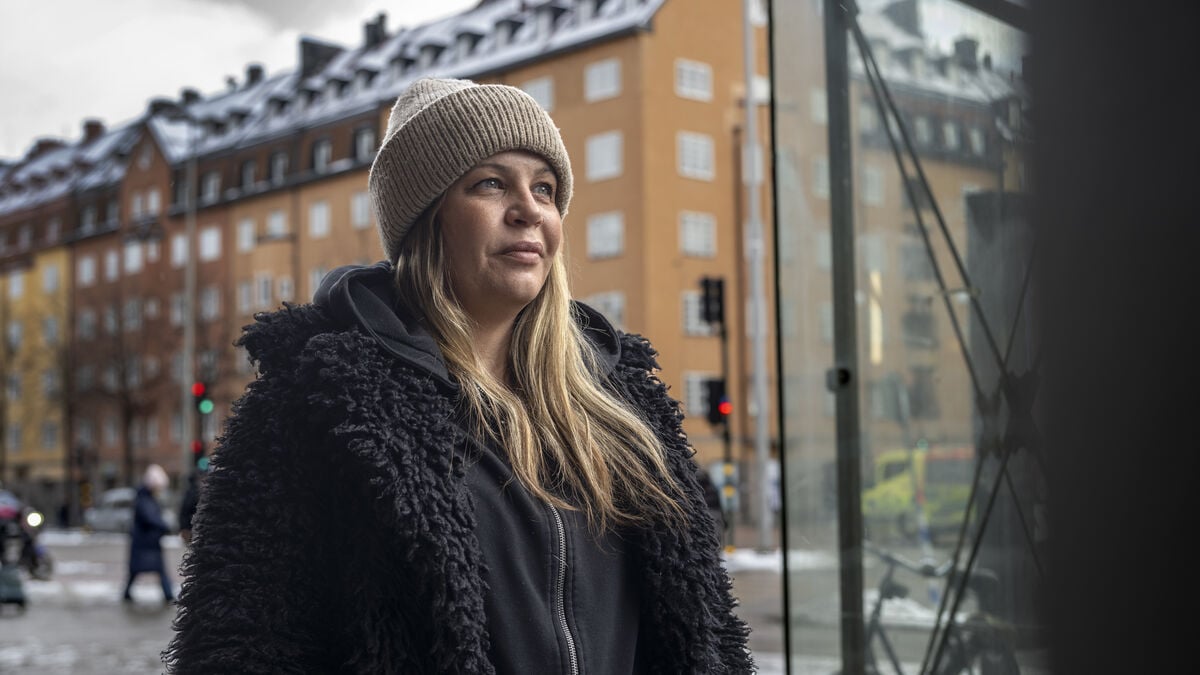
For Veronica, homelessness came suddenly.
Lost identity
She lived what could be described as a completely ordinary life: four children, a husband, a job and an apartment.
But a divorce upended her daily life.
The repayment requirements meant I couldn't buy my husband out of the apartment, and the fees were high. In the end, the bailiff came after me and I didn't have a long wait for rental apartments. It all made me fall into a deep depression, she says.
I was separated from my children. I lost my entire identity.
A spiral of unsafe, extremely temporary accommodation followed. Veronica was put on sick leave and describes her life as a circus; she saw no end to it and her condition kept getting worse.
When everything was at its darkest, things turned around. Thanks to Stadsmissionen's own housing queue, Veronica got an apartment.
The City Mission was the first to understand the problem. How can you organize your life if you have no foundation to stand on?
Veronica's story is far from unique. In the Swedish City Missions' new homelessness report, the organization highlights "the forgotten group."
Every six years Sweden compiles statistics on homelessness, but many people are not visible in them. Sweden counts homelessness in an old-fashioned way. Often, people with substance abuse problems or mental illness are taken as the basis.
For the past four years, the government has worked on a new national strategy against homelessness.
"In some parts it has been good. But the structural part is not included in the strategy. There needs to be a socially sustainable housing policy where more housing is available for ordinary people who find themselves in an economic crisis," says Rydberg.
Today, Veronica is doing job training at the church. She dreams of becoming a deacon - and of talking to politicians about how the problem of homelessness can be solved.
"Apartments must be built that are adapted to low-income earners, such as single women. And municipalities must learn to reach people who suffer from mental illness. All parties must cooperate better," she says.
In its report, the City Mission proposes, among other things, that the state should develop a national action plan for a socially sustainable housing supply.
The City Mission also believes that a housing commission should be established, with the task of taking a holistic approach to the Swedish housing market. The commission should also have a mandate to propose changes to taxation and financing of housing.
Furthermore, the City Mission believes that the housing allowance should be expanded, increased and index-linked.
Municipalities should, among other things, use prioritization to provide housing to people who cannot enter the housing market on their own, writes Stadsmissionen in the report. Rental guarantees should be available in all municipalities for families with children.
The City Mission also writes that the state and the private sector should together reserve affordable apartments for households with weak finances and that protection for those living in secondary housing should be strengthened.