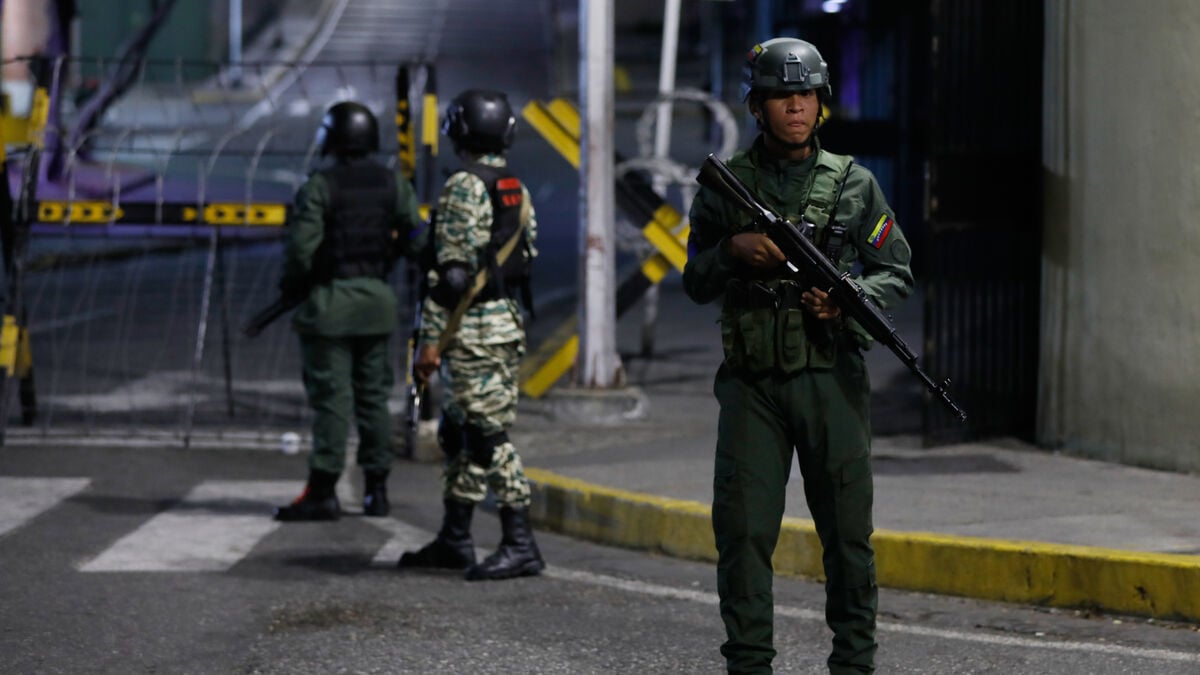
The US has violated at least two rules of international law, explains Mark Klamberg, professor of international law at Stockholm University.
"One is the prohibition of violence - you may not use military force against another state. The other rule prohibits intervention in the political affairs of other countries," he says.
Exceptions to the prohibition on violence exist if an attack is carried out with approval from the UN Security Council, which the US does not have. Another is if the action is taken in self-defense, which the US claims. The US has over the years used a very broad definition of self-defense, including in the war on terrorism, says Mark Klamberg.
They say this is some form of narco-terrorism. The right of self-defense is in the UN Charter, but then the Charter speaks of an armed attack and it cannot be claimed that Venezuela has exposed the United States to an armed attack.
Could follow
Violations of international law can have major consequences, warns Klamberg.
It's not that I mourn Maduro, but we still have to think that there may be other countries that see what the US is doing and do the same. It's possible to imagine a scenario where Russia or China are dissatisfied with some leader in a neighboring country and then they could use this as a precedent.
How do you think the Swedish government is reasoning right now?
I think they have a headache. At the Ministry of Foreign Affairs they have a department with international law lawyers who talk to the Foreign Minister and they probably say that this is illegal. But how important is it for us to say that, given that we want good relations with Washington?
“Delicate situation”
Klamberg compares it to when the US invaded Panama in 1989 and put President Manuel Noriega on trial in Florida for drug trafficking, among other things. After a vote, the UN General Assembly condemned the US invasion.
I am almost convinced that this will also end up in the General Assembly and that will put Sweden in a delicate situation. How should Sweden vote in such a vote?