Children easily forget newly acquired knowledge. It has nothing to do with teaching but more to do with how the brain works, says Anna Teledahl, a researcher in mathematics didactics.
Didactics is about learning and the art of teaching. Parents can easily help their children keep their math skills alive during the summer with exercises in everyday life, points out Anna Teledahl.
By repeating, we remember more, she says.
She points to the German psychologist Hermann Ebbinghaus's forgetting curve. He showed through his research that memory declines according to a regular function depending on time. Through repetition, memory is refreshed.
“It doesn't feel like school”
Let the children actively use the knowledge in a fun context, which doesn't feel like school. Then you get them to pick up the knowledge, to try to remember it. And the knowledge will eventually stick in their long-term memory.
If you are going to learn something new and the new thing has no connection to things you recognize, it is difficult to remember it. Children therefore need experiences that they can connect their new knowledge to. Children do not have as much to hang new knowledge on - therefore they learn less per occasion.
For example, it is very important that children gain experience reading and following recipes so they learn to distinguish between different units such as deciliters and liters. This will make it easier for them to work with units in school, says Anna Teledahl.
Experiences with games lead to children practicing mental arithmetic, strategy and probability, she further explains.
Anna Teledahl also recommends letting children shop and look at receipts. It's a way for them to learn to round off, use strategies to quickly add numbers - to see if they have enough money.
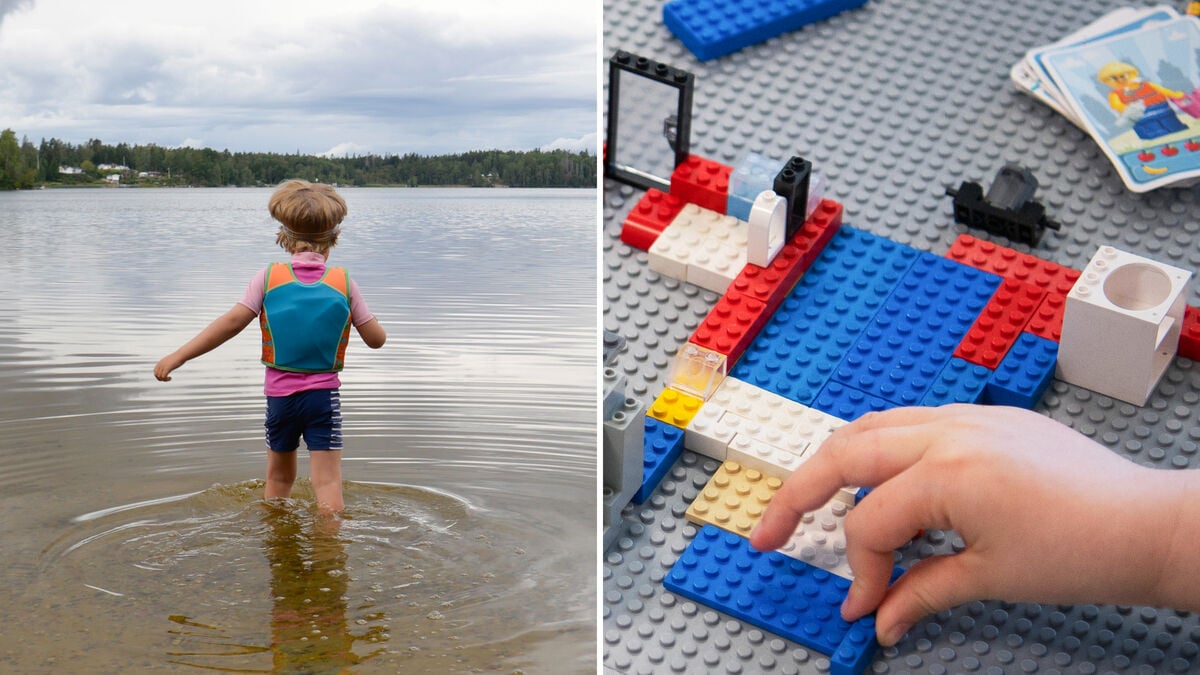
By building things like a hut or with Legos, they gain experience with length, angles and areas.
Playing with math problems
Anna Teledahl also wants to recommend working on problem solving with your children, which can be done together with the whole family during car trips.
My absolute favorite are Fermi problems, which have no exact answers. They are difficult to calculate and depend on assumptions. For example, the questions might be: “Can the entire population of the world fit on Öland? How far does a person walk in their lifetime?”
Anna Teledahl concludes with the advice to create and play with math problems.
I think all parents can come up with math stories or tricky tasks, such as: "What do you think comes next in line 2, 6, 10, 14?"