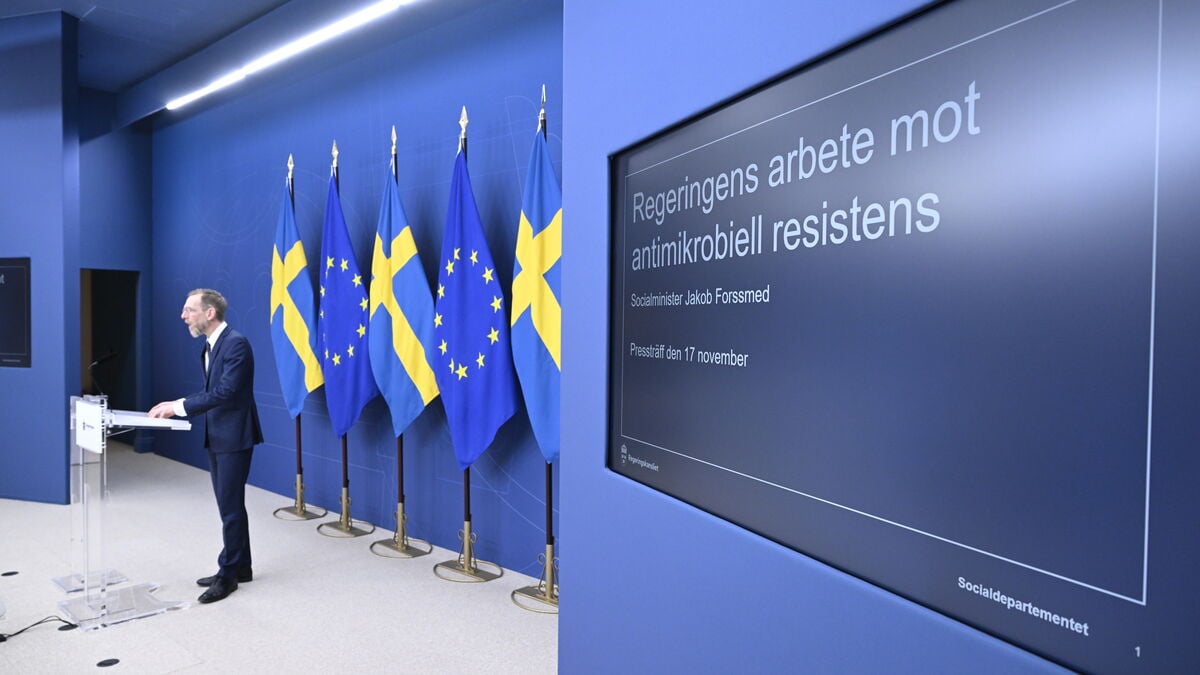
The work is part of Sweden's long-term strategy against antimicrobial resistance, which was presented last fall.
This means an updated mission for the Public Health Agency: to "ensure access to both new and older antibiotics."
"Safe and stable access to effective antibiotics is crucial for healthcare, for combating antibiotic resistance and for Sweden's preparedness. Sweden currently has a low level of antibiotic resistance, but we cannot sit back. We need to continue our work both nationally and in collaboration with other countries," says Minister of Social Affairs Jakob Forssmed (KD) in a press release.
Antibiotics are used to treat infections caused by bacteria.
Overuse of antibiotics has led to some bacteria becoming resistant.
When bacteria encounter an antibiotic, they can develop resistance through mutation. Then the patient needs to be switched to an antibiotic that works. But in the long run, new mutations arise - and eventually, in the worst case, there is nothing left to switch to.
The risk of resistance is reduced if antibiotics are not used unnecessarily and if bacteria are not exposed to doses that are too low or treatment courses that are too short.
By 2050, 70,000 Swedes are expected to be affected by resistant bacteria each year, according to the Swedish Public Health Agency.
Bacterial resistance to antibiotics is classified by the WHO as one of the greatest threats to human health and is sometimes called a "silent pandemic".
Sources: National Encyclopedia, Healthcare Guide.