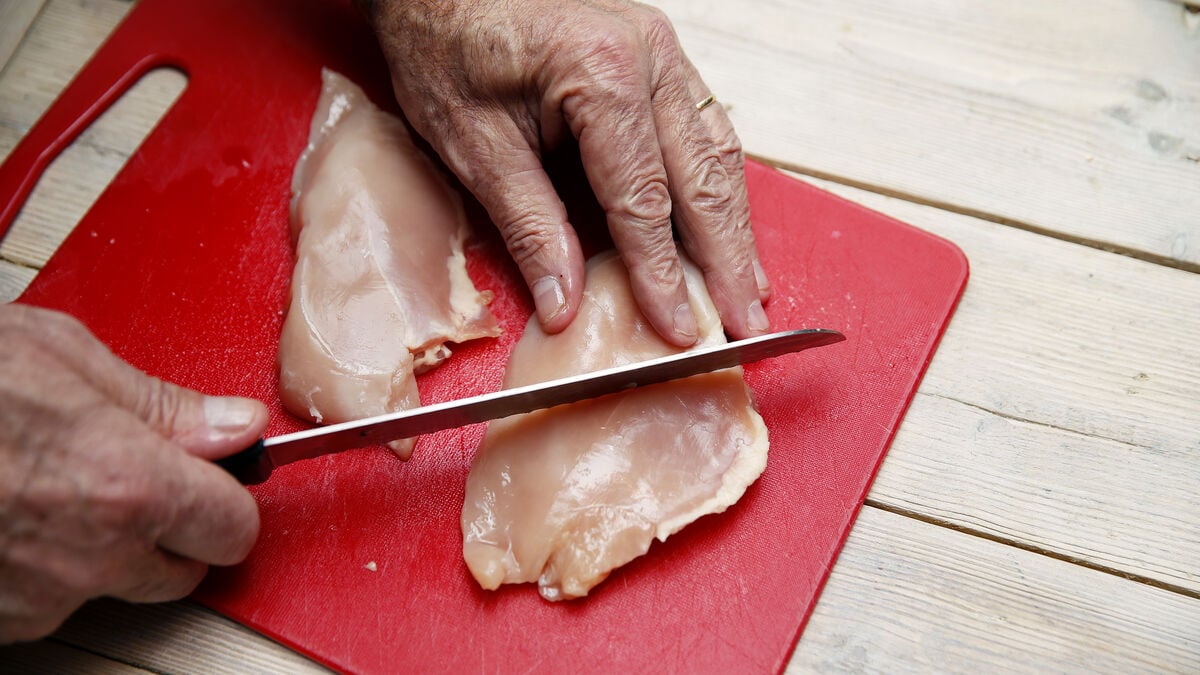
Campylobacter is a common bacterium that both humans and animals can carry. This applies primarily to poultry such as chicken, but it can also be found in pork, beef, sheep and unpasteurized milk.
In the summer it is often very hot and humid, which means that the bacterium thrives very well, says Catarina Flink.
Fever and aches
In humans, it causes severe stomach pain, nausea, fever and sometimes bloody diarrhea.
Symptoms usually appear two to five days after ingesting the bacteria, and most Campylobacter infections resolve on their own after a few days. Sometimes it can cause sequelae, such as joint problems, chronic stomach problems and nerve disease, says Catarina Flink.
Most often, people get the bacteria from chicken.
A common way of spreading is via hands and kitchen utensils. It only takes a few Campylobacter bacteria to cause infection. A splash or contact with contaminated meat can lead to infection, says Catarina Flink.
Therefore, it is important to maintain good kitchen hygiene when cooking chicken.
Do not rinse under the tap.
Catarina Flink advises washing knives and cutting boards, wiping up meat juices with paper towels instead of dishcloths, and washing your hands with soap and water.
Another tip is not to rinse chicken under the tap, because that can spread Campylobacter to other food nearby. You should also always cook chicken thoroughly, because that will kill any bacteria present.
Campylobacter can also be spread through livestock and pets, unpasteurized milk, or water.
According to the Infection Control Act, all cases of Campylobacter infection must be reported to an infection control physician.
Campylobacter is an intestinal bacterium that occurs in many animal species.
The disease is usually spread through contaminated food or drinking water.
The most common way people become infected is through chicken.
The incubation period is usually 1–3 days but can be up to ten days.
Most people become acutely ill with diarrhea, which is sometimes bloody, as well as stomach pain, nausea, vomiting and fever.
In 2025, 5,463 cases of Campylobacter infection were reported in Sweden.
The statistics also show that from the end of May this year, the number of domestically infected people increased, and in the first week of June, 91 cases were reported. The cases are found in several regions.
Source: Public Health Agency, Swedish National Food Agency.