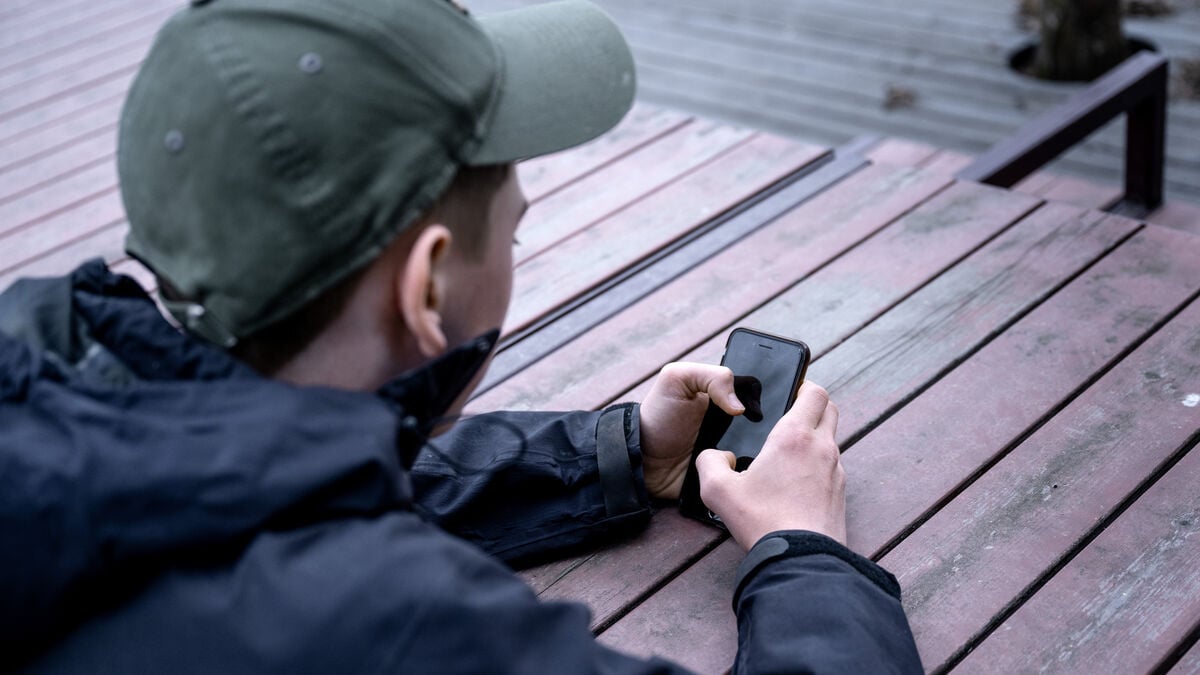
One in twenty children has been contacted by someone they don't know and asked to receive or send money, for example, via Swish. This is shown by a new Novus survey commissioned by Skandia, in which just over 700 children aged 9–17 responded.
Such a request may seem innocent, but if the money comes from criminal activity, the child is guilty of money laundering.
Johan Halling, with the police's National Fraud Center, describes the summer holidays as a "peak season" for recruitment.
To recruit young people who can pass on money from, for example, fraud, drug trafficking and human trafficking, criminals use manipulation, rewards or threats. Contacts are often made via messaging apps such as Snapchat and TikTok, or online games such as Roblox.
They post assignments in chats and on various platforms and entice you with quick money. Sometimes they can even make it seem like you're getting a summer job in the financial sector where you'll funnel money.
Not aware
Often, young people are not aware that they have done something illegal when they receive or pass on the money, according to Halling, who emphasizes personal responsibility.
If you go abroad, you can't say "someone else packed my suitcase." It's exactly the same here: you as an individual are responsible for what money comes into and goes out of your account.
In addition to a blocked account and suspension from Swish and BankID, young people convicted of crimes risk being restricted in their future choice of profession or travel destination. They may also be required to repay debts, which can make it more difficult to obtain a subscription or a rental property.
“Young people are being pressured”
In addition, the promised reward often does not materialize and the children risk being drawn deeper into crime, according to Halling.
A debt is found so the young people are pressured to commit more serious acts. Young people often think that if something goes wrong, they will be the ones to get hurt, but the gangs are not satisfied with that. If the young people cannot resolve the situation themselves, they will turn on their loved ones.
He advises parents to take an interest in their children's everyday life, including on social media, and prepare them for how to act.
It can be very difficult for a child to resist a cybercriminal who is pressuring them to do something. In that case, it's okay to lie and say "I don't have Swish," even though you do.
Show interest in your child's social life and ask what happened during the day, including online. Keep track of which apps and social media are used, who your child is in contact with and what they talk about.
Keep an eye on bank accounts and transactions (parents of minor children have access to their accounts). In addition to Swish transfers, children may, for example, be asked to withdraw cash from ATMs or buy electronics or branded clothing that is then resold.
Be vigilant if the child makes new acquaintances, especially older ones, if the child changes their attitude, suddenly receives things or monitors their phone. If the child starts offering things themself, it may be a sign that the child has been assigned to recruit others.
Talk to your child about the risks early on. Practice what your child should do if someone contacts them and emphasize that it is okay to lie to get out of the situation. For example, by saying that you don't have Swish, don't have your bank card on you, or that your parents review all transfers.
If you suspect that money that may be linked to money laundering has appeared in your child's account, contact the bank and file a police report.
Source: Johan Halling, crime prevention coordinator at the National Fraud Center
The survey was conducted via online interviews in Novus' randomly recruited Swedish panel. 716 children aged 9-17 and 1,020 parents of children in the same age group responded to the survey, which was conducted between March 24 and April 13 this year.
One in twenty of the children surveyed has been contacted about receiving or sending money from someone they don't know. Three in ten have not told an adult that they have been contacted and one in four would not tell an adult because they don't think it is that serious.
98 percent of parents believe they are in control of their child's financial life, but fewer than half (46 percent) say they regularly access their child's account and review their child's financial transactions.
Nearly three in ten children did not know that it can be illegal to receive or forward money to someone else. About the same proportion of parents are unaware that a child who forwards money can commit a money laundering offence.
Source: Novus report "Parents and children on money laundering and financial security", commissioned by Skandia.