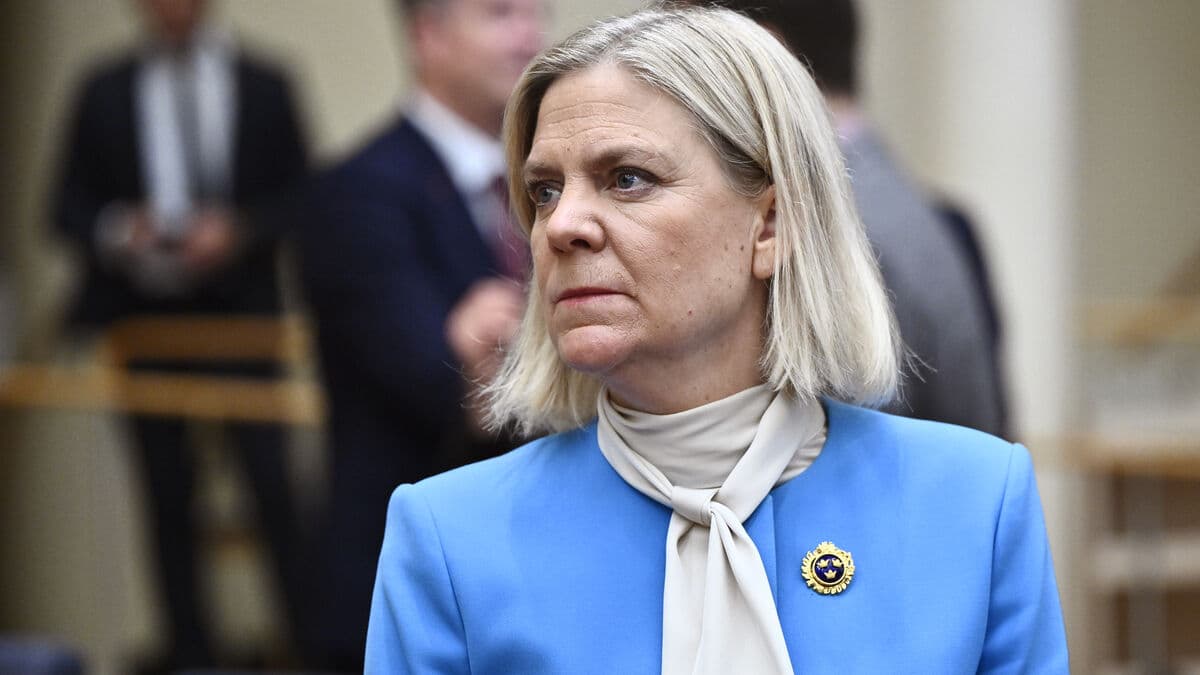
The Foreign Minister has just visited three countries in the Middle East – Saudi Arabia, Qatar and the United Arab Emirates.
These are countries that are in a difficult situation given the attacks that have been carried out by Iran, she says.
Qatar is participating as a mediator between the US and Iran to bring about a lasting ceasefire and the opening of the Strait of Hormuz.
Attacks from both sides
During the visit to the capital Doha, Malmer Stenergard had a meeting with her Qatari counterpart.
My reading here, after conversations with colleagues involved in the attempts that are now being made to find a more lasting solution through diplomatic means, is that we are in a very intense stage of the negotiations. It is believed we are relatively close to reaching a first-step agreement. But it is fragile.
At the same time, the United States has attacked Iran in response to reports of a downed American helicopter, and Iran has in turn fired on American bases in several countries in the Middle East in recent days.
The fact that they have nevertheless shown such great restraint in these recent attacks also confirms the picture I have received, says Malmer Stenergard.
Harsh words from Trump
Meanwhile, US President Donald Trump took to social media on Wednesday and wrote that Iran has taken too long in negotiations for a peace agreement. "Now they will have to pay the price for it," he continued.
I also read this as part of these negotiations, that they now really want to come to an end and, in order to do so, are trying to increase the pressure.
Malmer Stenergard emphasizes that opening the Strait of Hormuz is also in the interests of Sweden and Sweden's economy.
Sweden has offered to contribute to a long-term solution, at the initiative of France and the United Kingdom, if the strait is reopened.
Iran has also realized that it has a fairly strong weapon in the Strait of Hormuz, and we must disarm it, says the Foreign Minister.