Methane has been called the emergency brake of climate change because it disappears from the atmosphere much faster than carbon dioxide.
"If we can quickly reduce methane emissions or keep them down, we will also have a rapid effect. It is a way to quickly reduce warming and limit the negative effects in the short term," says Gustaf Hugelius, professor at the Bolin Centre for Climate Research and co-author of a new study on monitoring methane emissions.
Will increase
There are relatively cost-effective ways to quickly reduce leakage from oil and gas infrastructure, for example. But there are also natural emissions of methane, which are predicted to increase as the world warms.
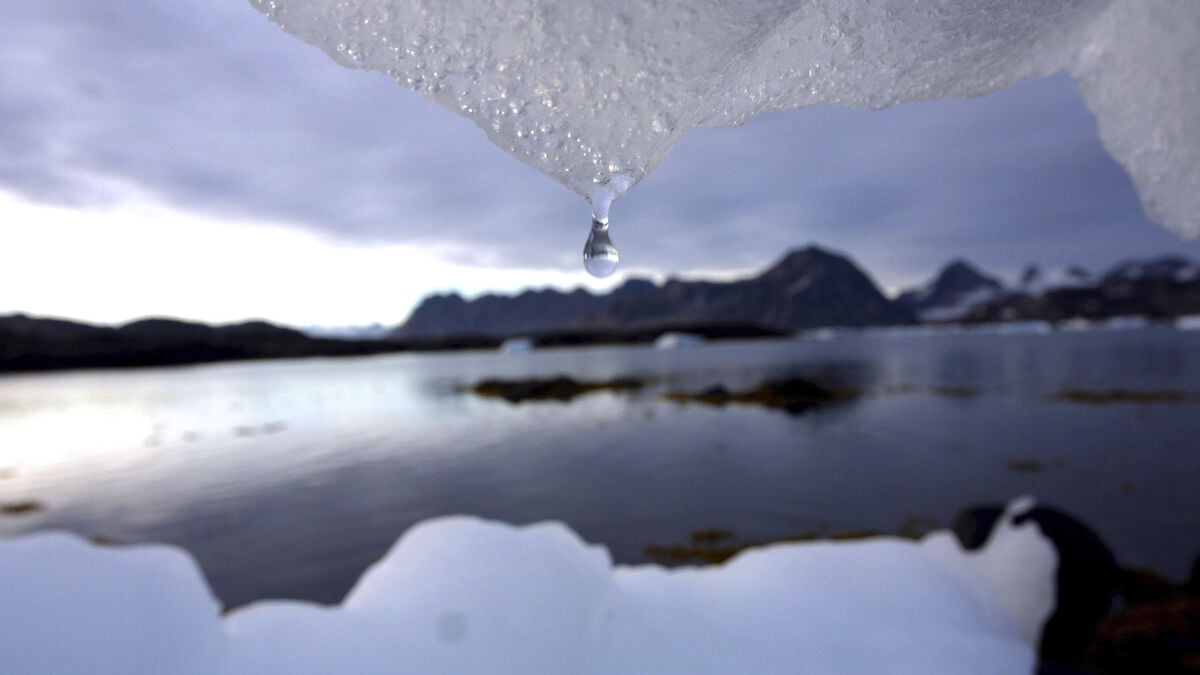
In particular, we have seen that wetlands in the tropics have begun to emit significantly more greenhouse gases, while wetlands in the Arctic are emitting more methane as the permafrost thaws.
Currently, natural emissions are poorly monitored. The researchers behind the study propose a global methane monitoring system to better detect and quantify emissions from both natural and human sources.
To really be able to follow and see what is happening in the atmosphere, we must be able to distinguish between the sources of emissions.
Diffuse emissions
New satellite technology makes it possible to better monitor the atmosphere, but measurements on the ground are also needed. Wetlands and thawing permafrost produce diffuse emissions over millions of square kilometers, and in the Arctic, for example, there are currently only a handful of monitoring towers.
You can't measure several million square kilometers with a few points. This requires a combination of new satellite technology and existing data, but also more measurements on the ground to get a comprehensive picture.
At the COP26 climate summit in Glasgow in 2021, 159 countries agreed to reduce methane emissions by 30 percent by 2030. Several have taken action, but because monitoring is insufficient, it is not possible to say whether this has led to any change in the atmosphere, explains Gustaf Hugelius.
"Without good information about what's really happening in the atmosphere, it will be very difficult to effectively verify and plan measures to reduce emissions. It will be a way to get confirmation that what we're doing is actually working."
Methane is a greenhouse gas that contributes to global warming. During the 20th century, the concentration of methane in the atmosphere doubled.
Methane is the most important component of natural gas and is formed by methanogens during the decomposition of plant material in oxygen-free environments in wetlands, such as peat bogs and rice fields. Ruminants, such as cattle, emit a lot of methane.
In the frozen seabed and tundra of the Arctic, there are large amounts of methane hydrates that are only stable at high pressure and low temperature.
Source: NE.se