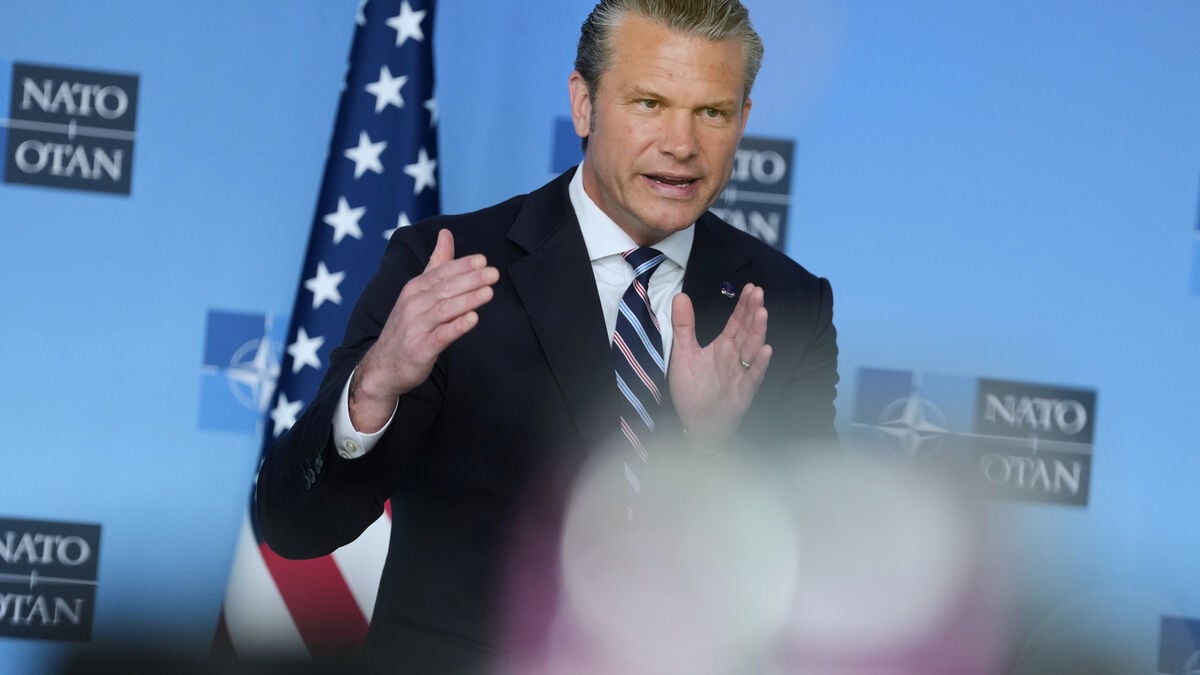
NATO must return to being a real and tough military alliance, with real capacity to meet threats and defend Europe, says Hegseth at the beginning of the meeting, painting a NATO version 3.0.
He says the review of the US presence in Europe will be done in six months, perhaps less. In addition to forces, it will also address conditions for the US military to operate from European bases in conflicts such as a war with Iran.
Some NATO countries, primarily Spain, denied the US the use of bases for operations related to a war with Iran. The US, President Donald Trump and Hegseth seem unable to forgive this, even though the NATO countries were not informed of the US plan for war in advance.
Hegseth once again said that allies who “didn't show up” should be ashamed.
No surprises
The American review is not about any "strategic surprises" for the other NATO countries, the US is only doing what best serves the interests of the American people, according to Hegseth.
The US will conduct an annual review of what other NATO countries are doing to ensure that NATO becomes a defense alliance that no longer takes a free ride on the US. The review will be crucial to how much the US contributes to NATO, according to Hegseth.
At the beginning of last year, Hegseth had bitter words to say about capabilities and defense budgets in Europe and Canada.
He now returned to the claim that NATO version 2.0 was a paper tiger that was more concerned with gender equality, climate change and other irrelevant issues than with maintaining and increasing military strength to deter or respond to threats.
At the NATO summit in The Hague last year, members agreed that they would invest the equivalent of 5 percent of GDP in defense by 2035, a significant increase for many.
Not understood
Some have already come a long way while others seem to have missed something in the translation, says Hegseth.
According to NATO Secretary General Mark Rutte, Europe is well on its way to 5 percent, highlighting a 20 percent increase in defense budgets last year - plus $90 billion.
"It's good that Pete Hegseth is keeping the pressure up," Rutte says, commenting on Hegseth's denigration of NATO countries that do too little and do not show up.
Sweden's Minister of Defense Pål Jonson (M), for his part, does not take the criticism personally. He says the foundation has been laid for Europe to deter Russian threats and attacks.
The big challenge now is to quickly transform economic resources into strong fighting forces, he says.