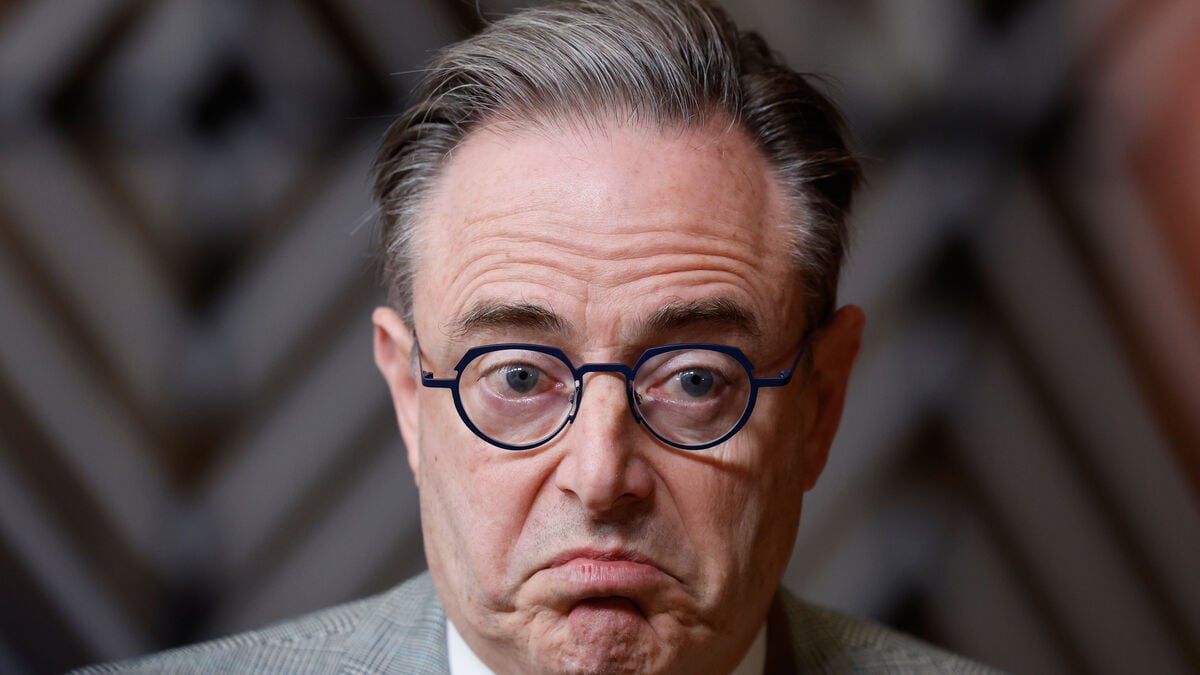
Prime Minister Bart De Wever is the Belgian against the tide. The country, which is otherwise seen as one of the most willing to compromise in the EU, has for almost two months persistently refused to use frozen Russian state assets as the basis for a loan to Ukraine.
The reason is mainly economic and legal concerns.
The frozen money is primarily located in Belgium, at the securities institution Euroclear. De Wever is concerned about having to stand alone against Russian claims for damages, with the risk of serious consequences for a country that already has one of the highest public debts in the EU.
Separatist
The concern for the country is also ironic. De Wever is not really a great friend of Belgium at all. When he participated in the national day celebrations as prime minister for the first time this summer, after taking office in the spring, he caused a scandal by refusing to say "Long live Belgium!".
De Wever is first and foremost Flemish – from the Dutch-speaking northern half of the country. His party, the NVA (New Flemish Alliance), is avowedly separatist, although in recent years there has been more talk of increased autonomy, rather than independence.
"I would be happier if I could die as a southern Dutchman than as a Belgian," he said in a famous television interview in 2021.
Success in quiz
De Wever comes from a family with deep roots in Flemish nationalism. He became party leader in 2004 and made a real breakthrough in early 2009 when he gained enormous popularity by reaching the final of the TV quiz show De Slimste Mens ter Wereld – the smartest people in the world.
Three years later, he published a cookbook to describe how he had lost 60 kilos in a short period of time during the winter. Instead of a well-rounded De Wever, the country has since become accustomed to him as a fit and well-dressed man, often in a western.
Shaky economy
As prime minister since last spring, De Wever leads a coalition with a strong focus on getting Belgium's faltering economy in order. The old communist party PTB supports his opposition to touching Russian assets, but otherwise there is a fermenting opposition eager to strike – not least in the French-speaking south.
Bart De Wever (born 1970) has been Prime Minister of Belgium since 3 February this year, leading a five-party government. He was previously Mayor of Antwerp from 2013.
Flanders historically comprises the northwestern parts of present-day Belgium and northern France. Formally, it now includes Belgium's five Dutch-speaking provinces, excluding Brussels – which is still the regional capital. Flanders is slightly larger in area than Uppland, with 6.8 million inhabitants.
Belgium consists of Flanders, French-speaking Wallonia and the Brussels-Capital Region. The country became independent in 1830 when the predominantly Catholic region broke away from the Protestant-dominated United Netherlands.