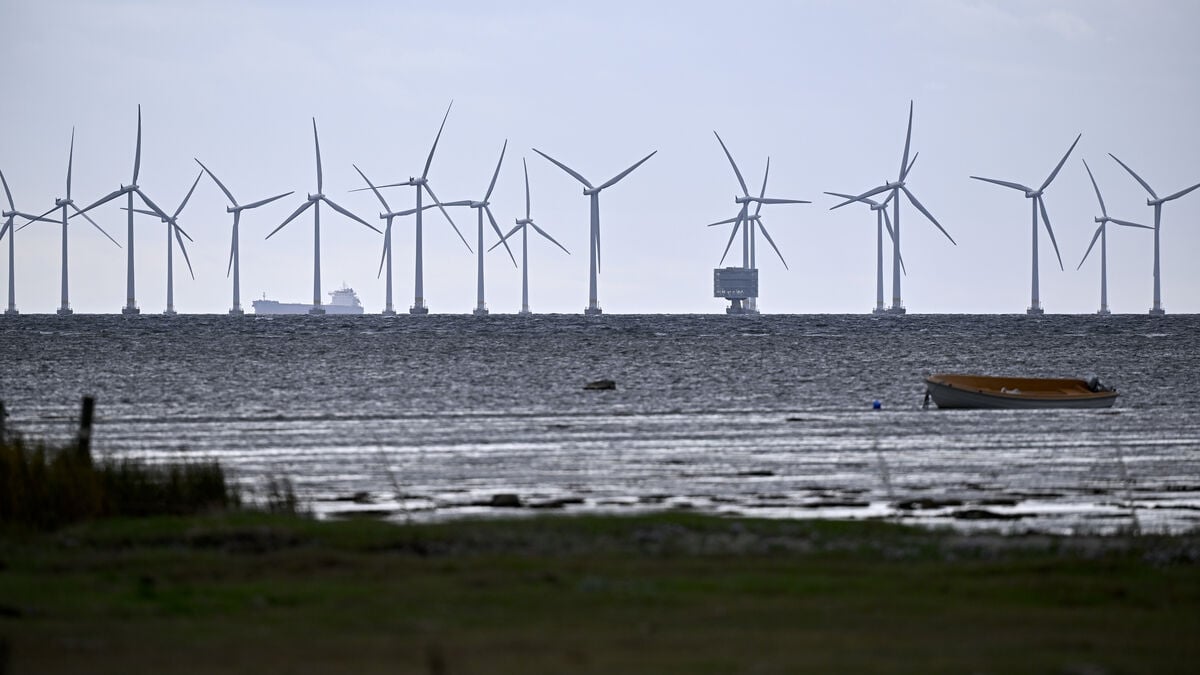
The eleven wind power projects whose permits are being denied are in several cases located along the Norrland coast, and the decisions are motivated by defence interests.
The overall consequences for defence are too great, Climate and Environment Minister Romina Pourmokhtari (L) said at a press conference.
Trying to mislead
"Svepskäl," parts of the opposition commented. It is obviously possible to combine the interests in other countries, according to the Centre Party's energy policy spokesperson Rickard Nordin.
"It is clear that the government does not want offshore wind power but rather feels compelled to give the green light to a few individual projects," he said in a written comment.
"The Tidö government is trying to mislead. With today's decision, they have closed the door to almost 90 percent of all offshore wind that has been on their table," Green Party spokesperson Daniel Helldén wrote on X.
In total, the two offshore wind farms that have been approved, Fyrskeppet off Söderhamn along the Norrland coast and Vidar off Grebbestad on the west coast, could produce approximately 19 TWh of electricity per year.
That's roughly twice as much electricity as all of Denmark's offshore wind power produces today, so that's a lot of wind power, Pourmokhtari said.
Not profitable
But they are unlikely to be built without government support.
With today's market prices for electricity, the project is not viable as it stands, Niclas Broman, CEO of the ownership company behind the Fyrskeppet wind farm, said.
Some form of government support is required, either a kind of risk-sharing mechanism in the same way as with nuclear power or government financing of the offshore cables, according to Broman, who is nevertheless pleased with today's announcement.
The owners of other previously licensed wind farms have said the same thing - it is not currently commercially viable to build offshore turbines.
It is also something a possible Social Democrat-led government wants to tackle if it wins the election this fall.
We want agreements across bloc lines that are sustainable and provide the conditions for construction, Fredrik Olovsson, the Social Democrats' energy policy spokesperson, said.