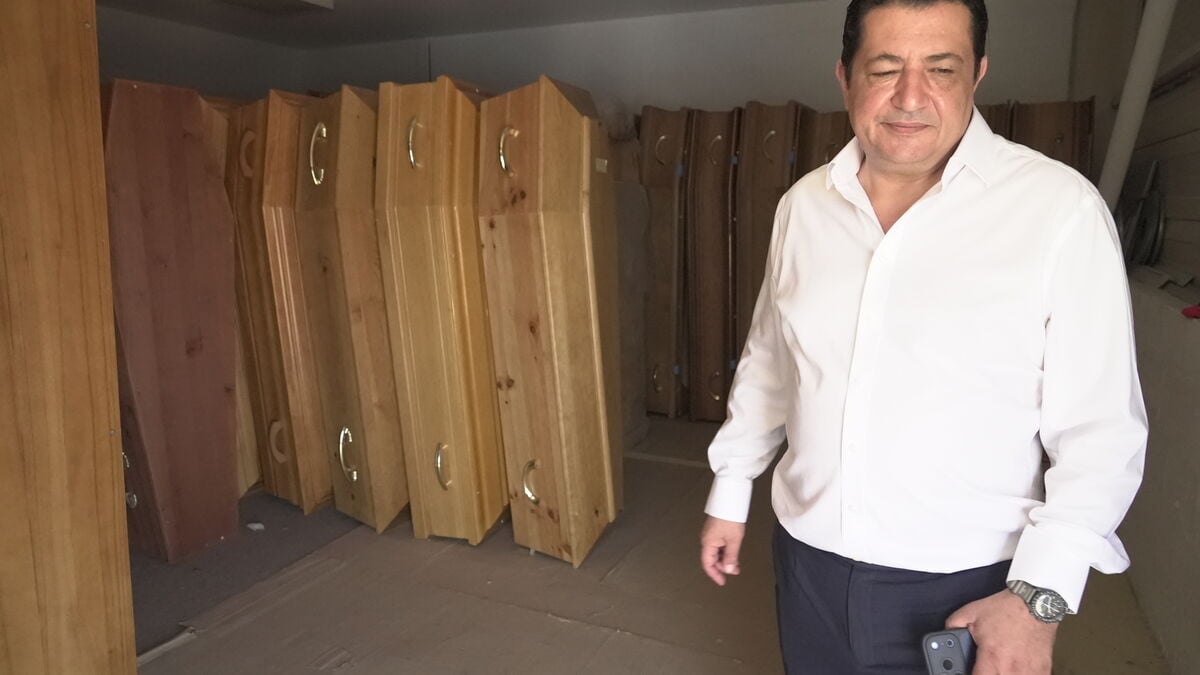
There are 32 places in his mortuary, all of which are occupied. Several times a day he is forced to say no when people call to ask if he has space.
"It's a truly catastrophic situation. I'm getting hundreds of calls," says Zouhaeir Hertelli.
Several other funeral homes and mortuaries are having the same problem. One undertaker tells Paris Match that his phone almost never stops ringing.
"We will certainly have to use refrigerated containers to store the bodies," another undertaker told the newspaper.
Zouhaeir Hertelli has already asked the authorities for permission to set up refrigerated containers, but is waiting for approval.
Families are suffering, he says, continuing:
We have no solution to offer them.
Thousands of deaths
In 2003, the country was hit by a similar heat wave that claimed an estimated 15,000 lives. This heat wave has hit harder. For about ten days, it held France in an iron grip, and heat records were broken several times.
The French equivalent of the public health authority, Santé publique France, states in a press release that last week more than 1,200 deaths were registered on Wednesday. By Thursday and Friday, that had risen to 1,400 deaths per day. And for comparison, the figure was between 900 and 1,000 per day during the last heat wave, in April and May. But the figure is expected to rise for the days last week, due to delays in registration.
“Could be worse”
Funeral director Véronique Bertrand says she fears lessons from previous heatwaves have been forgotten. In 2003, the heat wave mainly killed older people living alone. Véronique Bertrand believes it made people think about their neighbours and those who live alone and check in on them from time to time.
"Most of the deaths we are now dealing with involve people who lived alone, isolated," she says.
Given the circumstances surrounding how they were found, no other conclusion can be drawn than that the deaths were caused by the heat.
Over the years, we may have forgotten that it could happen again, and that the situation could even get worse, says Véronique Bertrand.