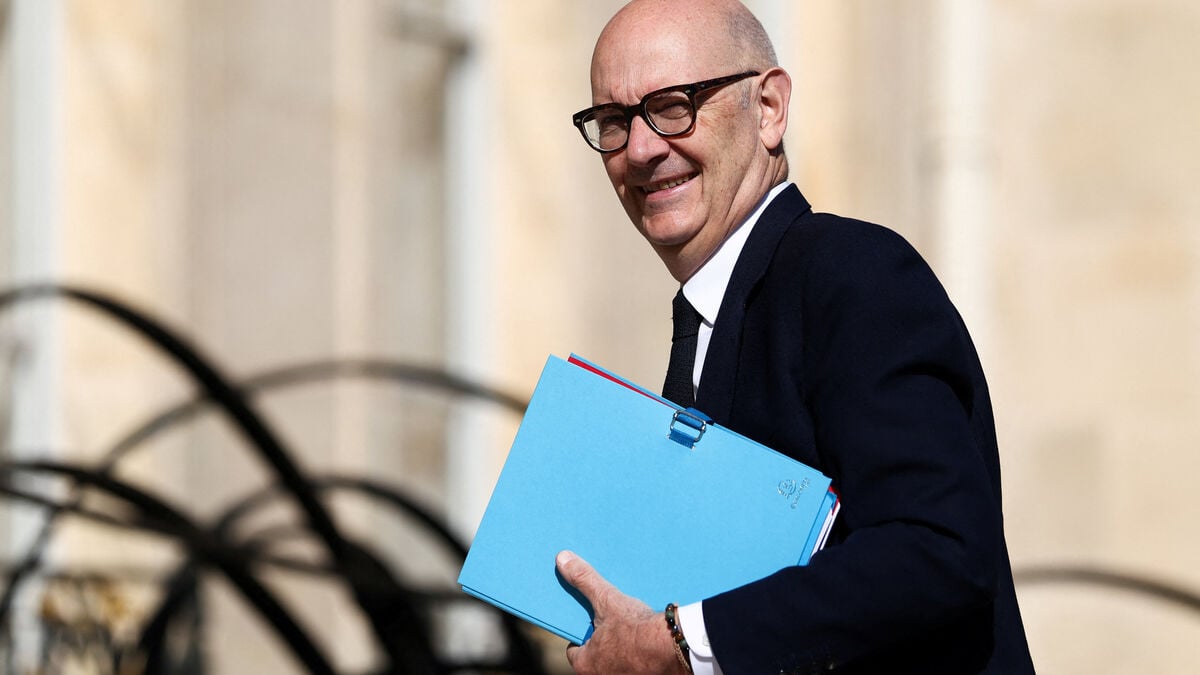
Help from the European Central Bank (ECB) is not needed to deal with the interest rate shock shaking the country, Finance Minister Roland Lescure says.
"That's not where we are," he told reporters.
"We don't need to discuss scenarios today. The goal, of course, is to avoid ending up in such a situation at all costs. That is why we insist on fiscal tightening," he added.
Seven months until the presidential election
The statement comes as his government, led by Prime Minister Sébastien Lecornu, formally presents an austerity budget for 2027 to the French parliament on Tuesday.
The proposal calls for a €54 billion (£49 billion) reduction in public spending compared with this year's budget. The government hopes that frozen salaries for public-sector employees, changes to the pension system and higher thresholds for income tax deductions - combined with French growth of 1 percent next year - will be enough.
The austerity budget comes just seven months before next year's French presidential election, in which voters will choose a successor to Emmanuel Macron. Worried investors recall that two previous French governments were recently brought down in confidence votes over controversial austerity packages.
The press reports that Eurosceptic far-right leader Marine Le Pen is already leading in opinion polls ahead of the presidential election.
The budget battle is expected to continue for some time.
There will be back-and-forth between the government, the National Assembly and the Senate - possibly well into the first half of 2027. It can be assumed that this will create more political uncertainty, says Jérémie Peloso, European chief strategist at BCA Research, according to the news channel Euronews.
Highest risk premium since 2011
France's public finances are characterized by national debt of 119 percent of GDP. This can be compared with Sweden's 35 percent. The budget deficit is estimated at 5.4 percent this year, and the debt is expected to keep growing - contributing to market concerns about whether France can manage its public finances on its own.
The yield gap between ten-year government bonds in Germany and France - a risk premium reflecting distrust in France's ability to pay - is currently 1.53 percentage points. It is the largest gap since 2011.
The French budget crisis has also pushed the euro down to $1.12, its lowest rate since May 2025.